*Disclaimer: This is a sponsored post, in that we were hosted at Kunjani, however all additional costs, for e.g food, were at our own expense. All views are my own*
If you’ve been following my wine and food journey so far, you’ll know this boutique winery has a special place in my heart. Special friendships and memories have culminated from their very ethos – a coming together of two cultures. My husband and I together with our fur-child, bunny Riesling, how apt right? (seeing that Paul grew up between his father’s Riesling vines in Germany’s Rheingau region) were invited to stay for a weekend at one of the beautiful villas at the winery. Warmly welcomed by co-founder Pia, we found ourselves to feel right at home already.
Peek a boo – Riesling living his absolute best life at Kunjani!
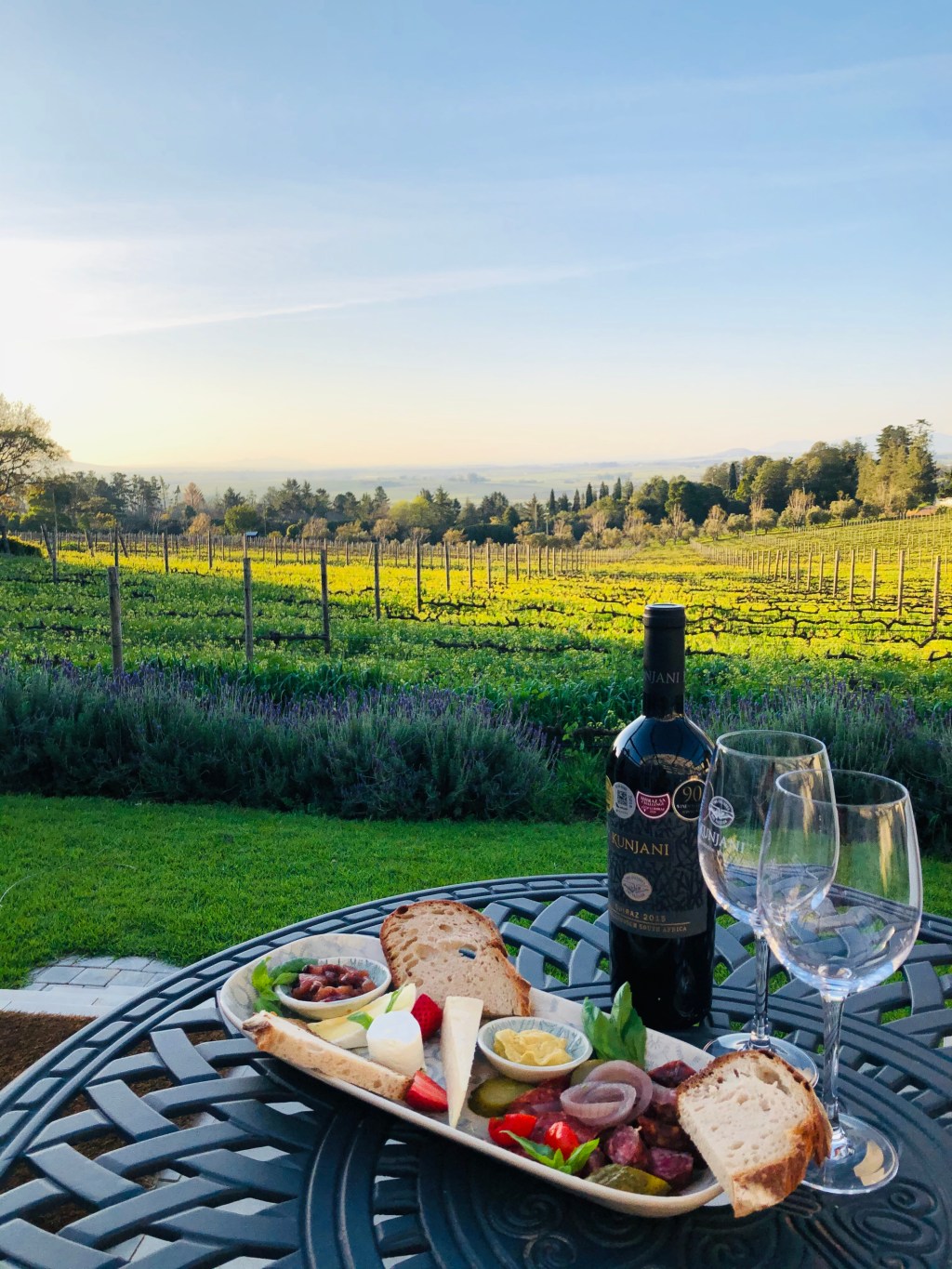
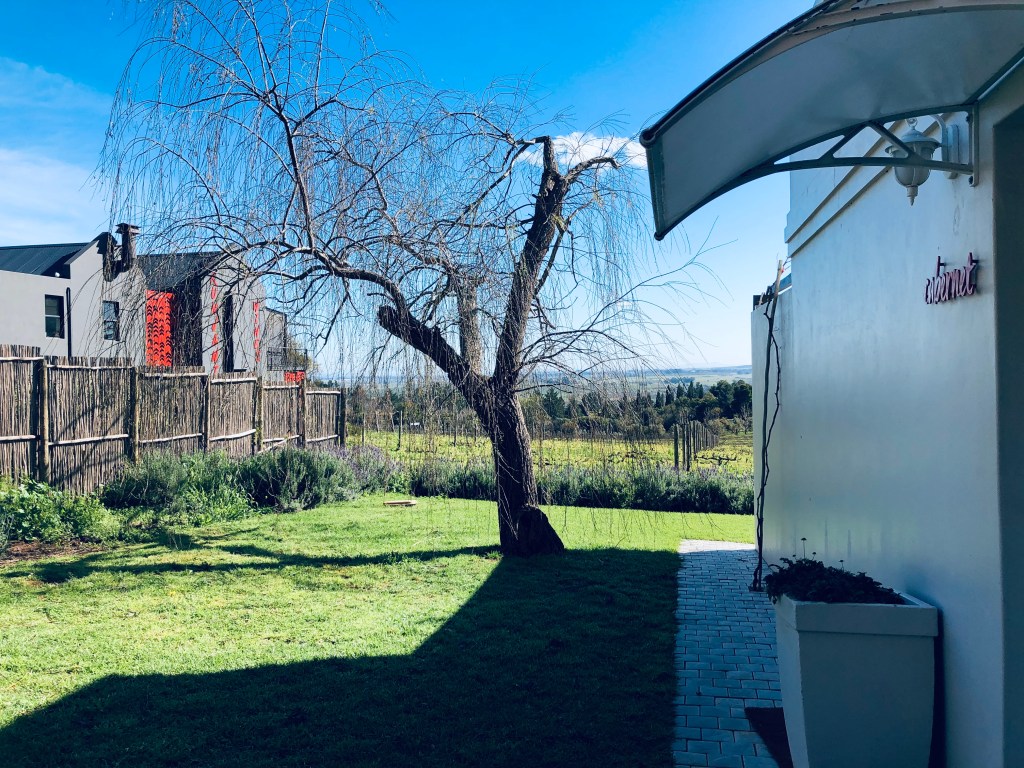
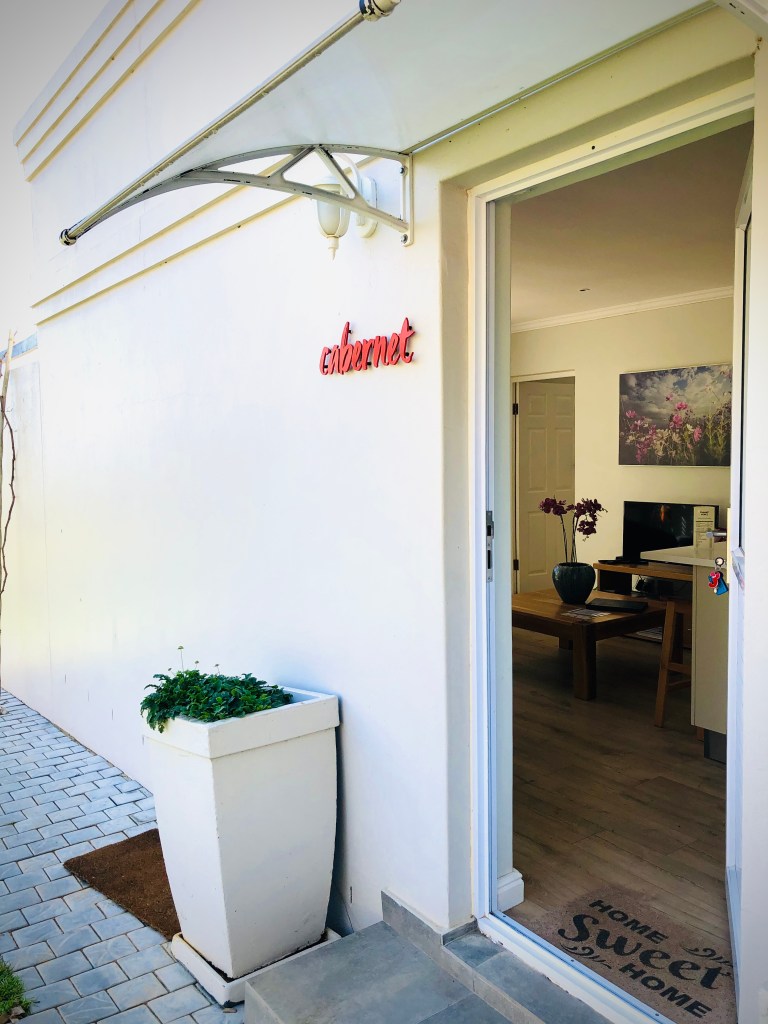
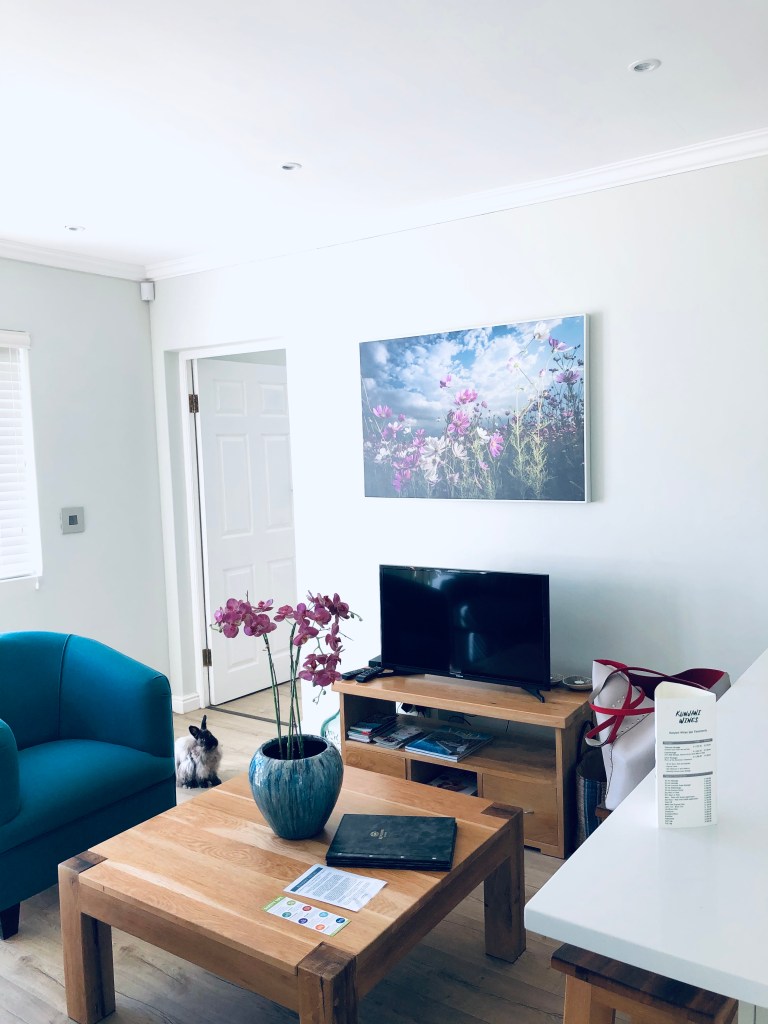
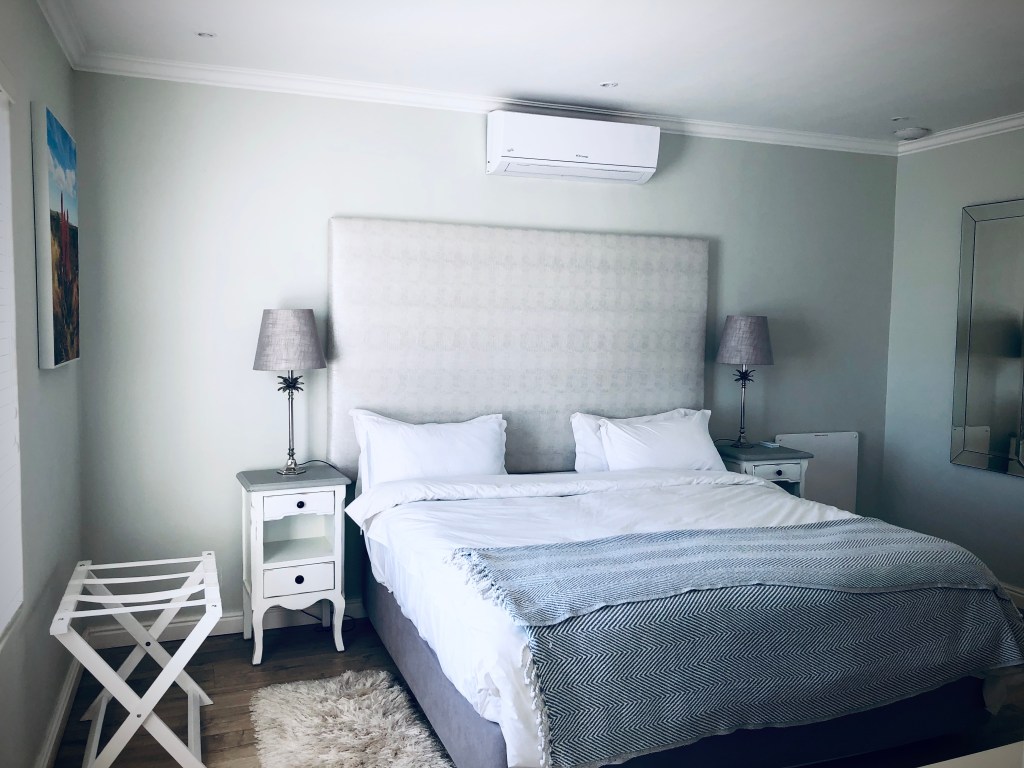
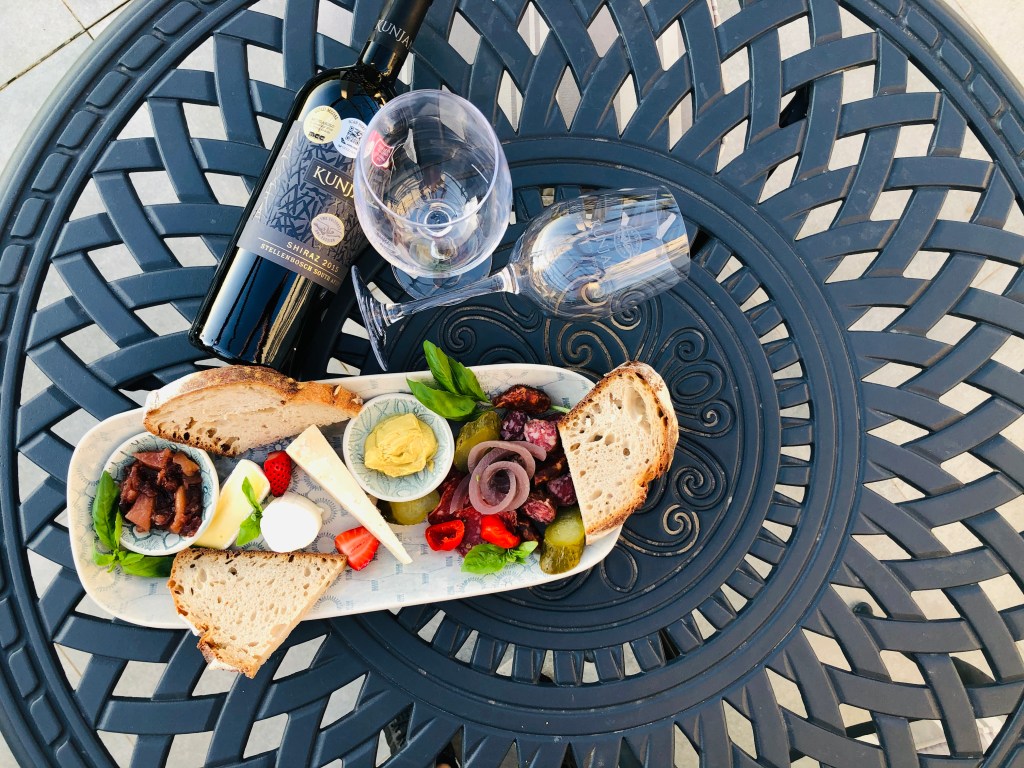
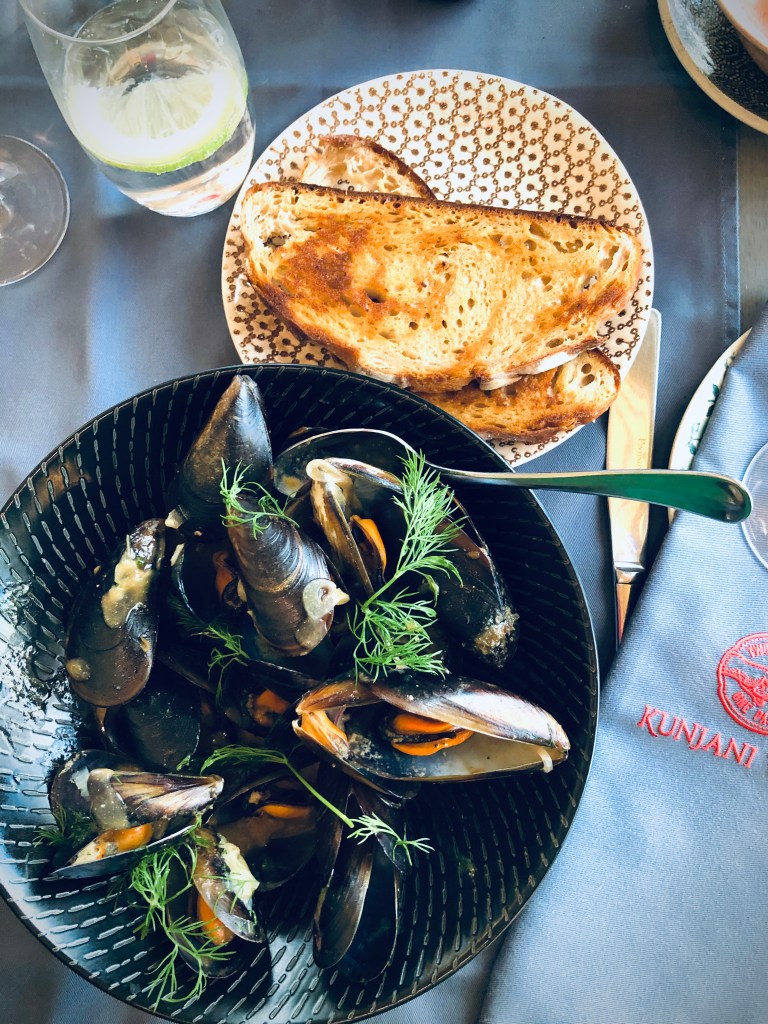
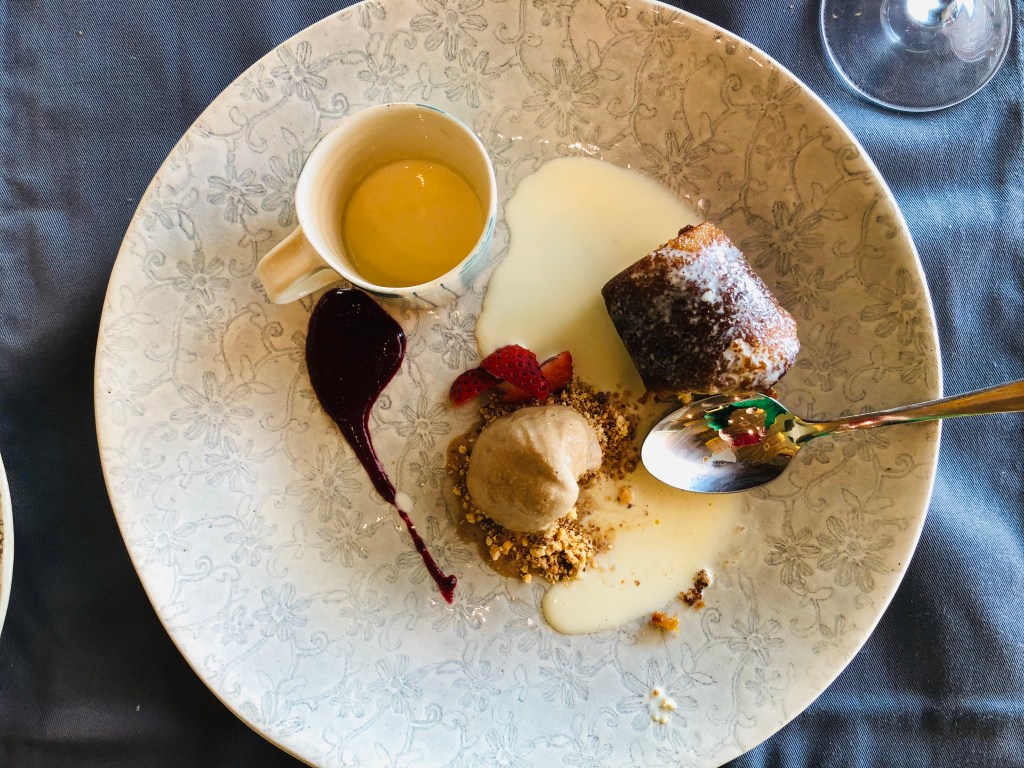
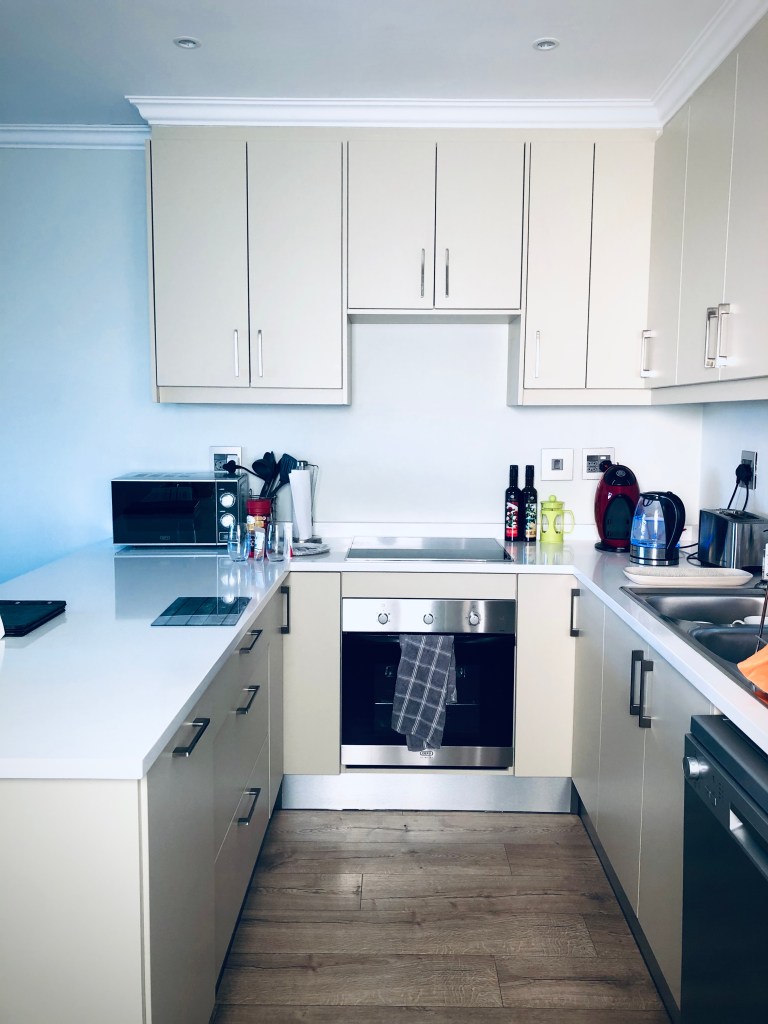
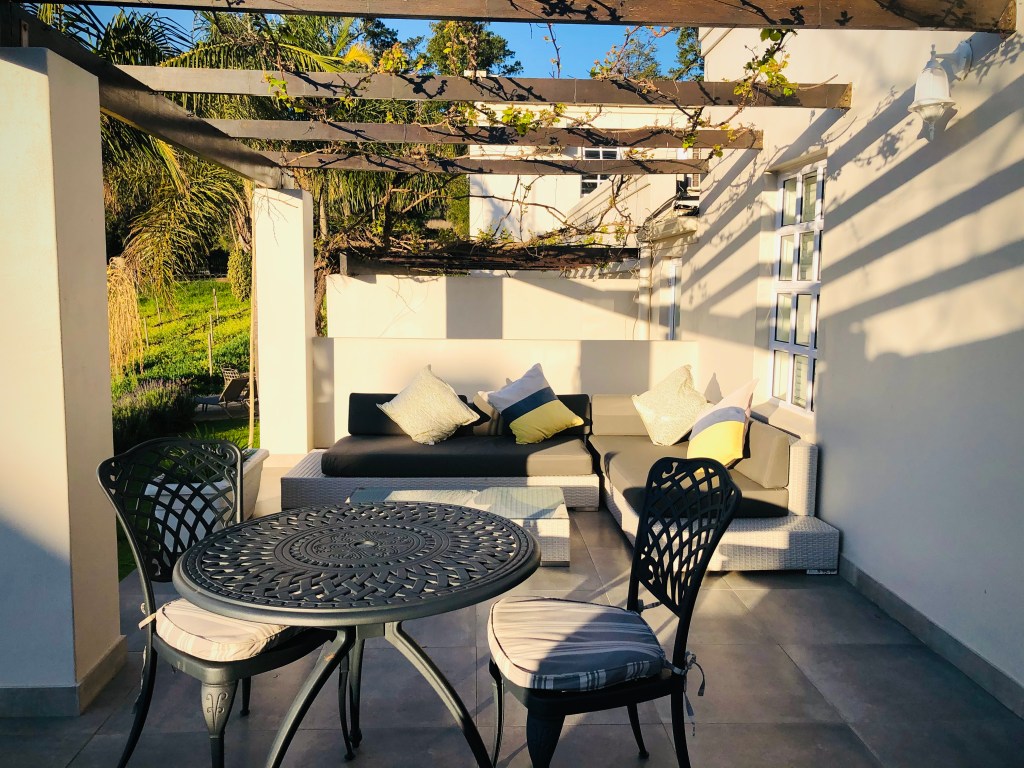
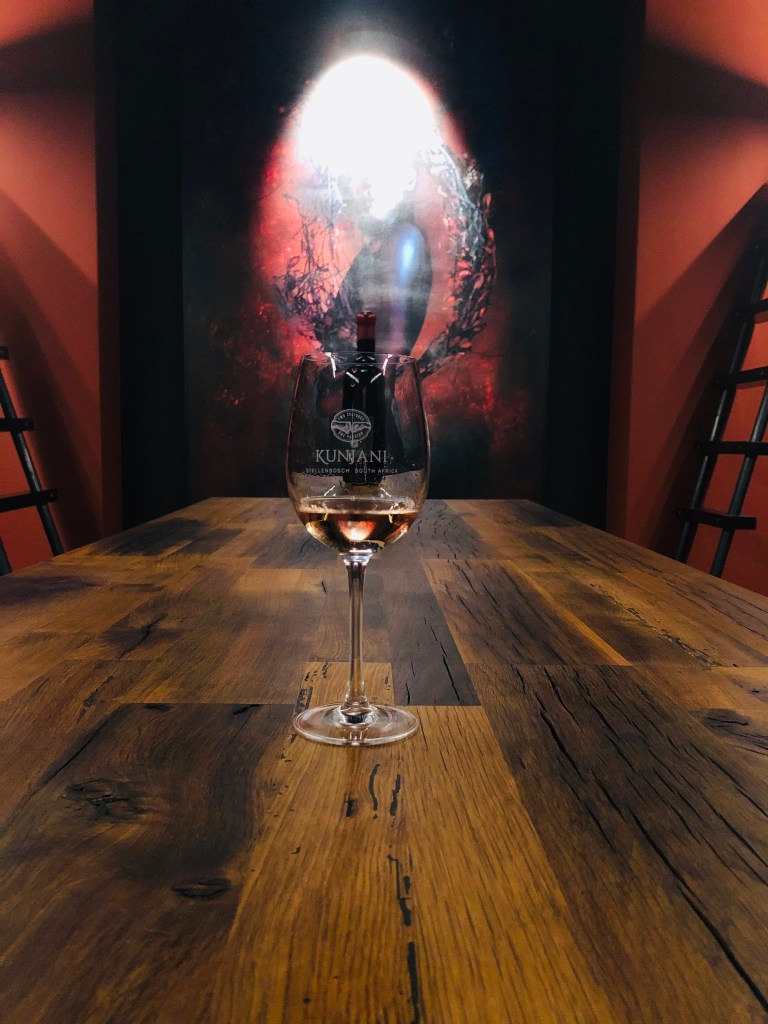
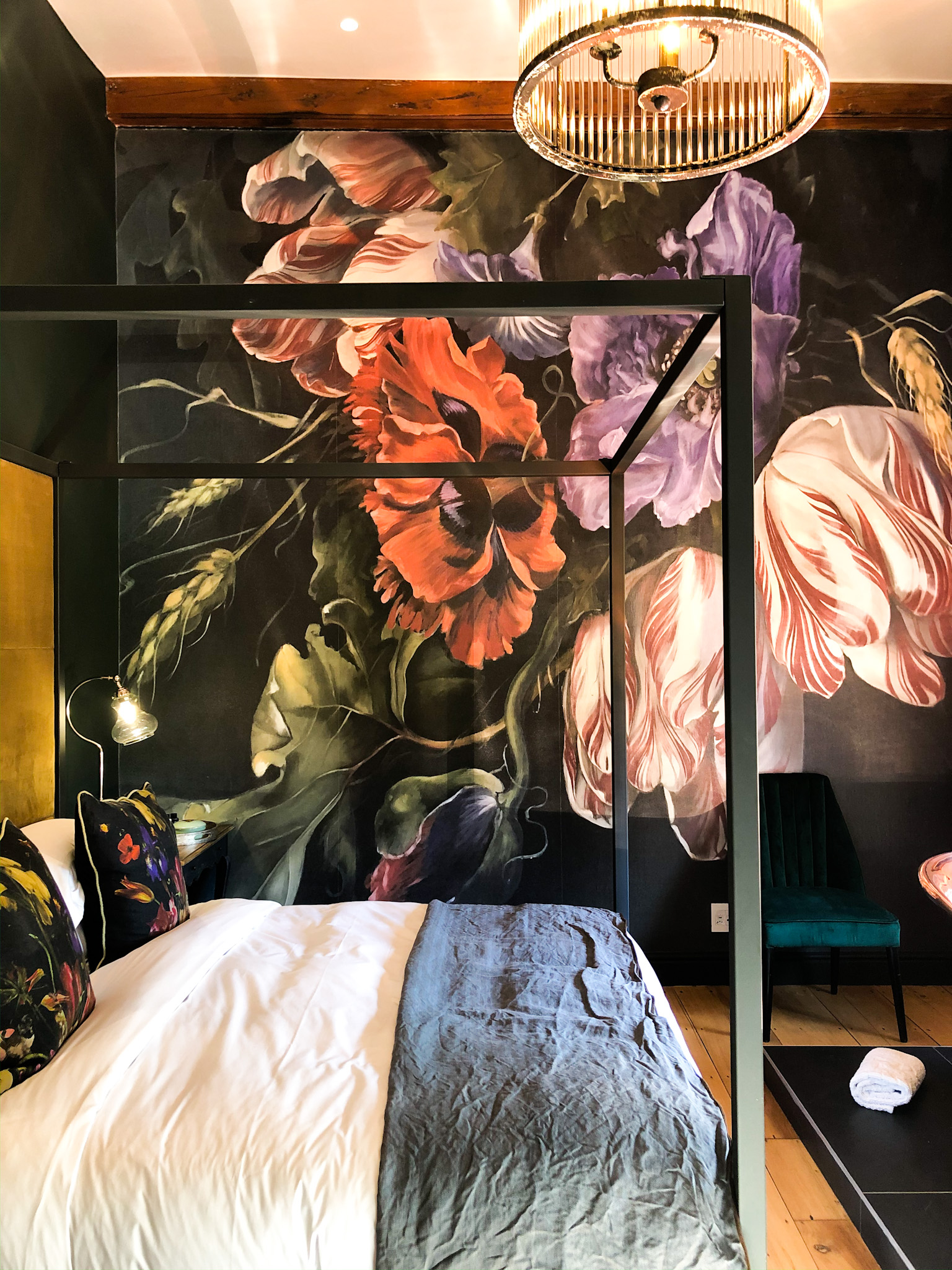
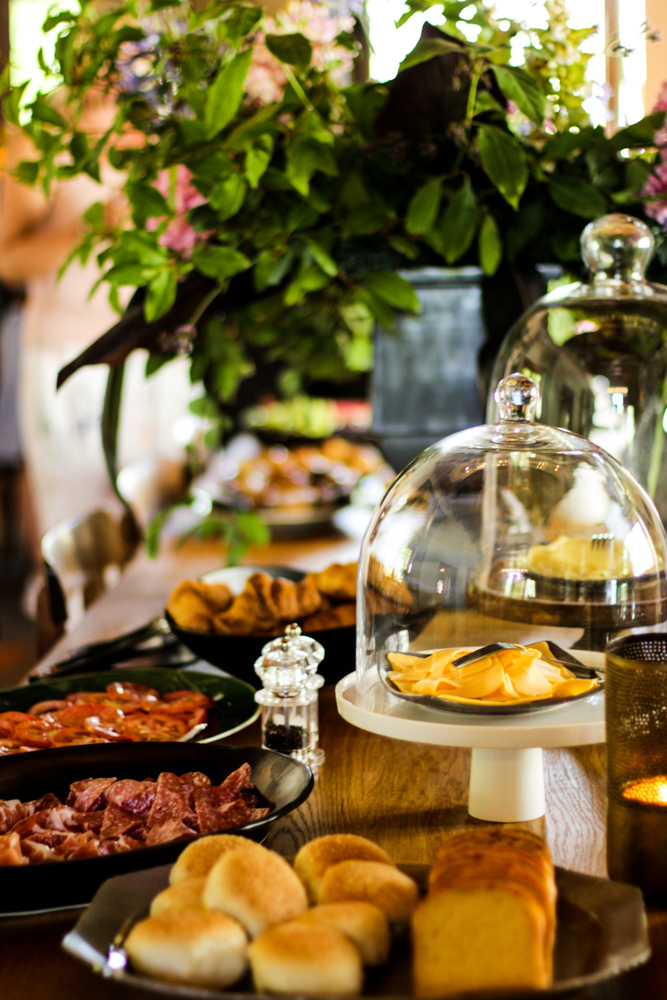
We were accommodated in the self-catering Cabernet villa which is beautifully furnished with modern fittings, a working kitchen with all you need and then some, an en suite bedroom with a very comfy king bed. The platter of delicious morsels that awaited us in our villa, was perfectly curated by Chef Lamek. Although the level 2 rules were in place at the time, which meant we couldn’t purchase any wines over the weekend, we were treated to a lovely tasting of their latest vintages. As usual Kunjani’s wines never disappoint. From wines to food, It’s no secret how talented Chef Lamek is, his food is always thoughtfully made and seasonal of course. Having visited whilst still in the throes of winter, the menu is curated in a comfort food meets gourmet fashion. Crispy Pork belly, mussels in a white wine broth, and lamb shank are what you will expect to find on the winter menu. All of course paired to perfection with a Kunjani wine.
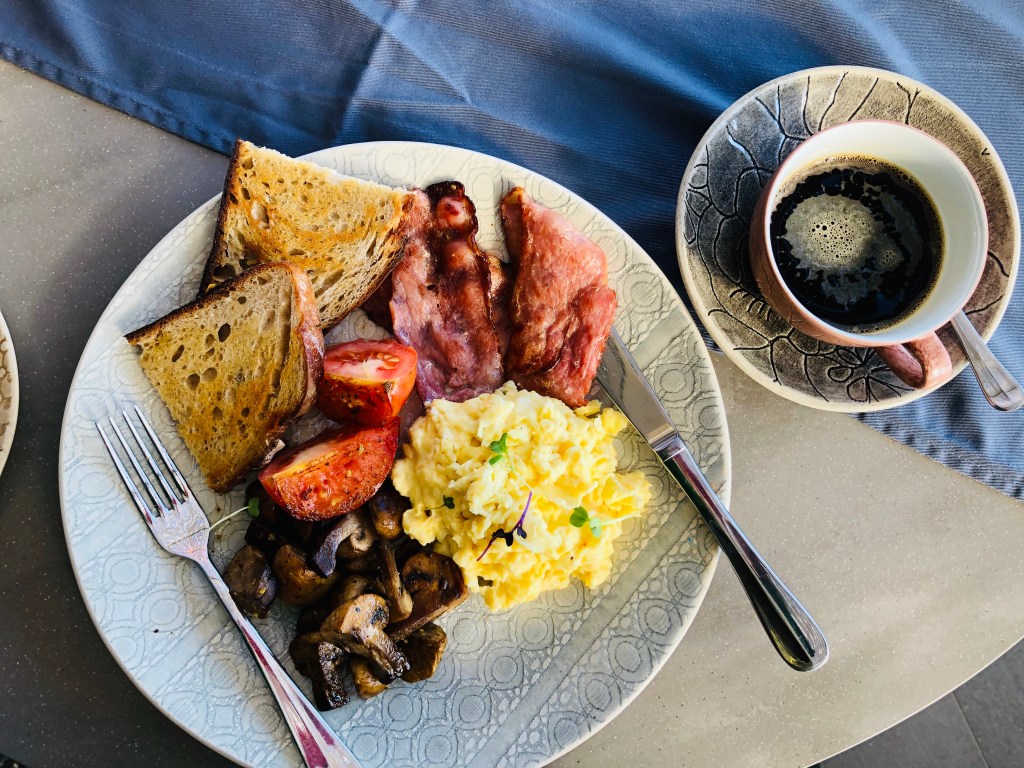
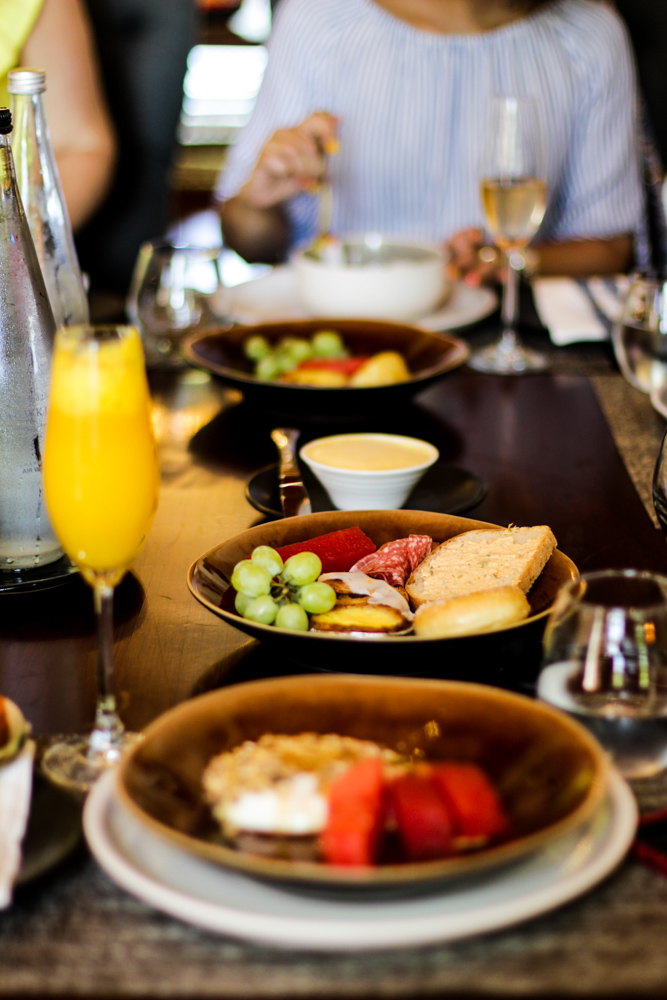
Breakfasts are simple yet tasty (not included in your stay). The restaurant caters only for breakfast and lunch. Thereafter you will have to scout the greater area of Stellenbosch for dinner, or make a meal in your villa in the lovely kitted out kitchen.
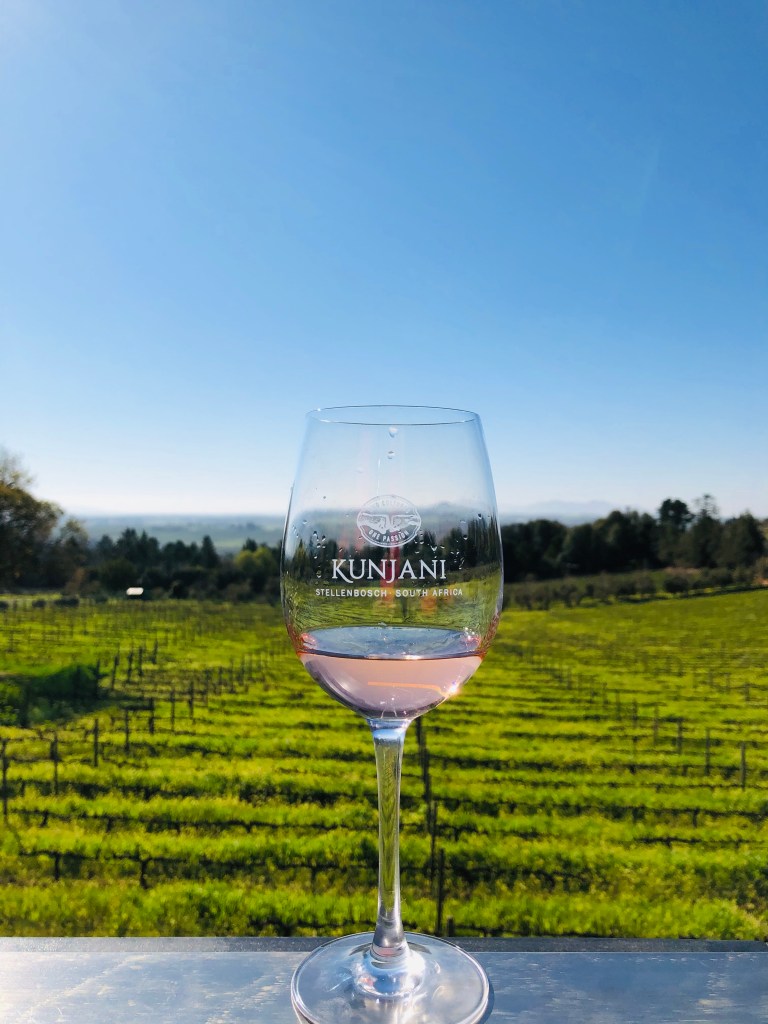
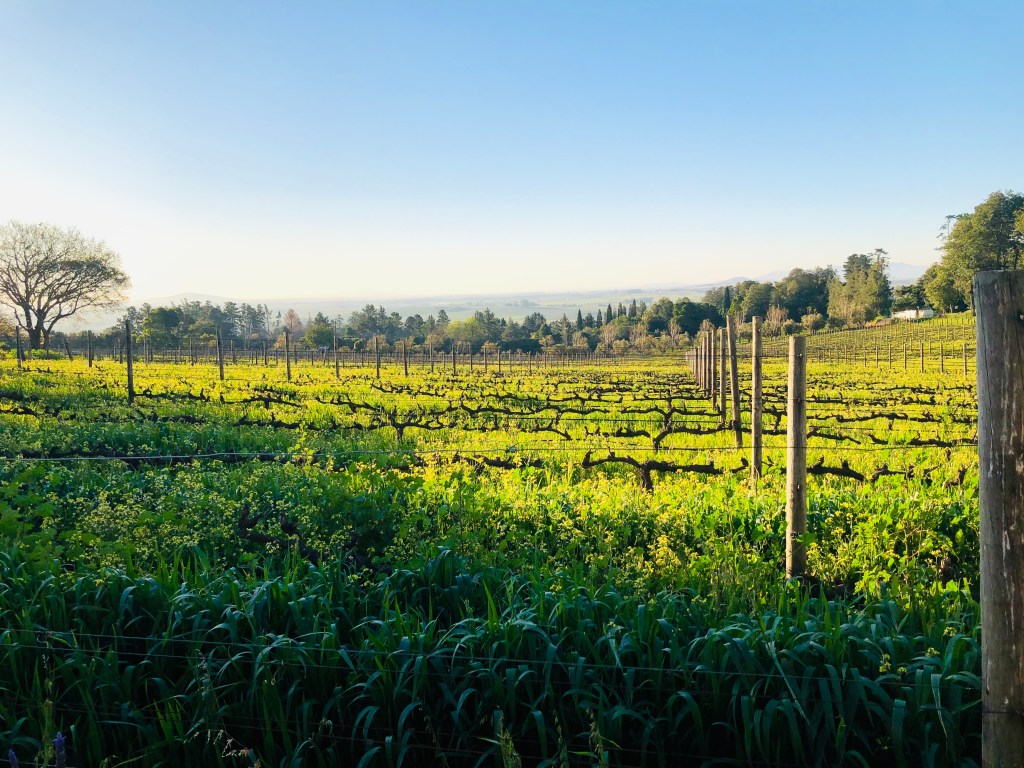
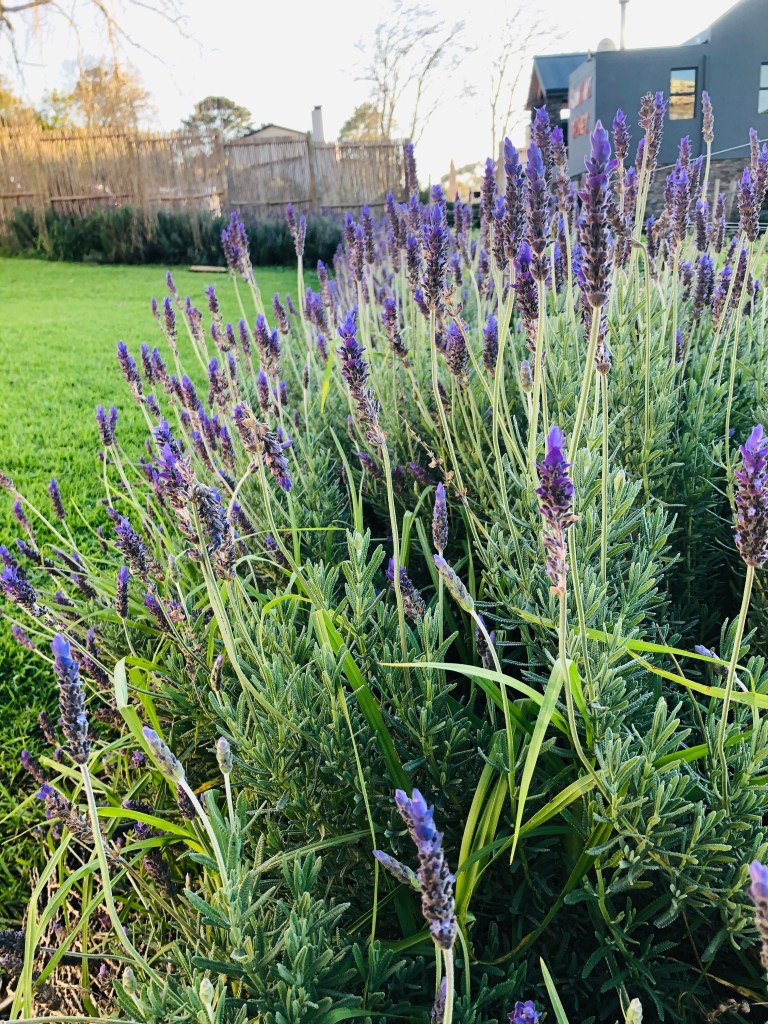
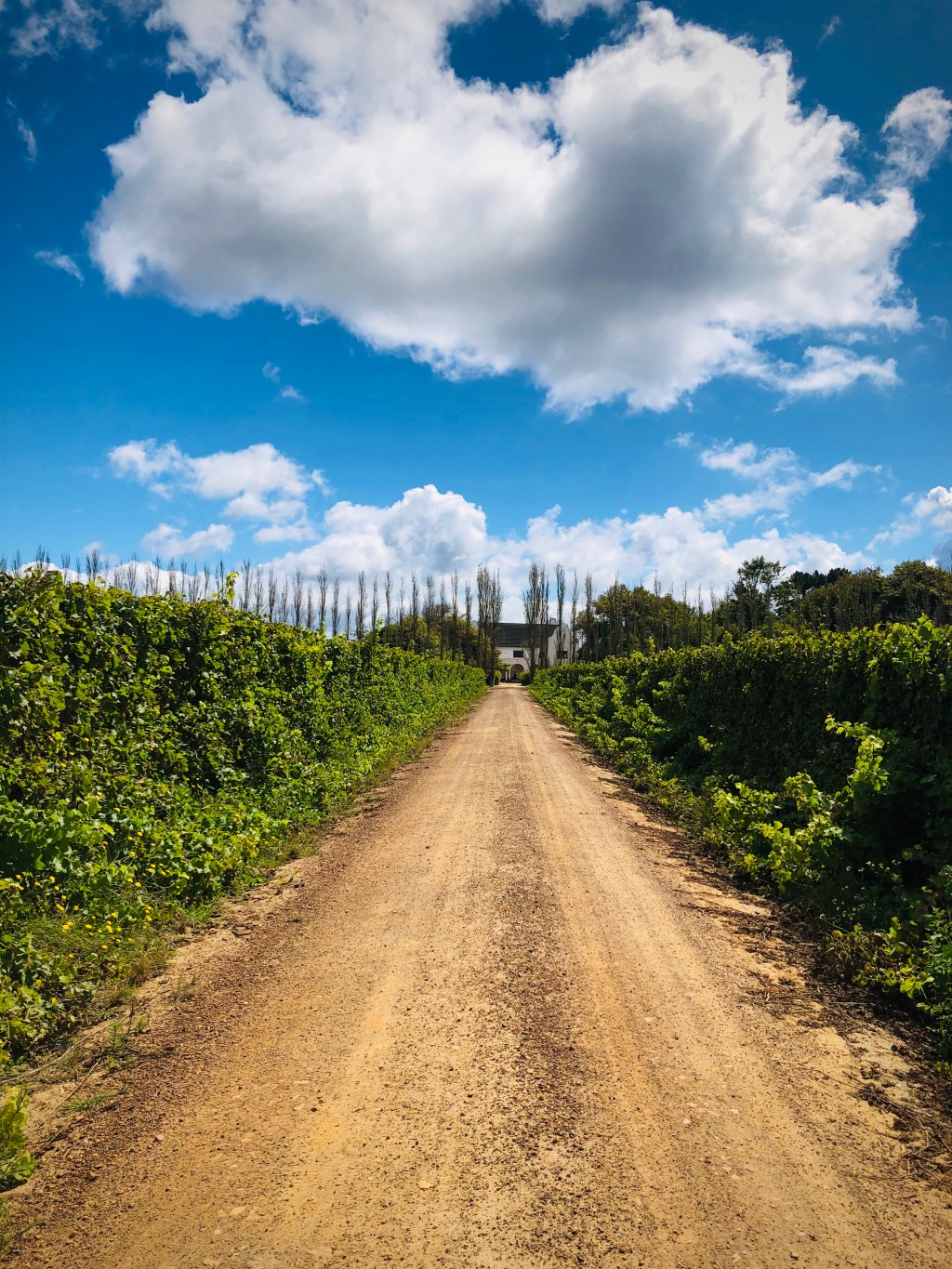
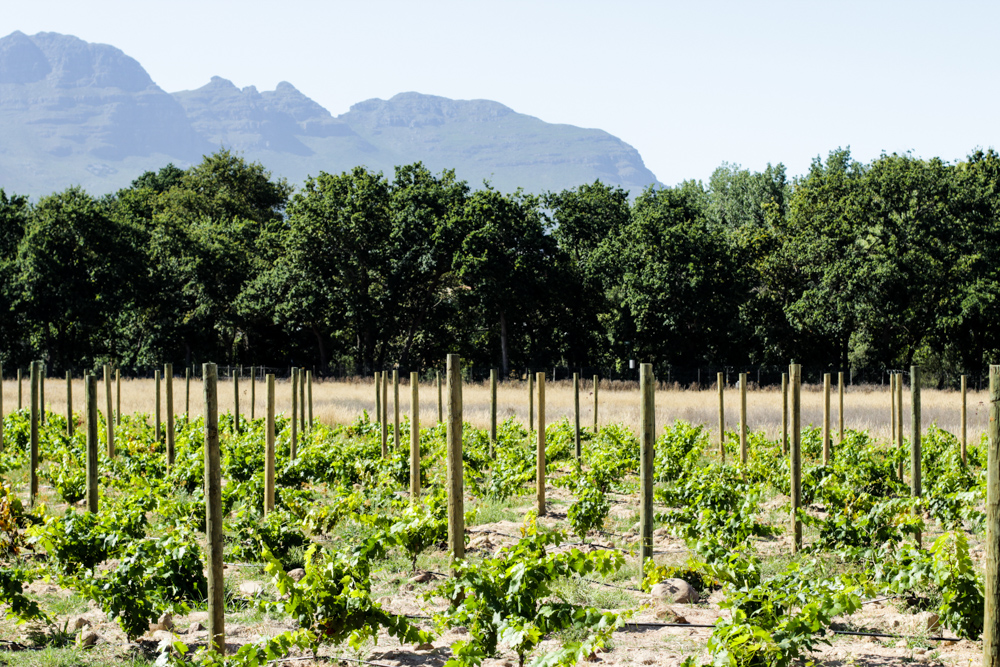
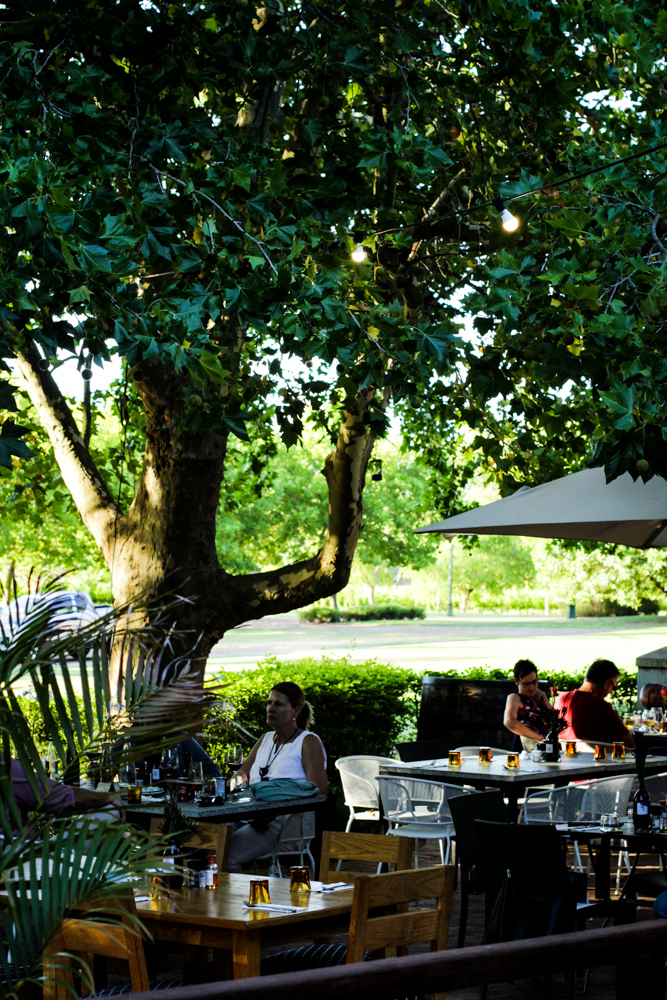
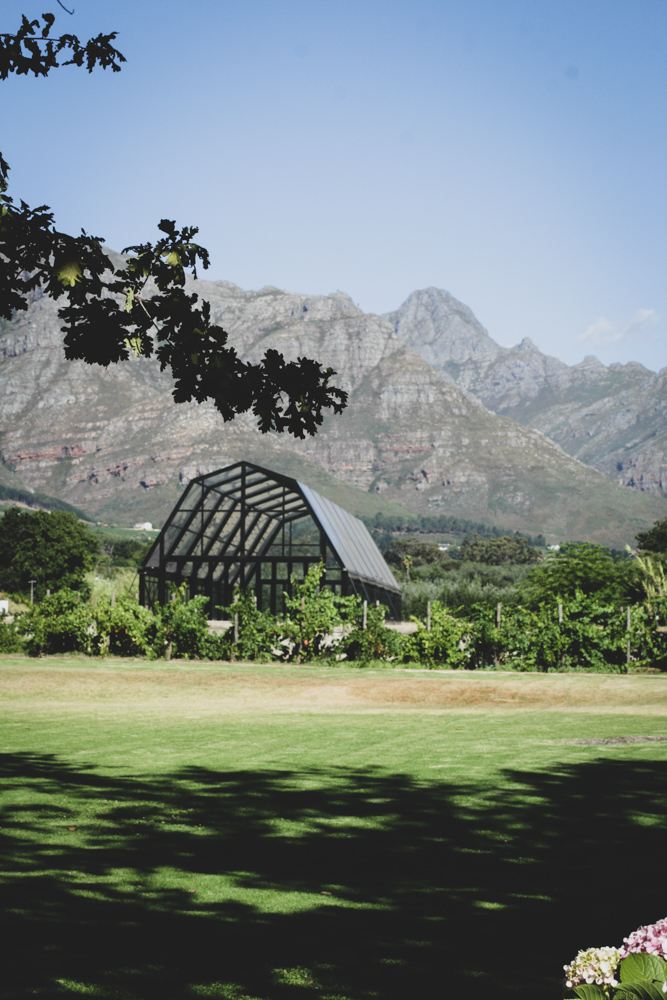
The villa has a gorgeous patio that opens up to the low yielding vineyard that produces Kunjani’s award-winning Chenin Blanc. We were very lucky to bask in some sun that weekend, although a chill stayed in the air. A little tranquil vineyard stay is what we all need to acclimatise to the new norm we now face. Get 30% off all accommodation bookings valid until 28 February 2021. This offer is valid for all stays at Kunjani Villas until 28 February 2021. Discount is only valid when booked directly with Pia viainfo@kunjaniwines.co.za
A massive thank you to Pia and Paul for graciously and warmly hosting us.
The Elgin Valley, synonymous with award-winning Pinot Noir and Chardonnay varietals that sing with cool climate melodic notes. Situated about 70 km’s from Cape Town. It’s incredibly easy to drive by if you’re not a local and just take in the scenic drive en route to another nearby town. In case you’re not familiar with South Africa, the Western Cape is a treasure trove of so many wondrous and beautiful wineries, each region takes on a different and own unique typicity of terroir. This fact excites me and could get me reading and listening about wine in a geographical sense for hours! Don’t get me started 🙂
Why Elgin you ask? For our honeymoon, we ended up touring a few of my favourite regions, such as the Walker Bay, Swartland and Bot River regions. So in reliving the magic, we decided on our first anniversary this year, we would explore another favourite, Elgin. The valley of not just cool climate wines, but the home of Appletiser, apples and, who can’t forget Peregrine!
Peregrine (not pictured here) has grown from a deli/farm stall into a tourist attraction for their fresh produce, freshly baked loaves of bread, wine section and restaurant. Outside a small grassy patch with a little park for the kiddies and pooches to be entertained and refreshed. This is one pitstop you cannot miss. Be sure to stock up on lots of delicious freshly pressed apple juice, sourdough, mosbolletjie bread, last but not least, the pies are LEGENDARY!
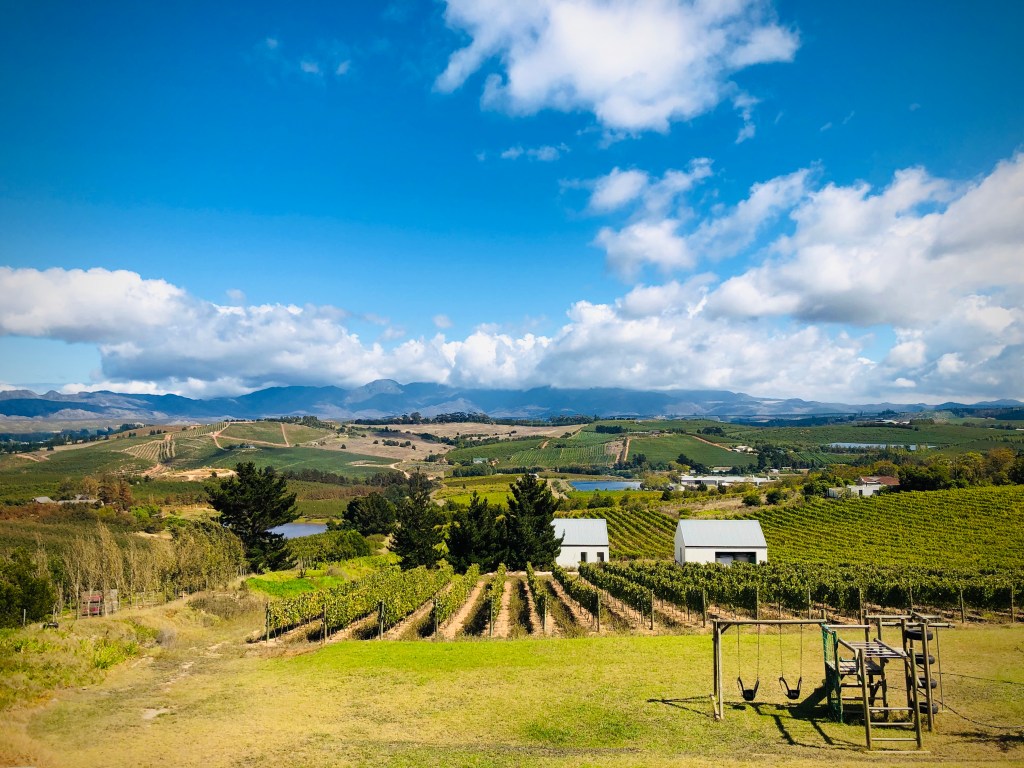
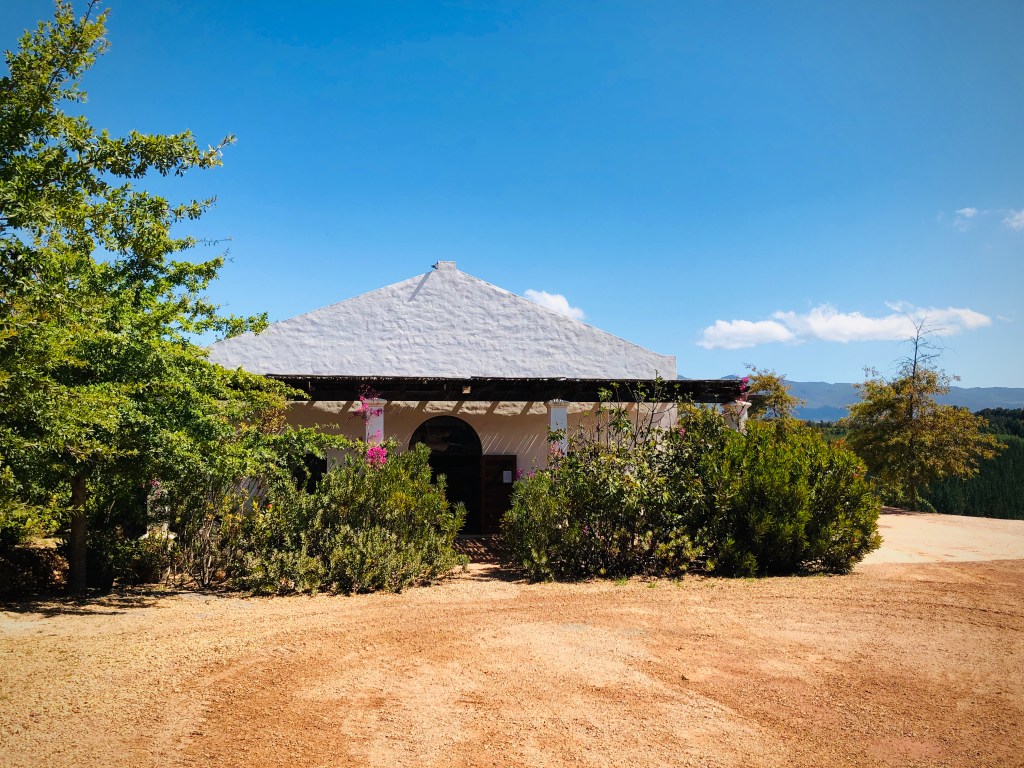
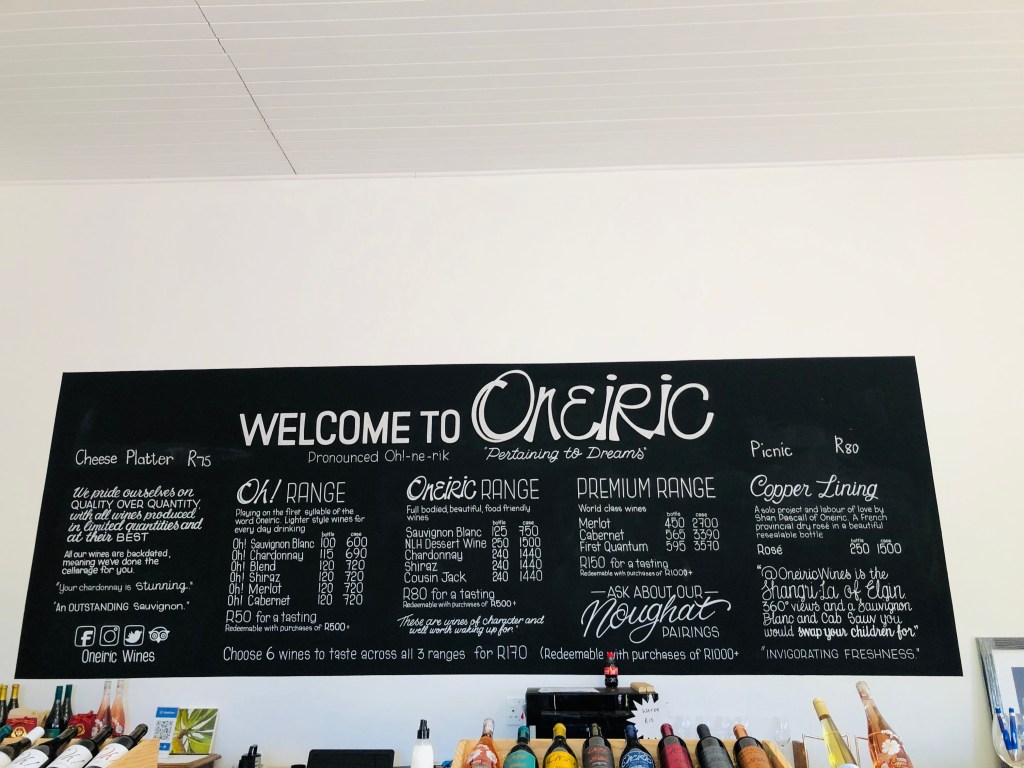
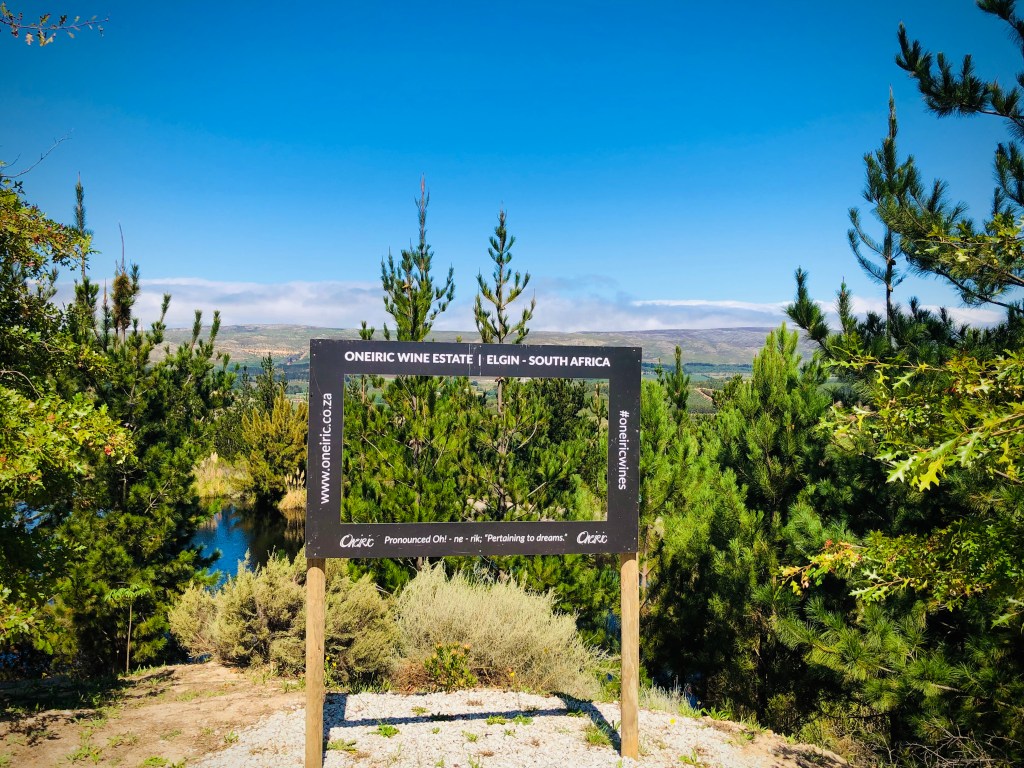
Our first winery stop, was at Oneric. O N E I R I C; pronounced “Oh! – ne – rik” borrowed from Greek terminology and roughly translated as ‘dream’ is exactly that – a gem nestled in the heart of the cool-climate Elgin Valley. Warmly received and graciously hosted. We found not only the view from the small estate but the Chardonnay quite a dream.
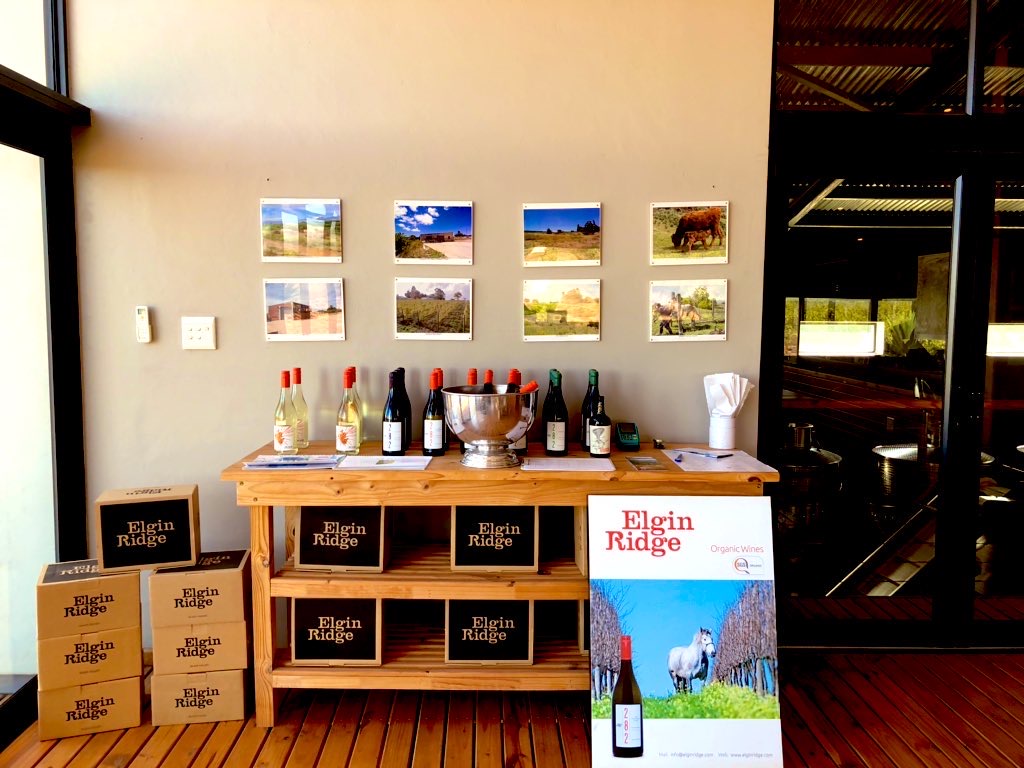
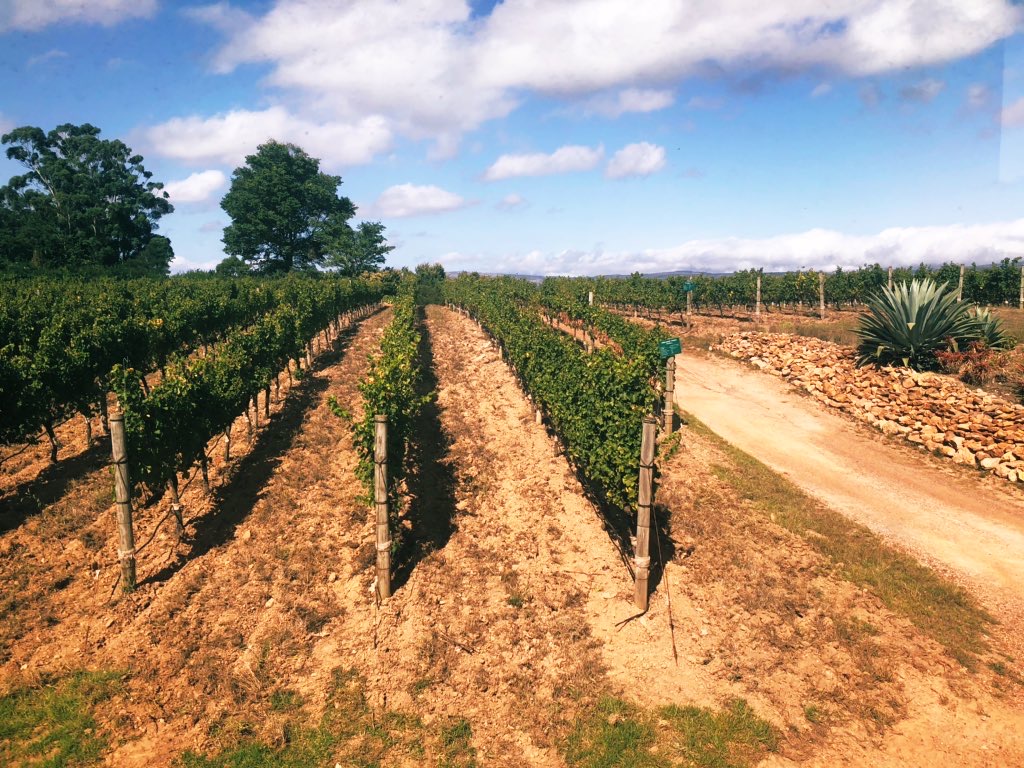
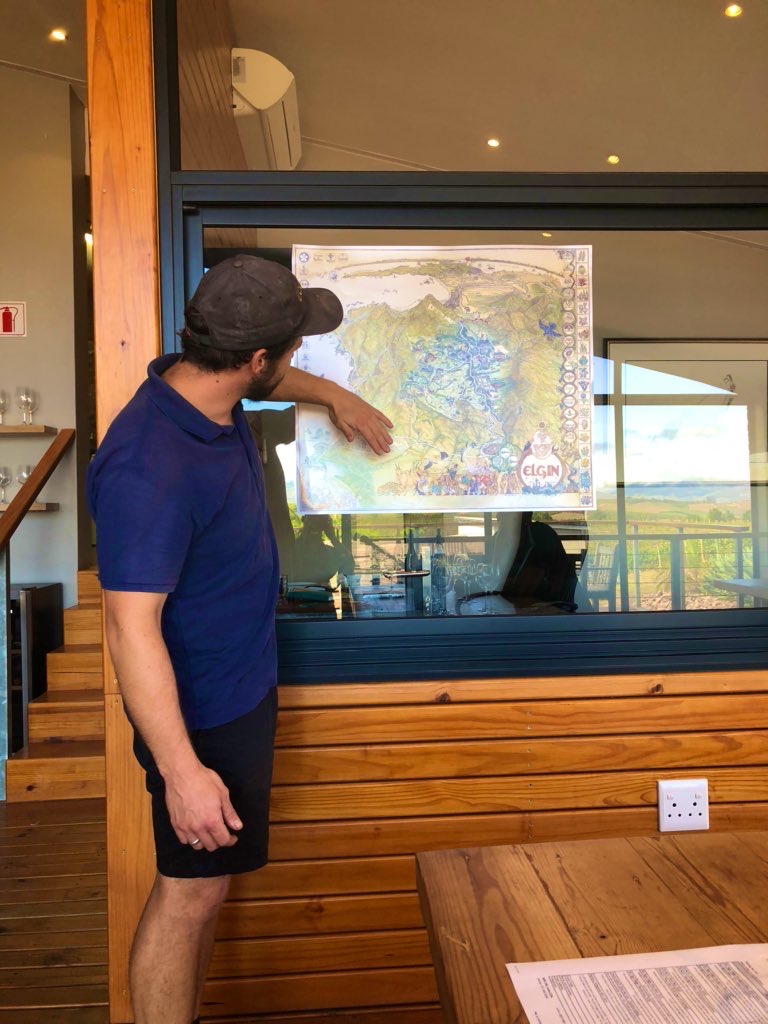
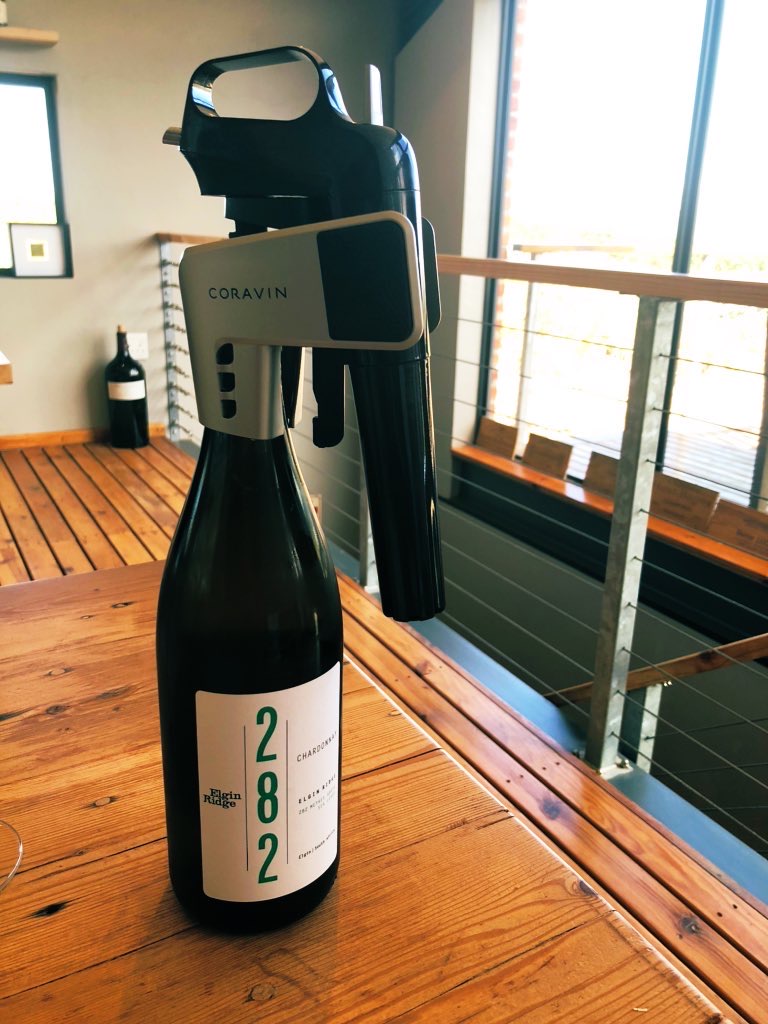
There were so many wineries on my list, and of course this was pre-lockdown, which also meant the valley was mostly empty. There next winery, I am a loyal admirer and consumer of, Elgin Ridge. We were fortunate enough to be hosted for a tasting by the Winemaker himself, Kosie van der Merwe. having been treated to a tasting of their incredibly delicious 2018 vintage 282 Chardonnay via a Coravin! (drools) Any oenophile will know when I say to own a Coravin is a dream indeed. I curiously ask in and out about the difference between organic and biodynamic viticulture, Kosie is visibly passionate about biodyamic viticulture in order to get the best out of the typicity that Elgin Ridge as a farm has to offer it is best to let the wines do the talking with minimal interference.
Today, Elgin Ridge is proudly certified biodynamic by Demeter (since 2016) and certified organic by ECOCERT (since 2012) and CERES, (since 2019). At current they are the only certified organic producer in the Elgin valley and one of just two certified biodynamic producers in the whole of South Africa! Visit purely for their range of gorgeous wines. The 282 Pinot Noir has a bright ruby colour and displays a raspberry and dark cherry fruit core with subtle hints of floral scent. On the palate, the acid adds an uplifting freshness to the cherry fruits and floral scent on the nose. Indulgent, special and one of those wines you open to celebrate something, be it, a celebration of life! The Crunch range, the everyday drinking range, but that’s certainly not to say it lacks in quality and taste. 50% whole bunch natural fermentation and aged for 7 months in concrete egg before bottling. With aromatics of intense raspberries and cranberries that carries over to the pallet with a salinity that leaves your mouth watering for more. The Crunch Sauvignon Blanc is equally delightful too!
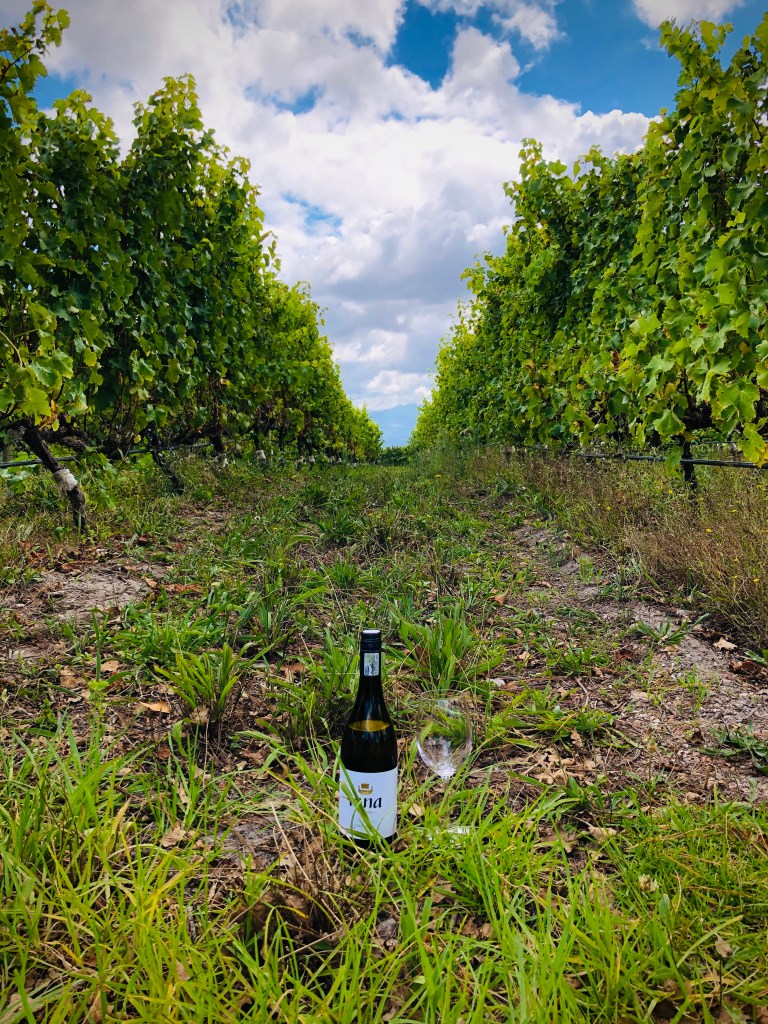
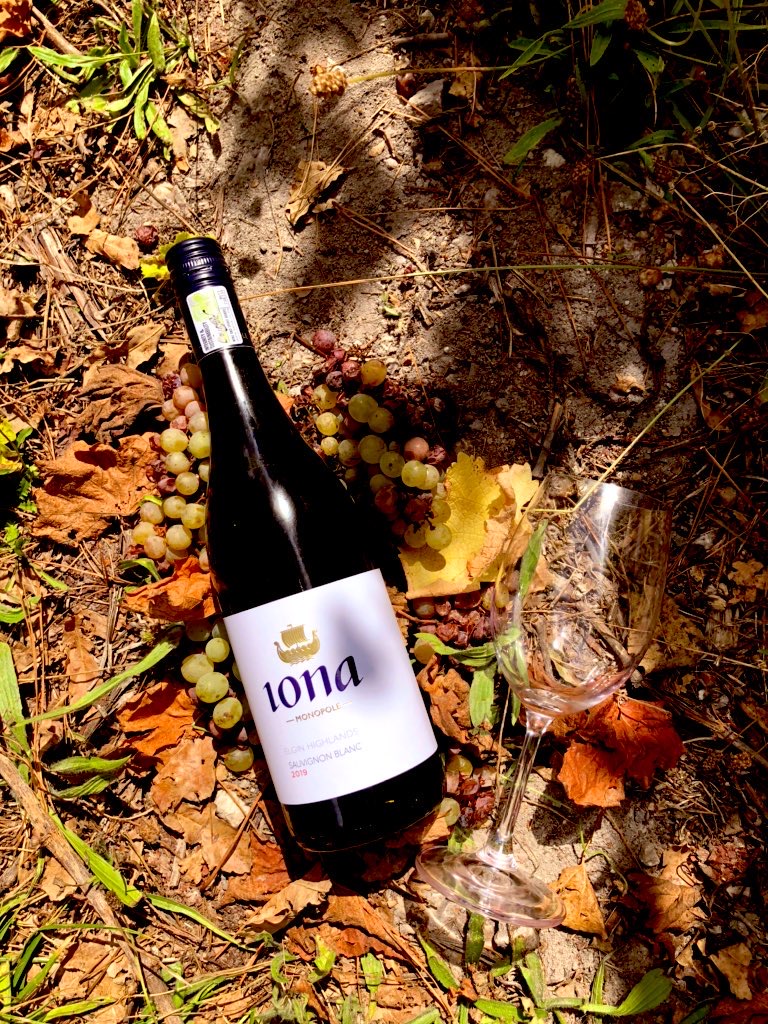
Iona wineries was a bit of a trek up a 5km gravel road up alongside the hill that separates the main town from this (at the risk of sounding clichéd) hidden gem. I remember tasting their Sauvignon Blanc at the FNB TOP 10 awards, and was completely blown away, hence my eagerness to visit the estate. Greeted by a very fervent ridgeback pup leading us straight to the small but warm tasting room with a classic car emboldening the space but definitely not taking up space as one would think. The trek to find the winery was well worth it!
In the endeavour to produce a fine glass of wine from this stunning farm, Iona focuses on four quality wines; Sauvignon Blanc, Chardonnay, Pinot Noir and the One Man Band, an estate blend of Shiraz, Cabernet Sauvignon, Petit Verdot, Mourvedré and Viognier.The philosophy at Iona is to make wine that expresses the soils and climate as closely as possible, making use of sustainable farming methods and to maximise the use of natural products in farming and winemaking. Everything is done in-house, from the vineyard to the wine distribution.
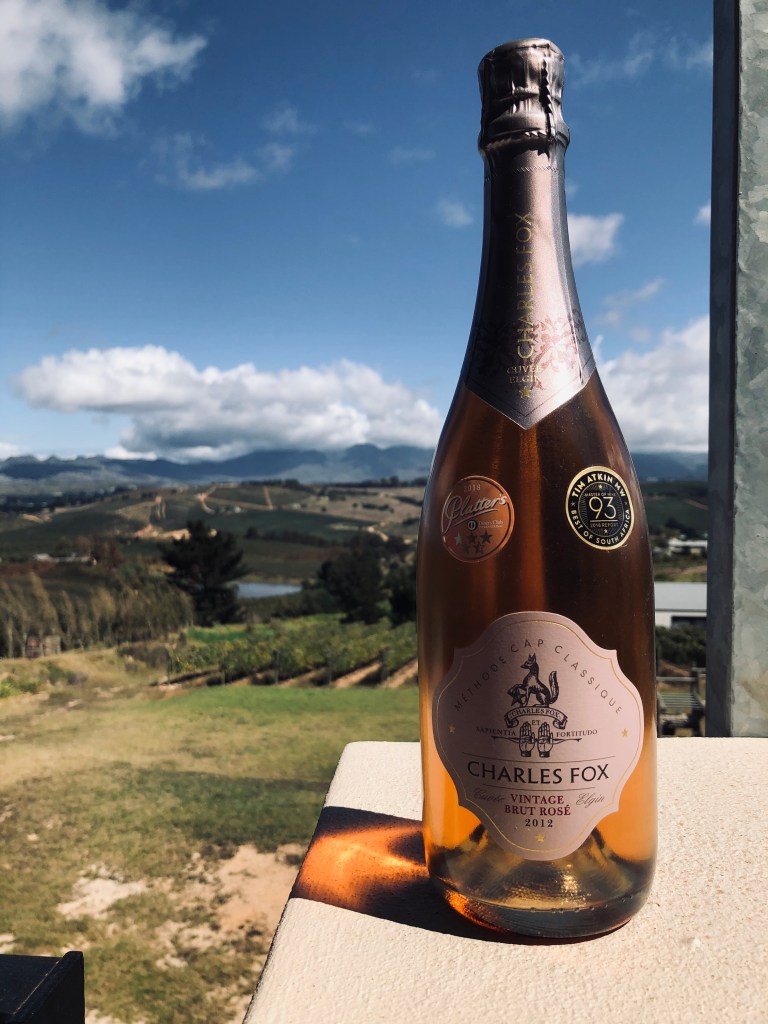
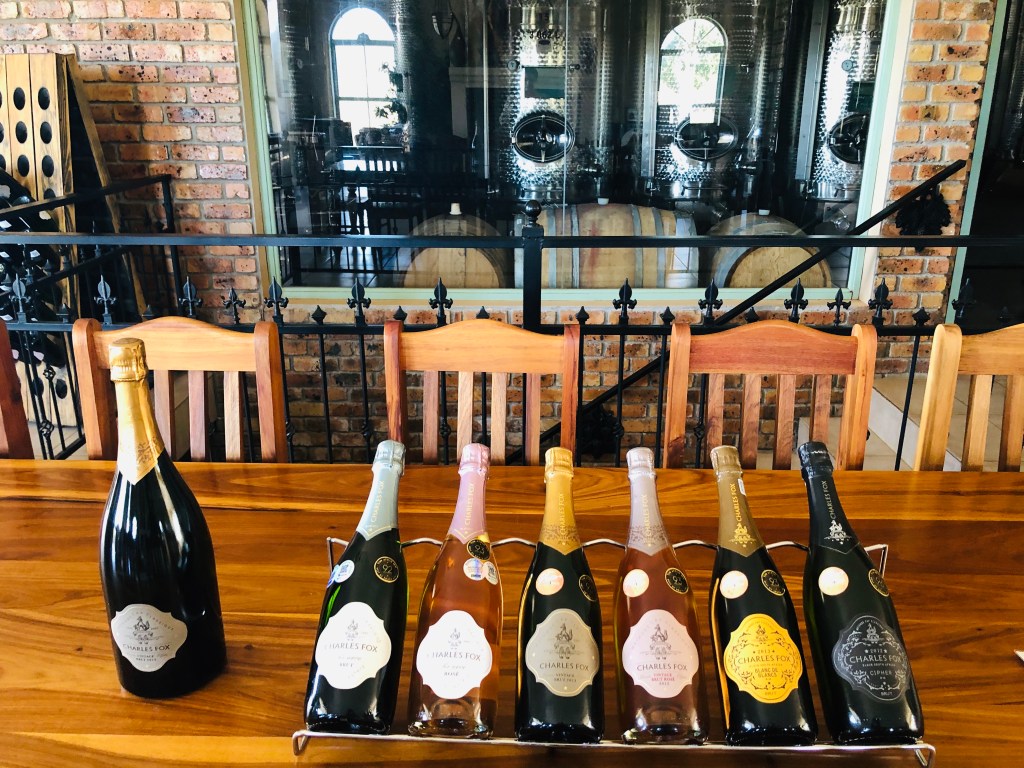
Give me a glass of MCC any day and I will be more than content! I’ve heard very good things about this Elgin wine estate and of course needed to see what the fuss was all about. The tasting room dons many a memorabilia from days past from the owners adventures to photos paying homage to working with renowned French winemakers. Originally an apple and pear farm, The Furneaux Farm was purchased by Charles and Zelda Fox in 2005 after an intensive search for terroir that would be perfect conditions for growing chardonnay and pinot noir grapes and producing MCC. I do love a good Brut, the Charles Fox Reserve Brut Rosé was a token of which I decided to bring back home with me.
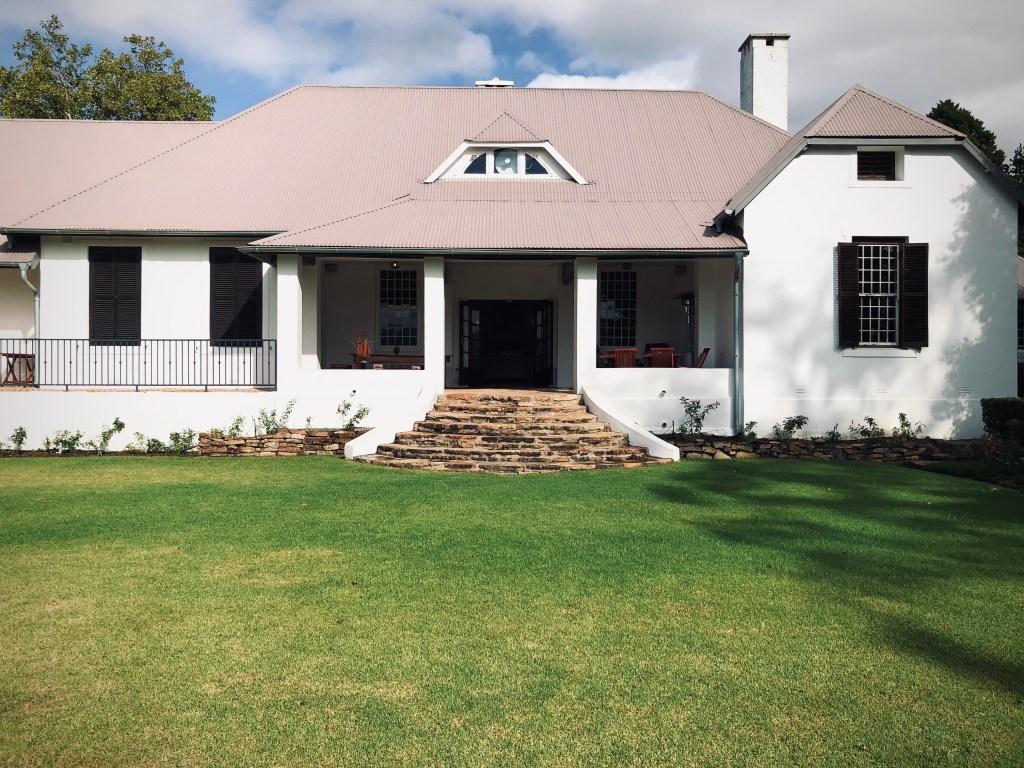
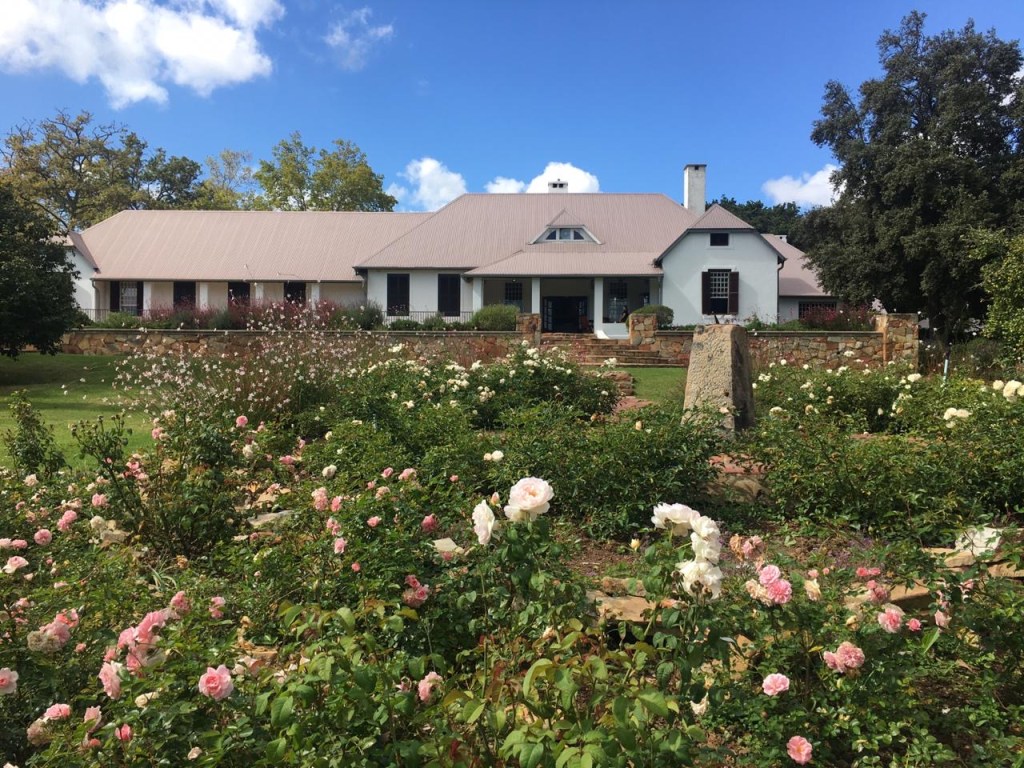
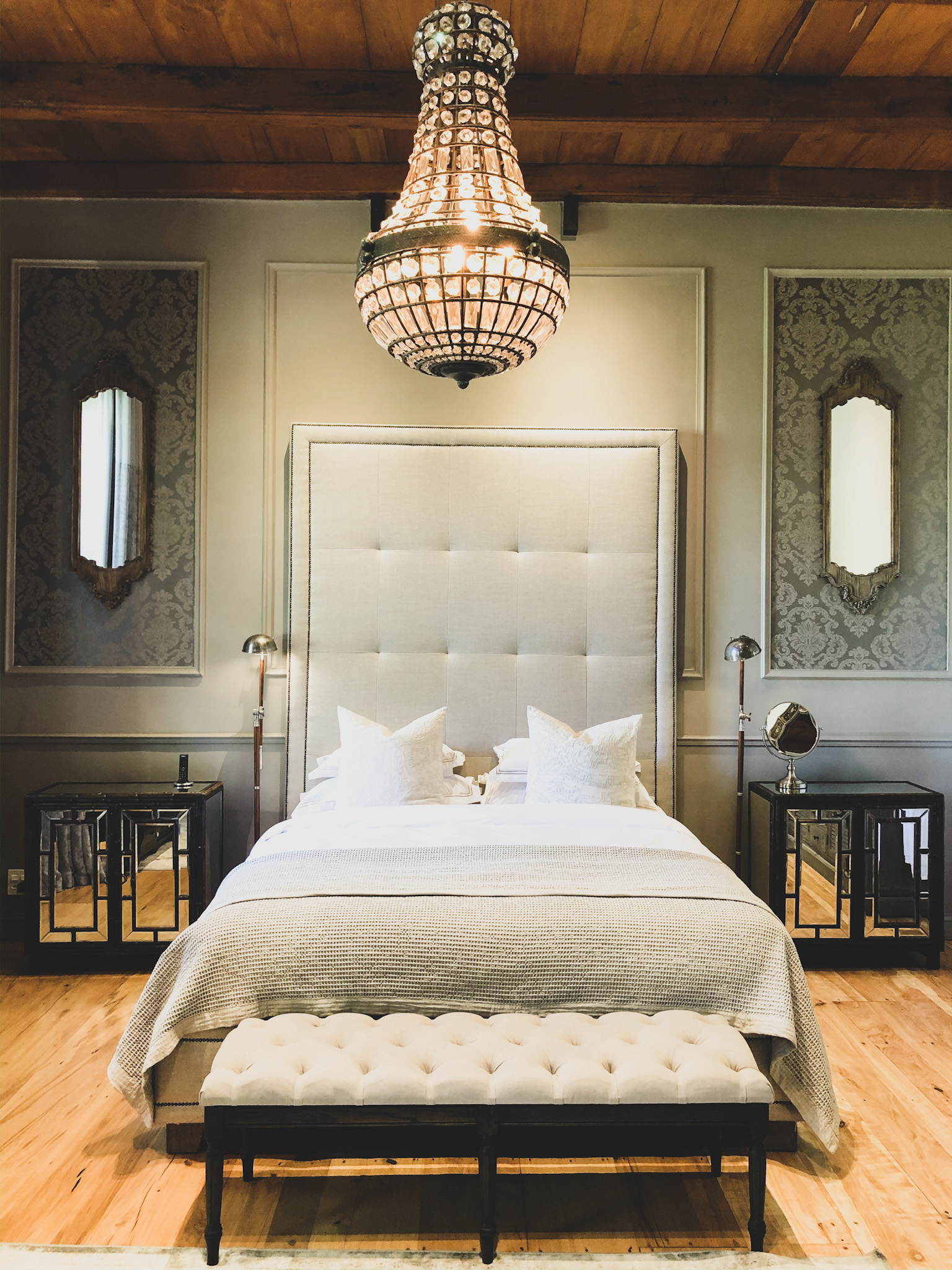
The weekend we spent wondering and tasting our way through the valley were spent mostly at Elgin Vintners, to which they have a guesthouse with four luxurious suites. We had the entire guest house to ourselves, but stayed in the Browne Suite. The Manor house was built in 1927 to a Sir Herbert Baker design, the Manor House has been restored to its Victorian glory, with all the modern comforts. Accommodating up to 10 guests in luxury suites, the Manor House is child-friendly and gives guests the run of the property, including the swimming pool, tennis court, garden and braai area.
Guests staying at the Elgin Vintners Manor House are offered the following complimentary services:
Breakfast – a full Continental or hot breakfast on order, complete with coffee & tea
Complimentary use of the estate’s swimming pool and tennis court
A complimentary wine tasting of 4 Elgin Vintners wines at the Tasting Room
Bottled water
Wireless internet
Bathroom and swimming towels
There were a few wineries like Almenkerk, Oak Valley and Paul Cluver that were unfortunately closed to visitors at that point before lockdown. But with level 3 in effect and with the hope of the virus coming to an end in the near future, I urge you to please plan your visits to as many of these wineries and perhaps if you can now, please order your favourite wines online from any of these magnificent wineries, in the Elgin region or any other local wine region for that matter.
Start planning your wine adventures, it’s never too late.
**Disclaimer: I was hosted at Blaauwklippen Wine Estate‘s expense in exchange for this review on the experience. My view is unbiased and reflects the my opinion on my stay on the farm and not that of the winery**
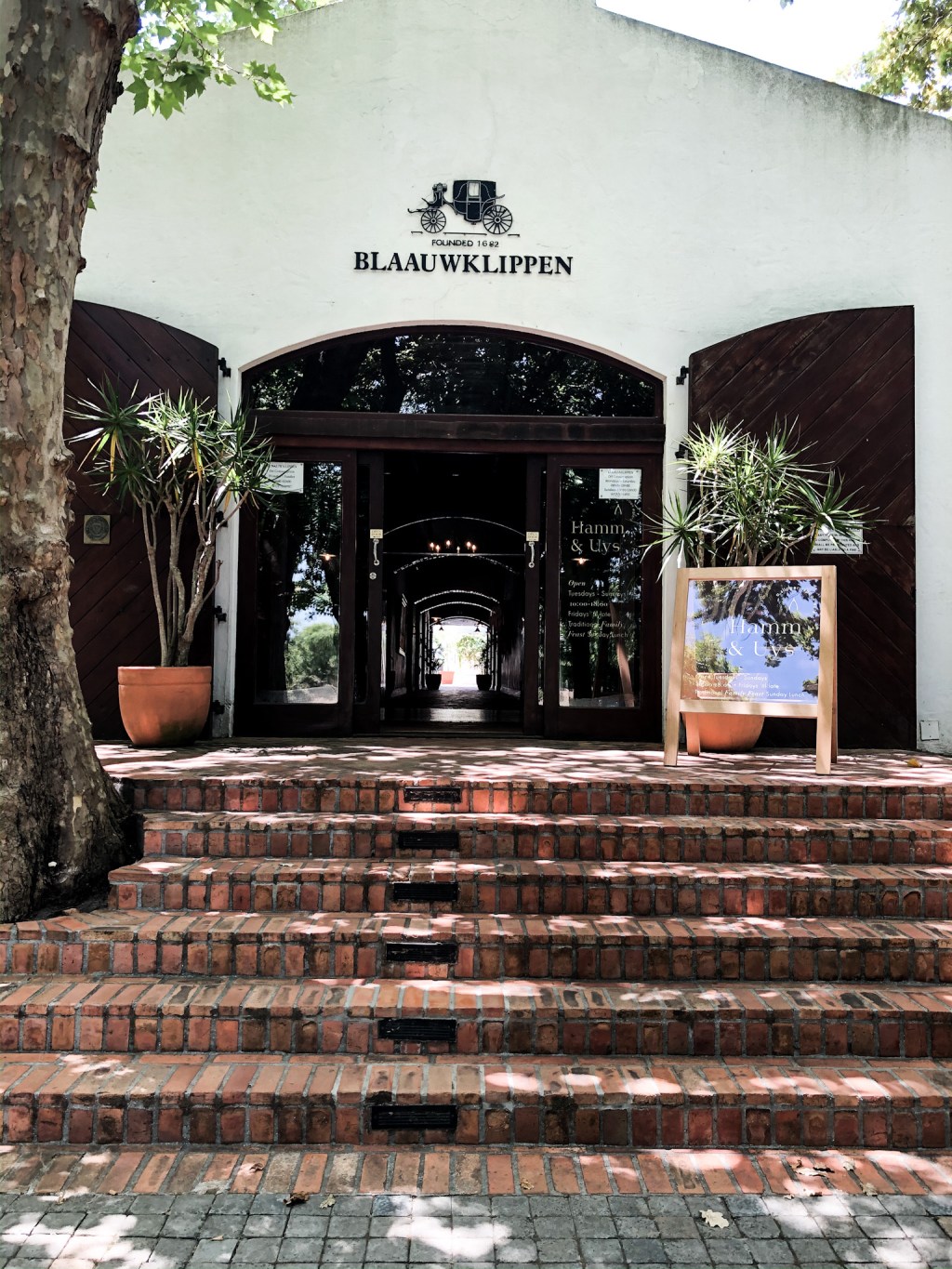
Situated in the bustling town of Stellenbosch lies the lush and beautiful winery of Blaauwklippen. An estate that is shaped by 300 years of commitment to quality winemaking and passion. The farm was founded in 1682 by Gerrit Jansz Visser, but it wasn’t until 1688 that the first vineyards were planted in the fertile soil of the estate. Fast forward to 1899, when Cecil John Rhodes became the owner of Blaauwklippen, but only for one day! In 1971 the renowned Stellenbosch Wine Route was founded, with Blaauwklippen becoming one of the first members. The Route is still going strong today as one of the biggest tourist attractions in the Western Cape.
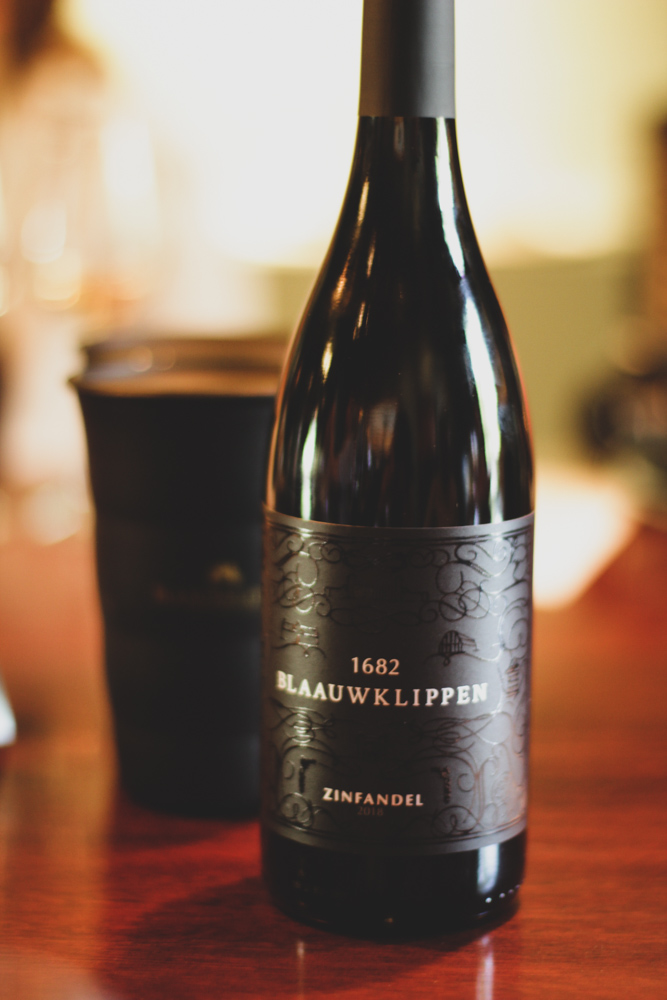
By 1977 the very first Zinfandel grapes were planted on Blaauwklippen, with the first wines produced three years later. By 1977 the very first Zinfandel grapes were planted on Blaauwklippen, with the first wines produced three years later. Blaauwklippen became the first winery outside of the USA to join ZAP (Zinfandel Advocates and Producers) in 2008. And in 2015 Blaauwklippen Vineyards celebrated 333 years of establishment.
The Blaauwklippen Blending Competition was founded in 1984 and over 30 consecutive years later remains the only wine competition in South Africa aimed at consumers and not producers. In the tasting room next to the deli you will find blending kits for purchase. The perfect gift for the wine geek in your life (or yourself).
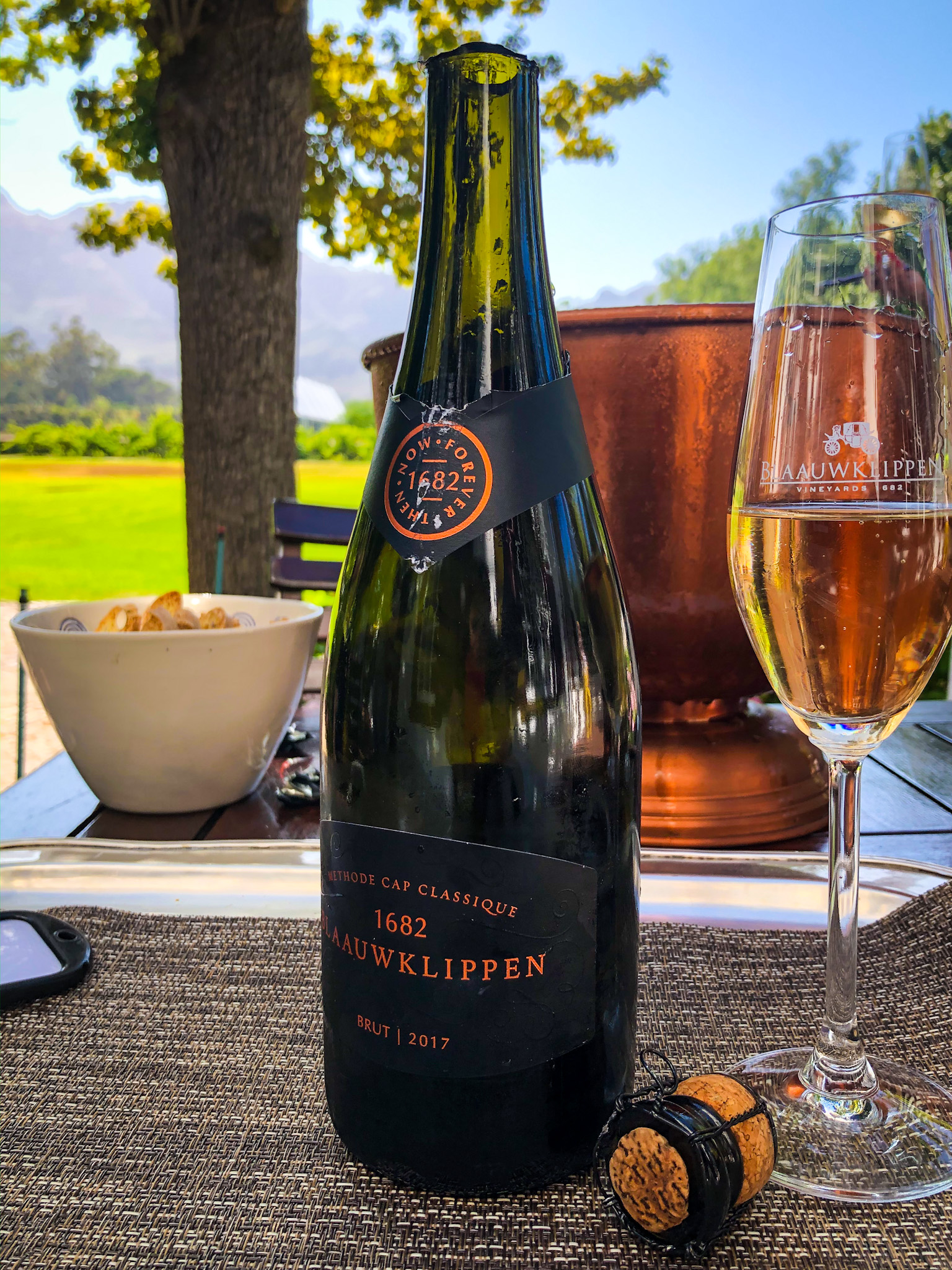
My stay on the farm kicked off with a wine tasting consisting of their renowned Zinfandel, White Zinfandel, Shiraz, Cabernet Sauvignon, Malbec, and their delicious MCC crafted from their maiden varietal, the Zinfandel of course. My favourite out of the tasting selection would have to be the phenomenal Malbec and the delectable MCC. The Cab. Sauv. is in a league of its own too! With classic notes of eucalyptus and bell pepper on the palate. A typical award-winning Stellenbosch Cabernet Sauvignon.
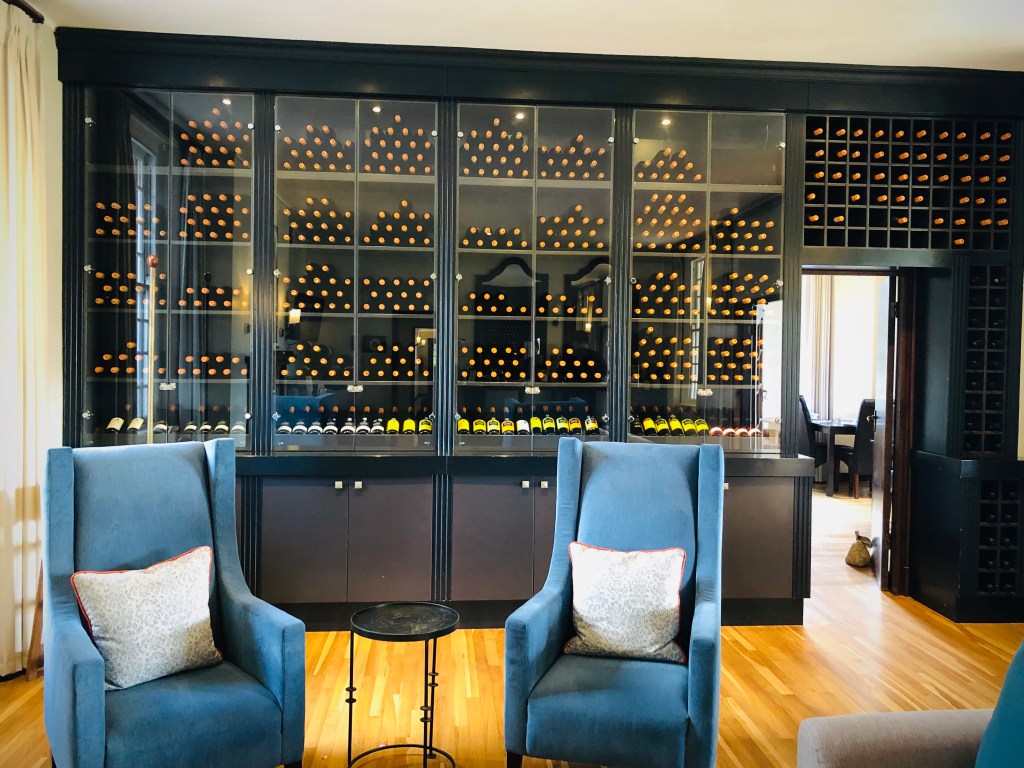
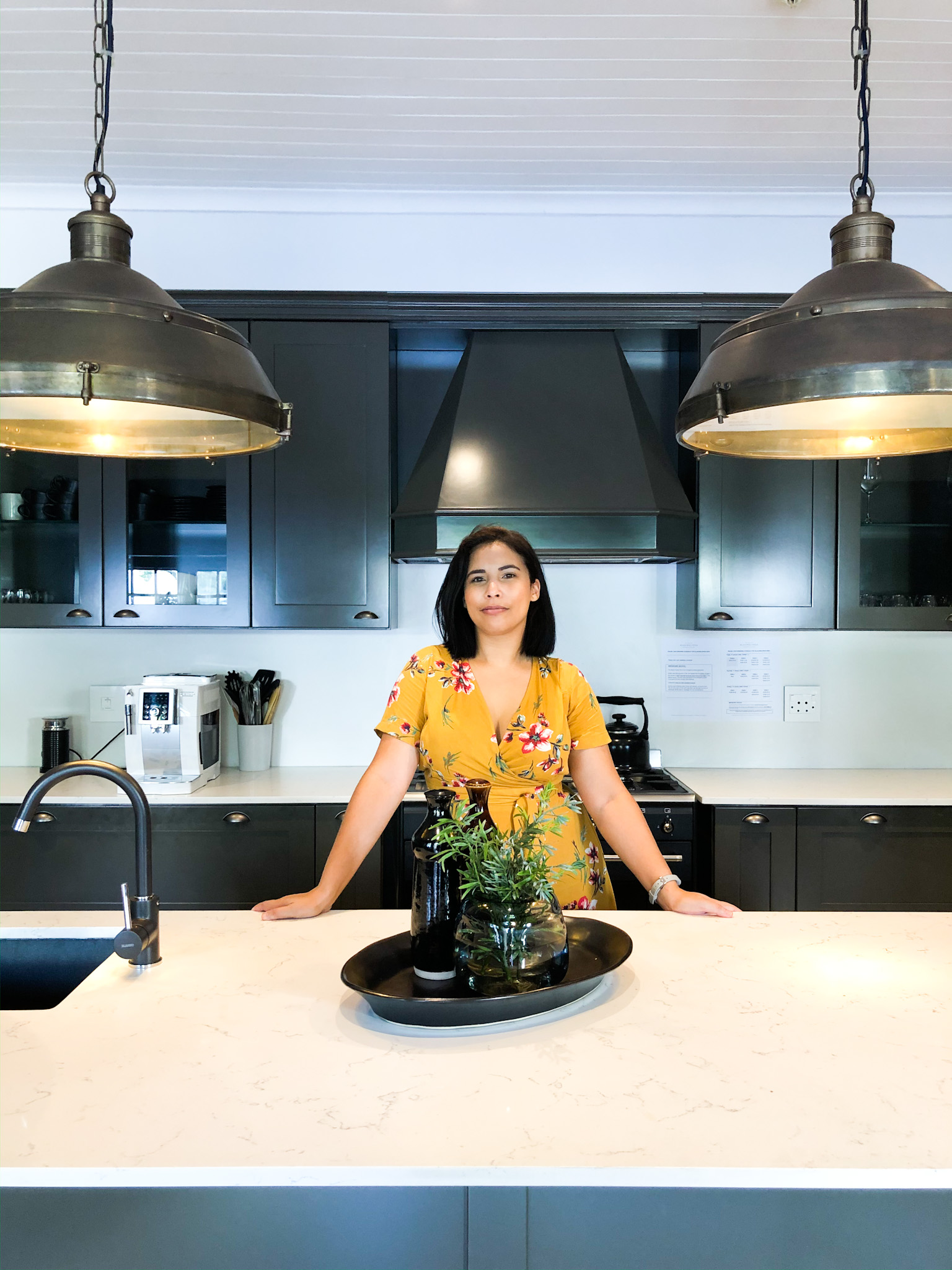
What followed was a tour of the famed manor house to refresh the senses and the legs. Each and every room had a luxurious airiness with an opulent aesthetic, I couldn’t help but wonder what it must be like to stay in the some R40 000 a night large manor house. My favourite room? You guessed it, the kitchen! A kitchen made of dreams, envisioning many days of meal preparation spent feeling like domestic goddess Nigella Lawson.
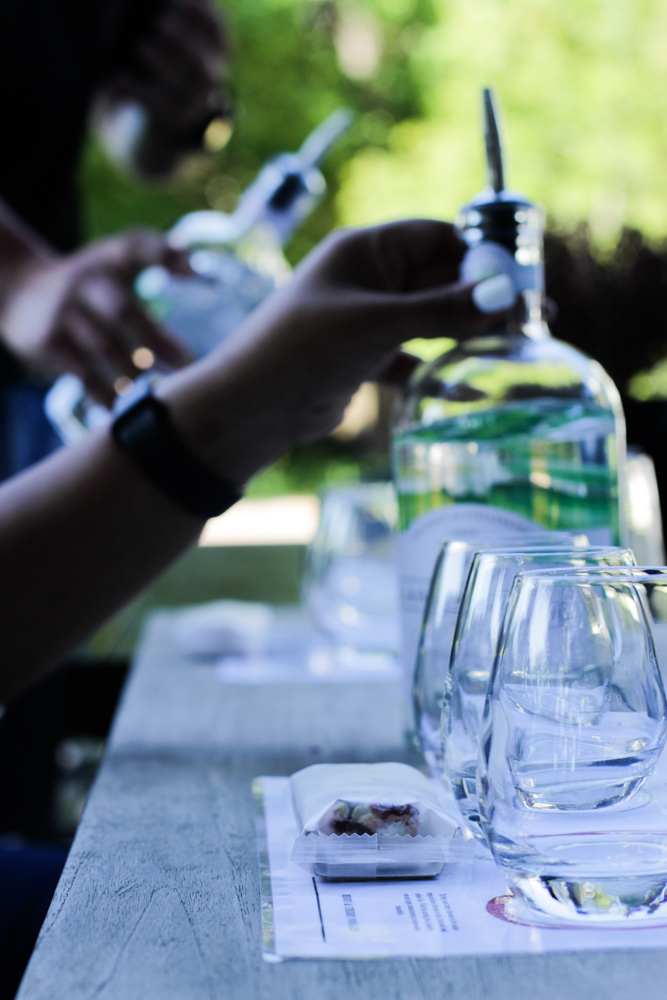
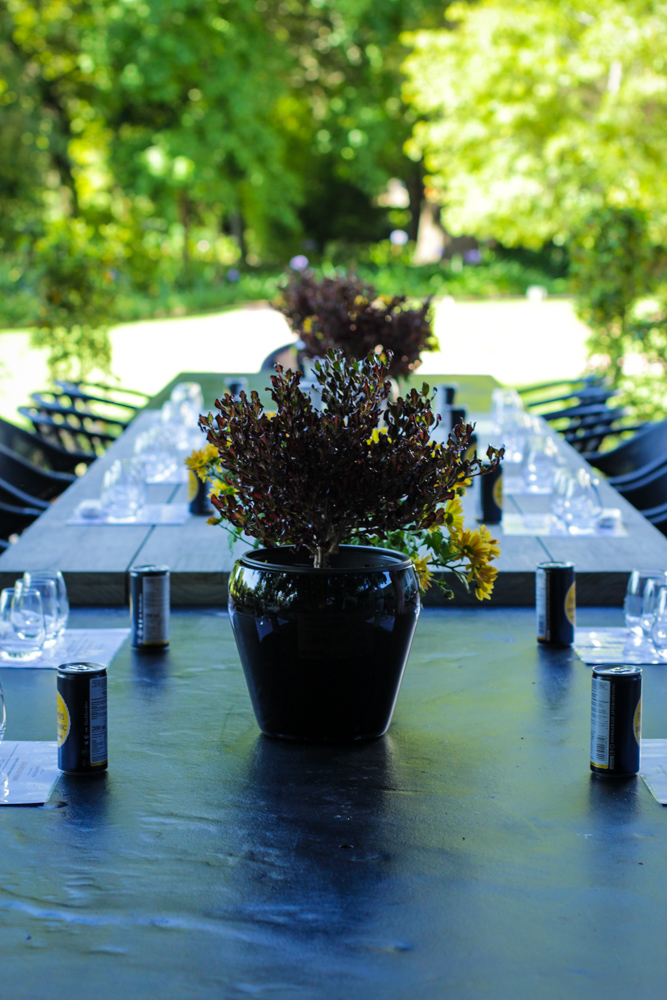
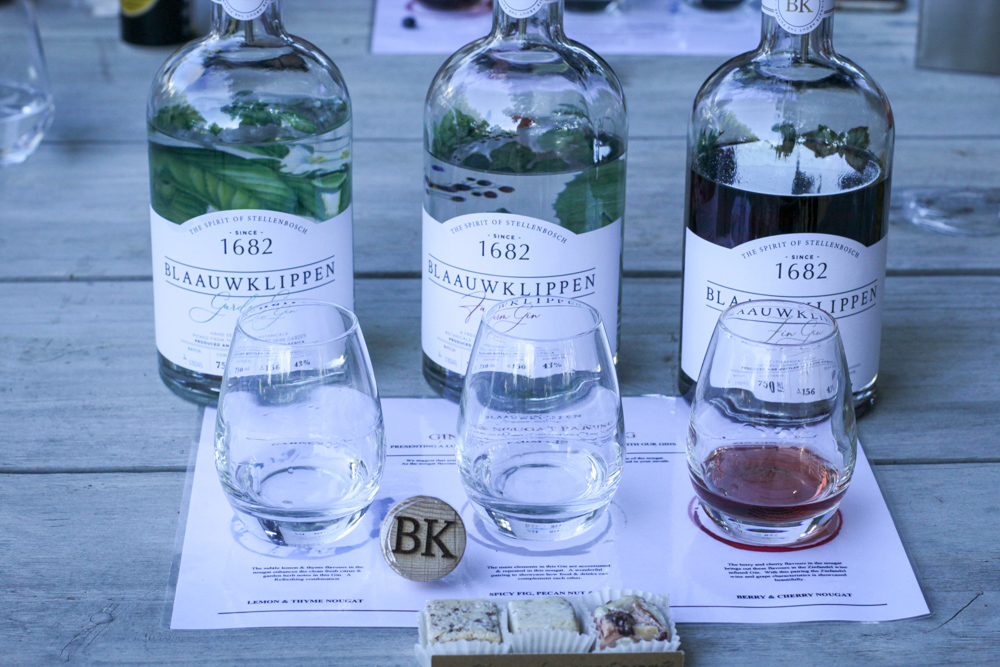
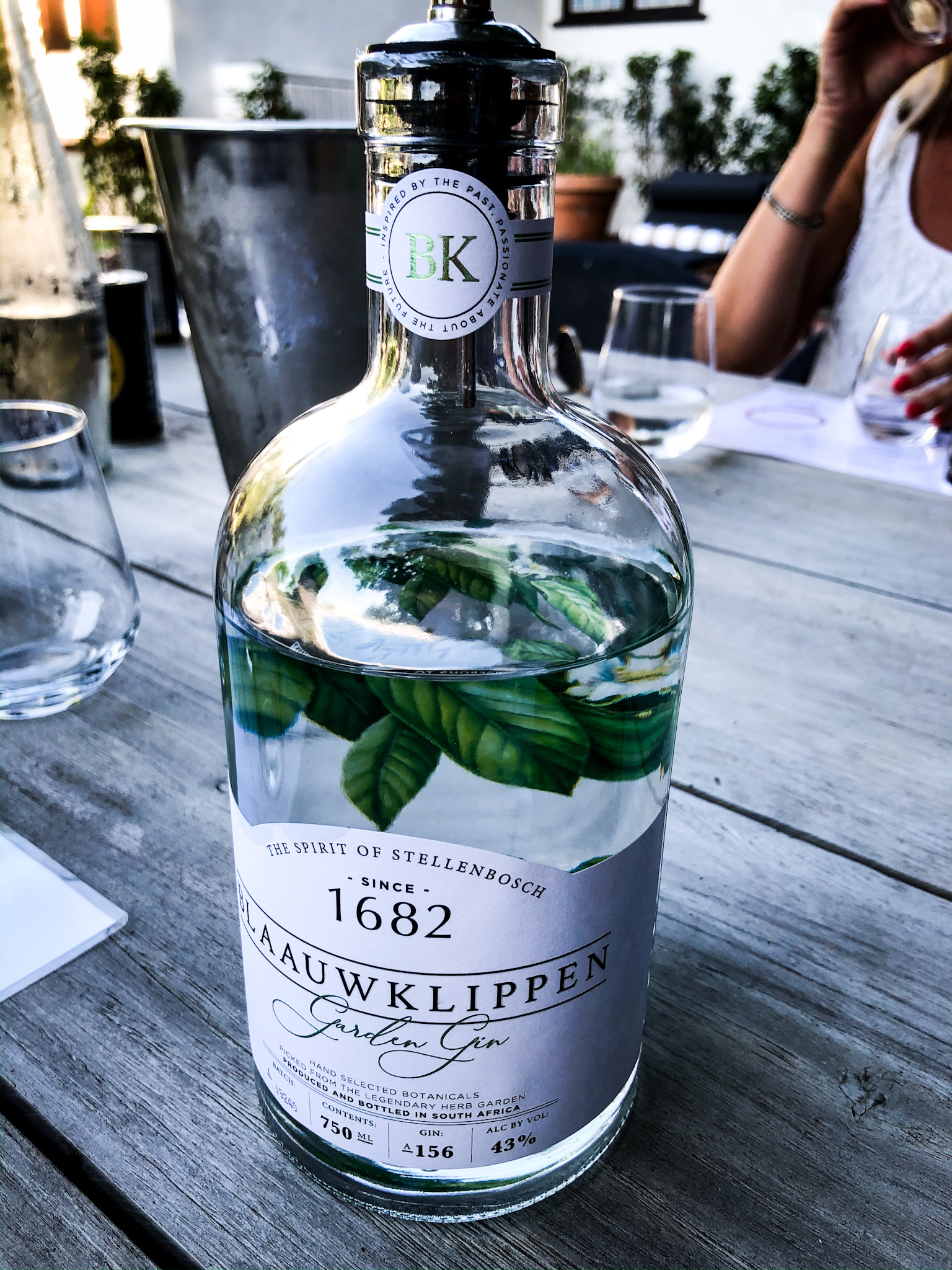
Blaauwklippen takes pride having something available for everyone to indulge in. Not much of a wine consumer? Try their craft gin range and do a gin and nougat pairing. The tasting consists of three different types of gin, paired with three different flavours of locally crafted nougat to perfectly match the flavours that each gin holds. The pairing is R135 per person. I particularly loved the Zin Gin. The Zinfandel juice infused gin is rested for up to three months before diluted with Reverse osmosis water is added to reduce to bottling strength. Vapour infusion is seen as a more superior method than steep and boil since botanicals do not over-boil. The vapour slowly extracts the delicate flavour or essential oils of these botanicals to form the Gin. On the palate, you will find sweet red berries with cranberry juice, dry piny Juniper and tea-like tannins which reminds me of Christmastime and mince pies. The Gardin Gin is a typical dry gin with hints of orange zest and floral accents. I can definitely see myself sipping on this throughout summer. The Farm Gin, the last in the juniper berry laced trio, shows bursts of wild fig, pink peppercorn with slightly sweet and silky smooth herbal and floral notes. Really balanced and pairs well with the pecan nut nougat. I absolutely adore the fresh floral designs on each bottle.
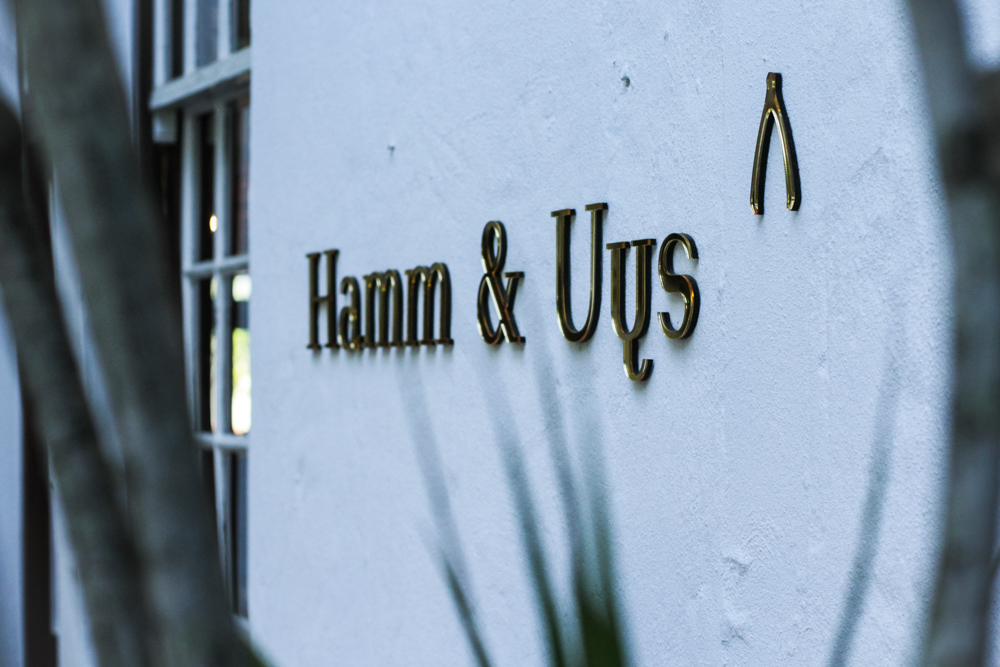
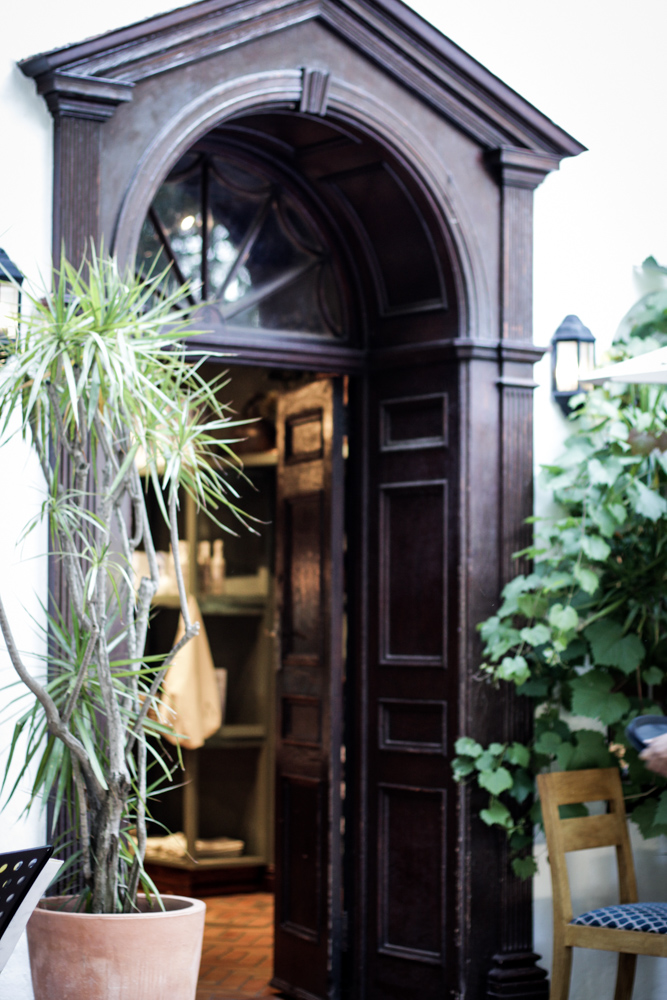
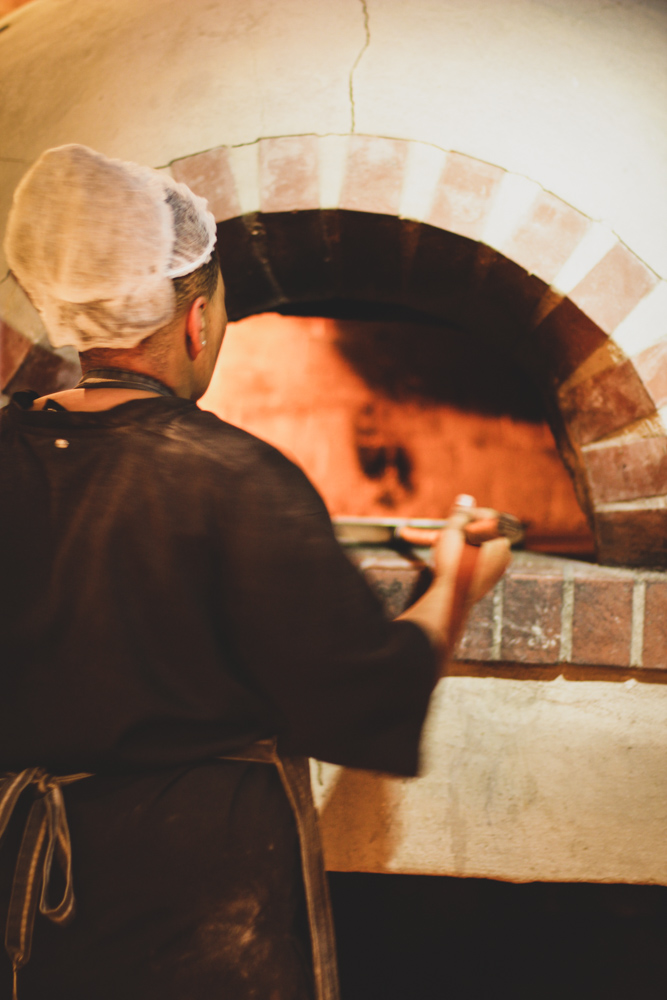
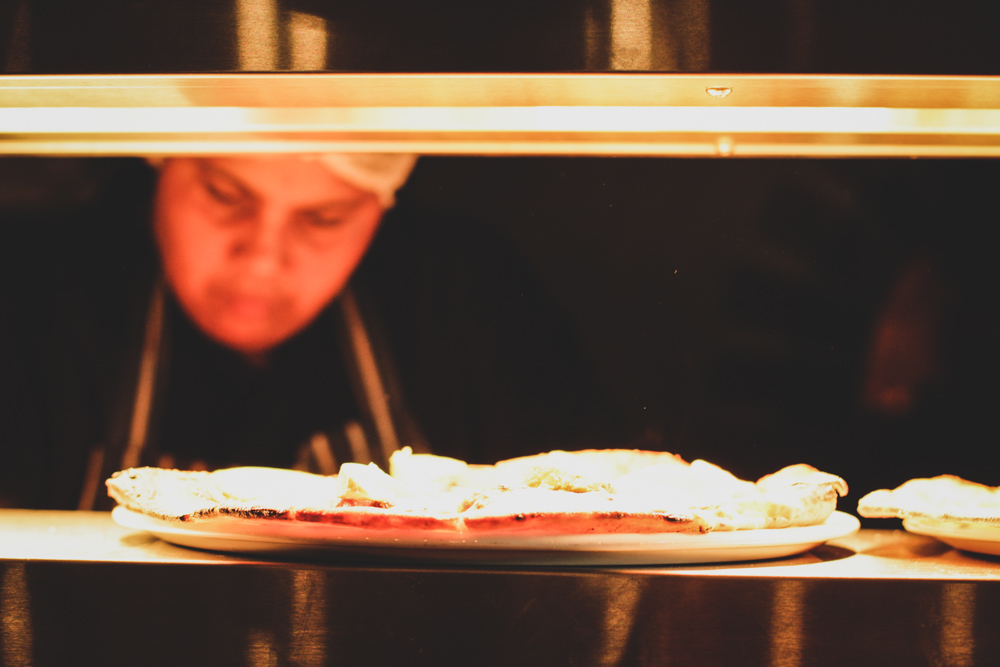
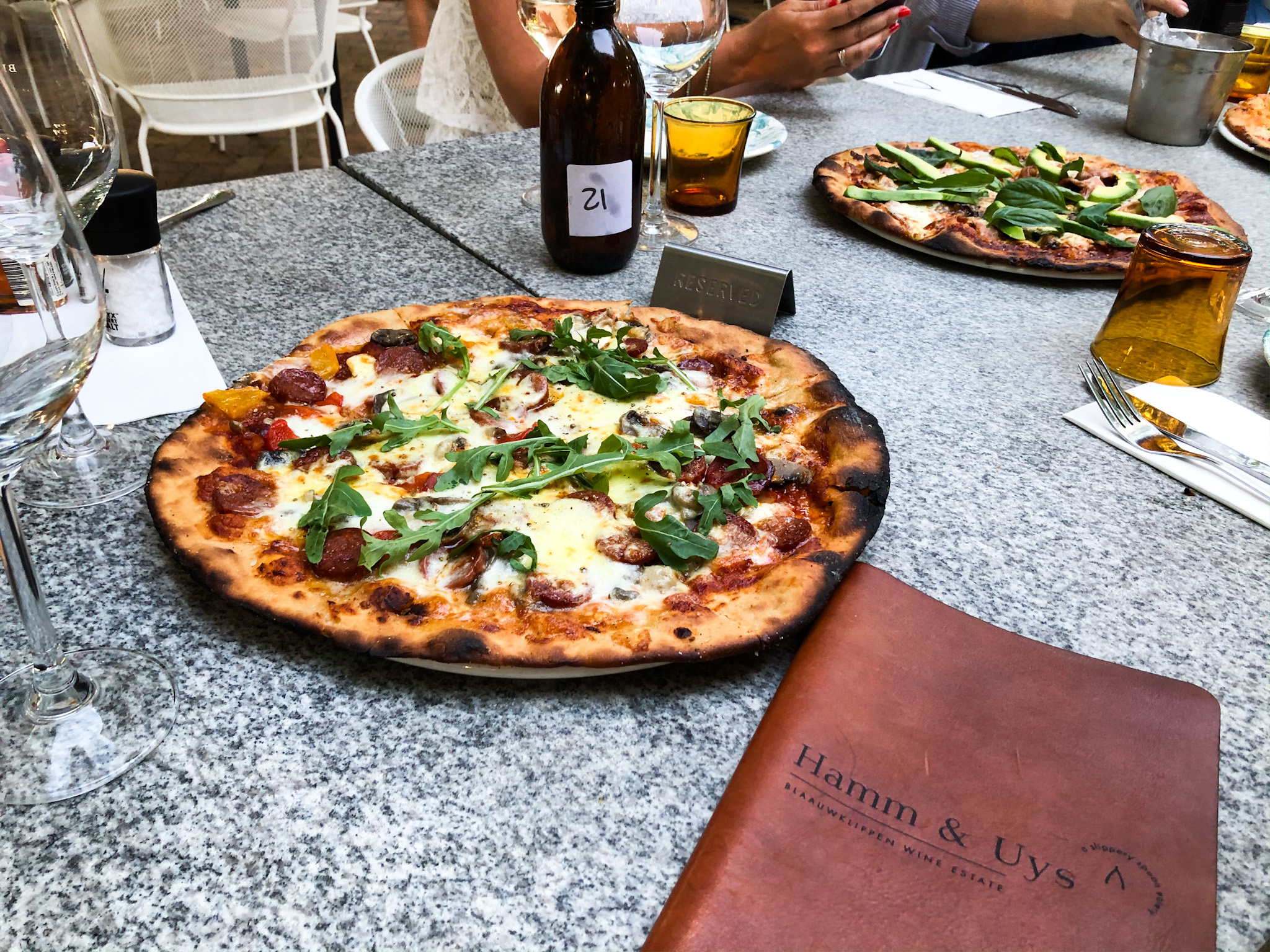
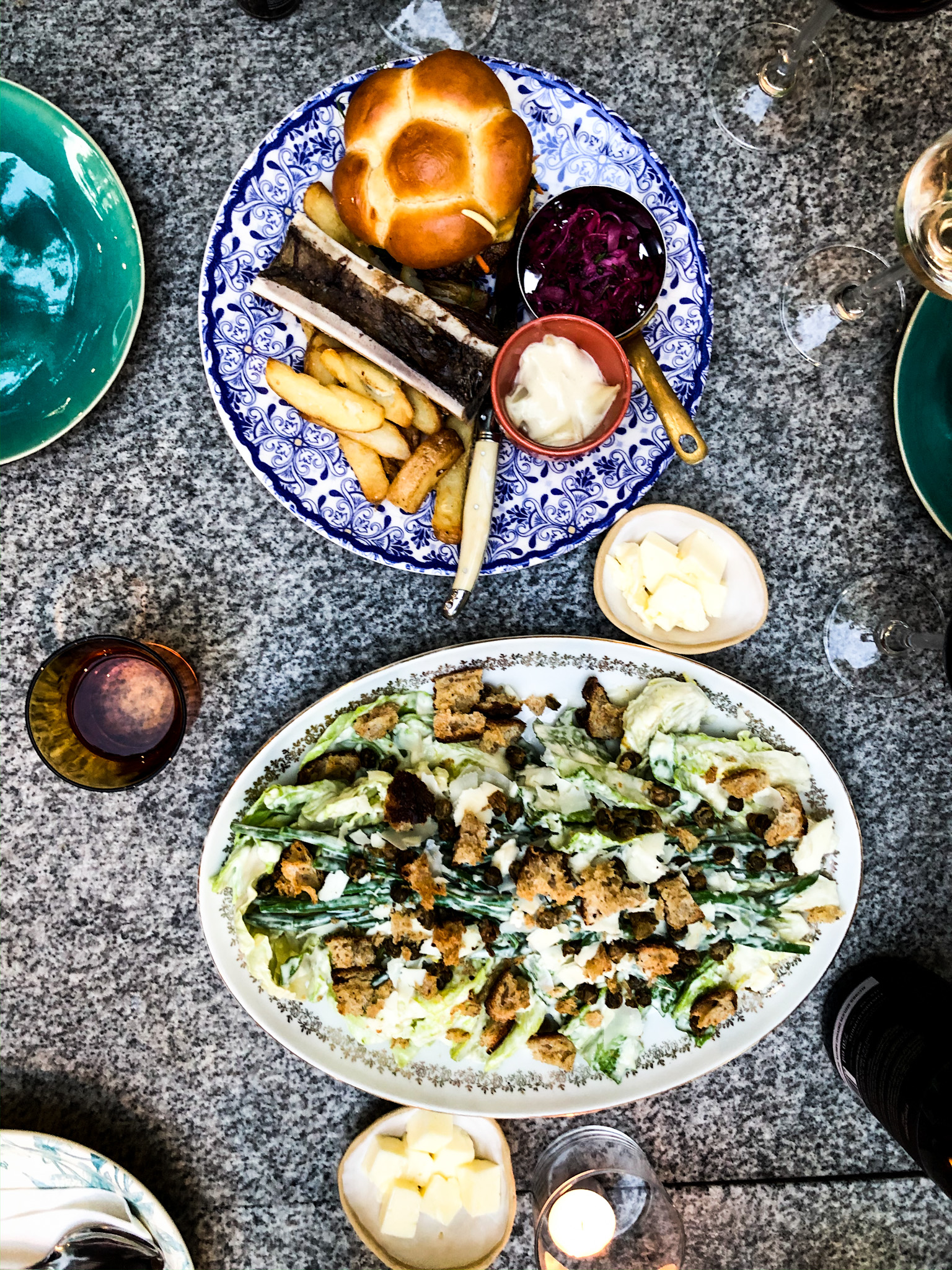
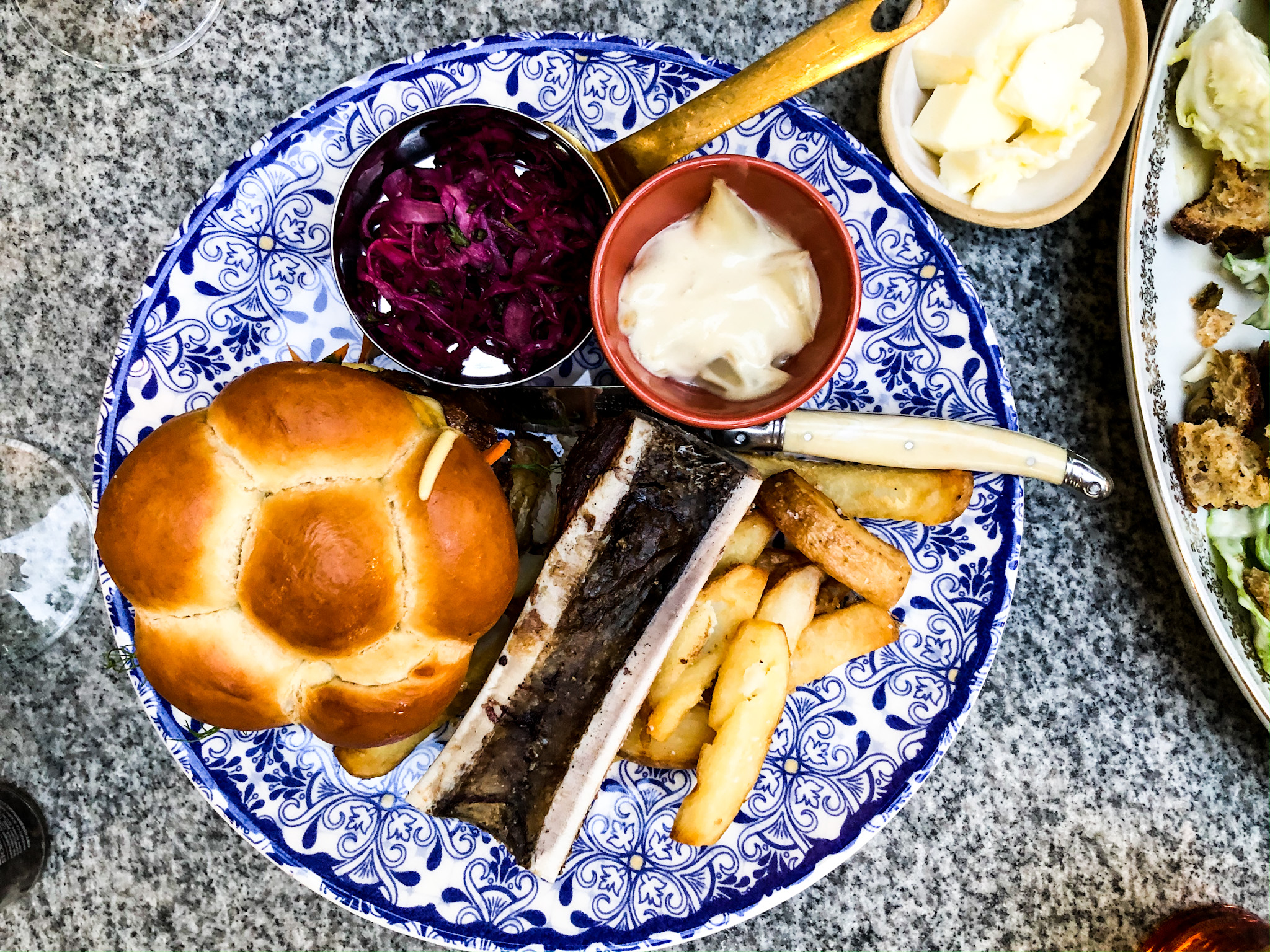
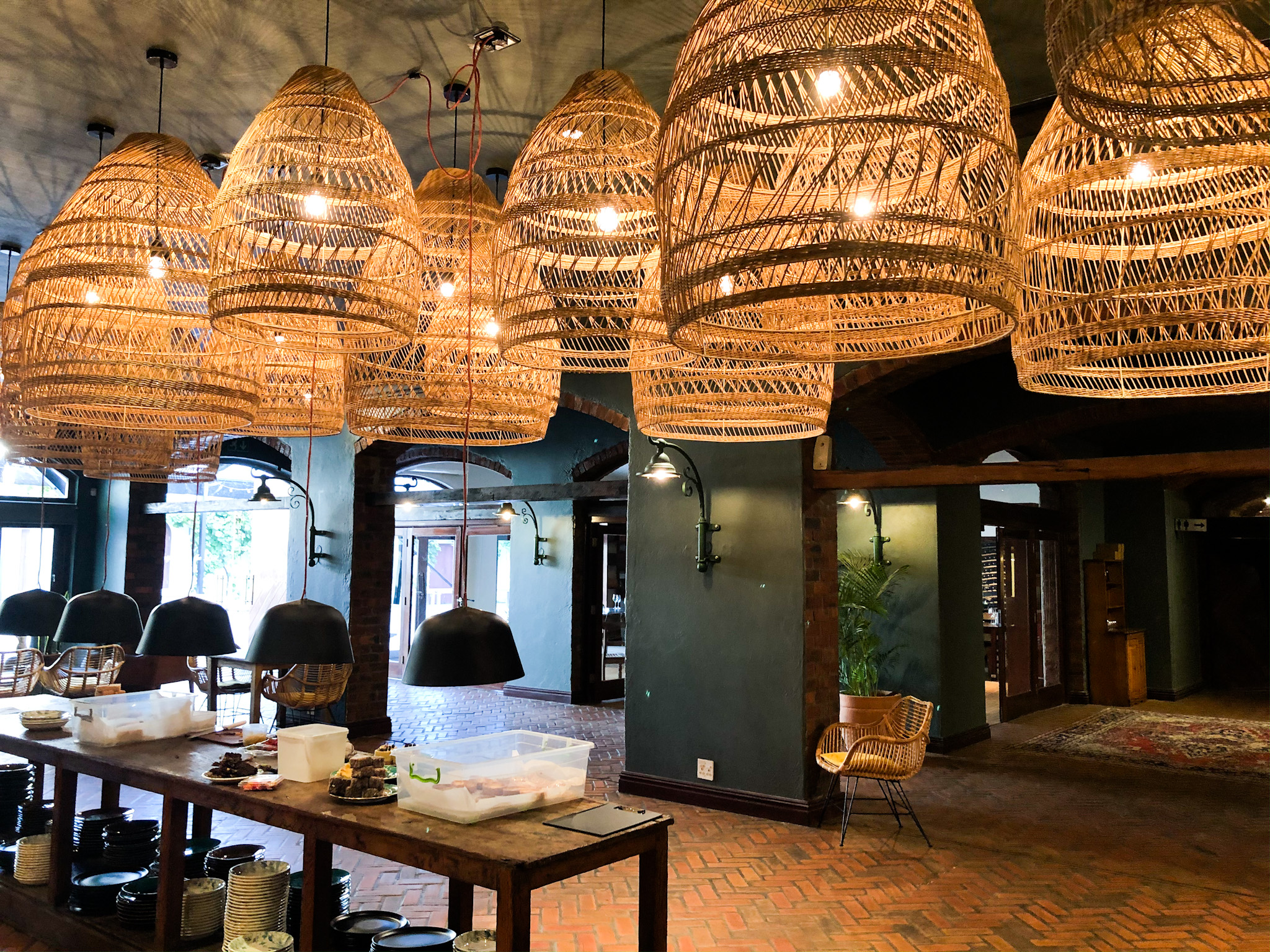
Friday nights at Hamm & Uys are quite the occasion, with pizza being the star of the show. Every Friday evening the farm-based restaurant hosts a pizza evening with live music as entertainment for the hungry hoards. Pizza is made fresh in-house in their wood-fired oven with delicious seasonal toppings. Why Hamm & Uys? I LOVE the aesthetic and of course, the delicious offerings they have on their menu, such as the generous serving of mussels served in a beautiful dutch oven with roosterkoek to mop up the white zinfandel laced juices! The beef burger with crispy wedges and roasted marrow bone is the ultimate! I enjoyed my pizza and burger with the winery’s unforgettably delicious Malbec.
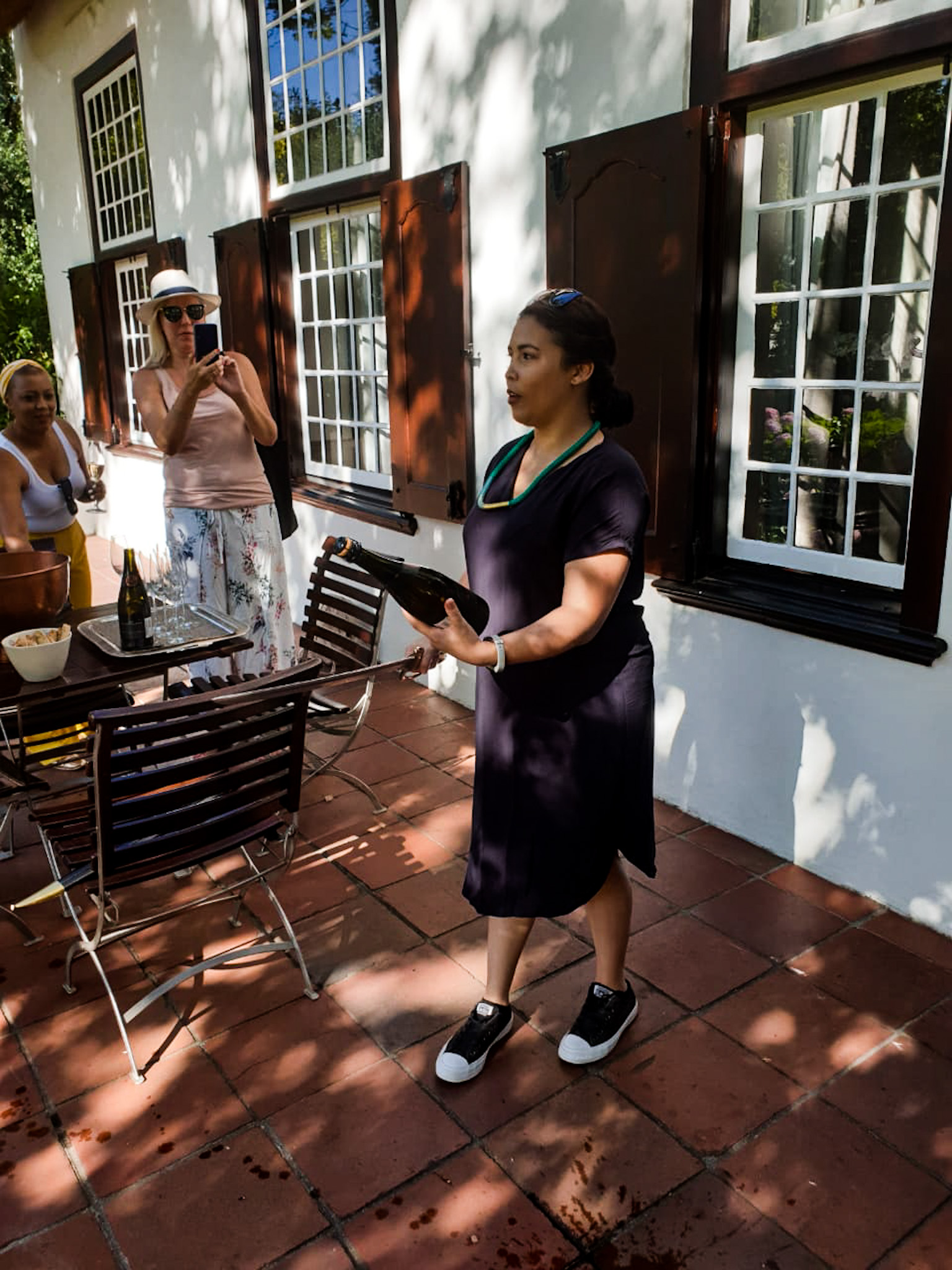
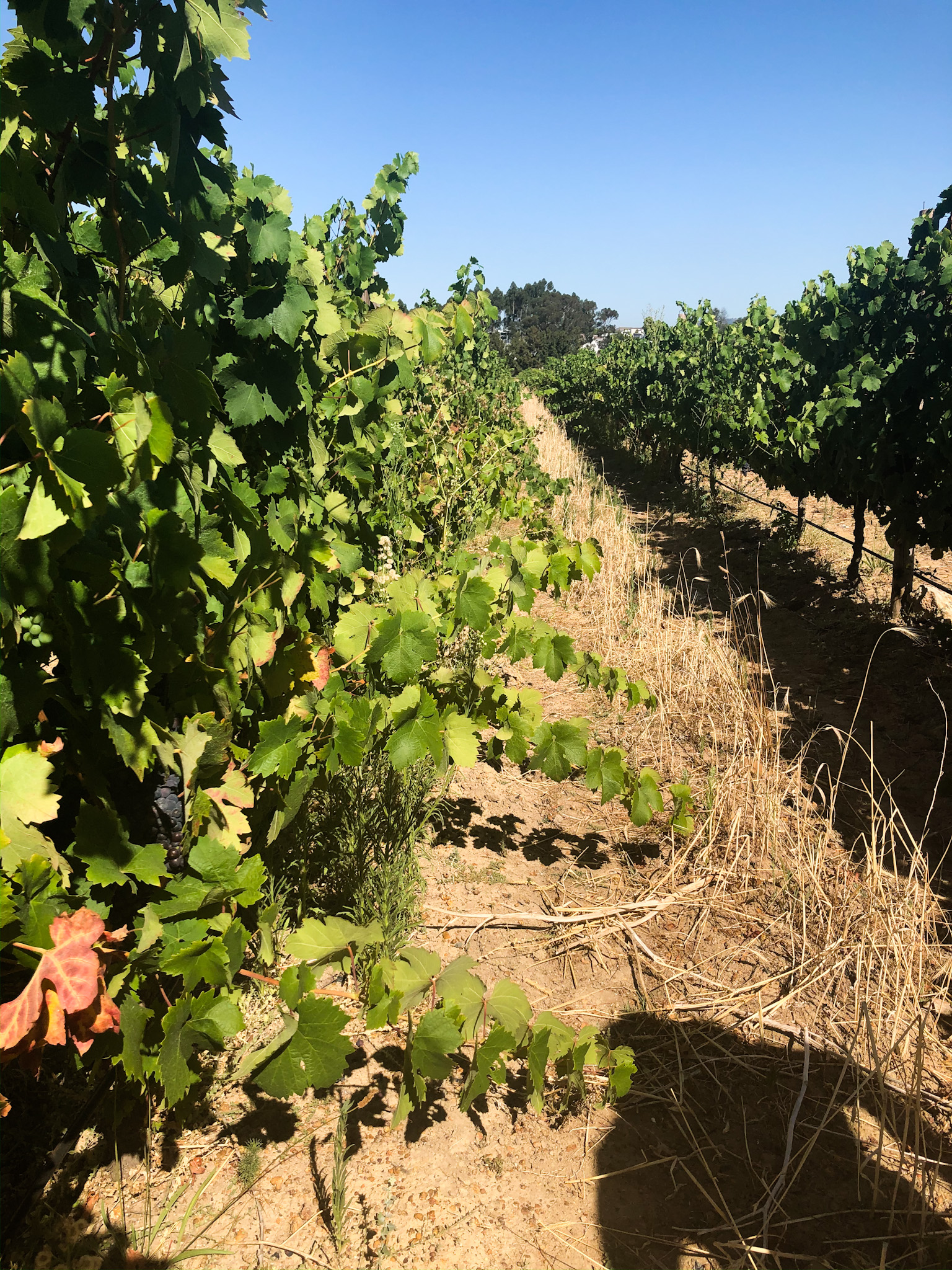
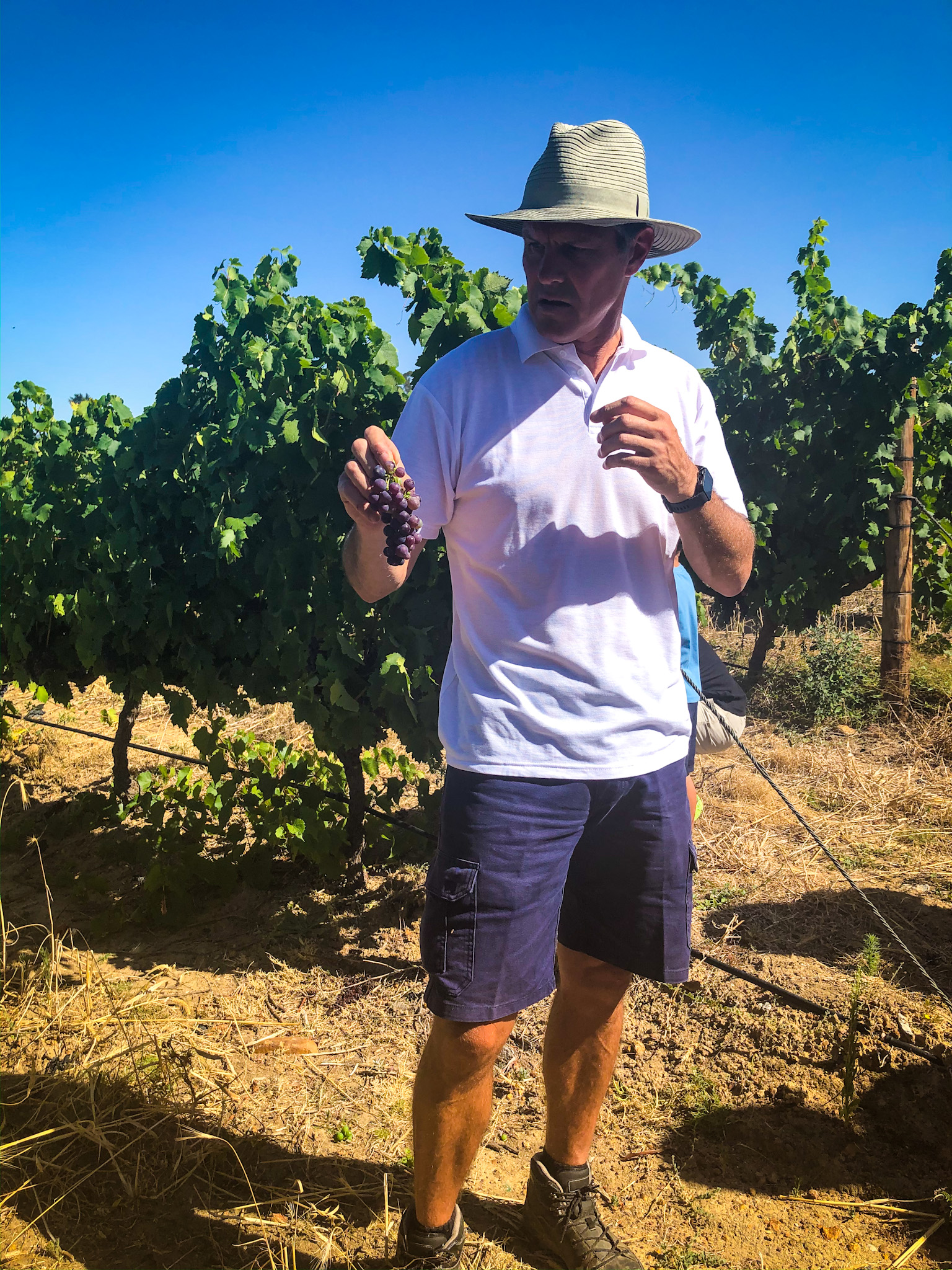
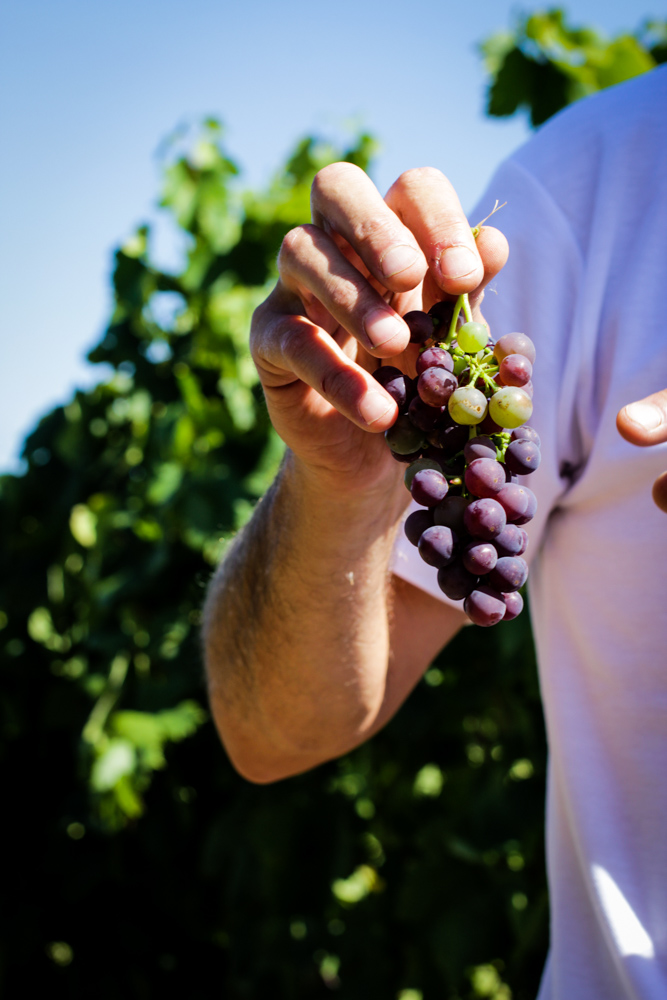
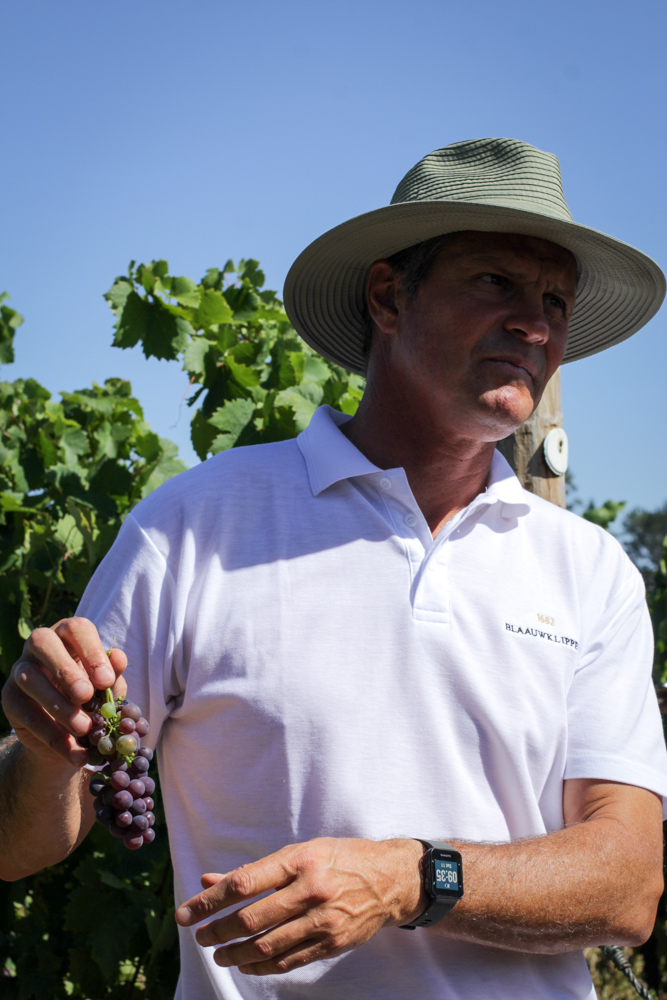
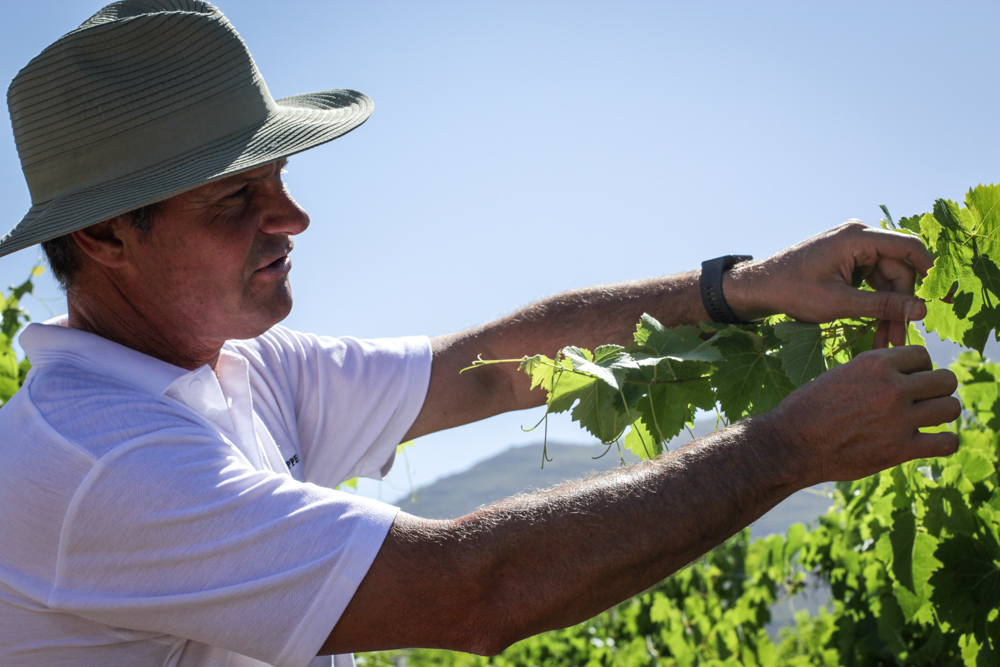
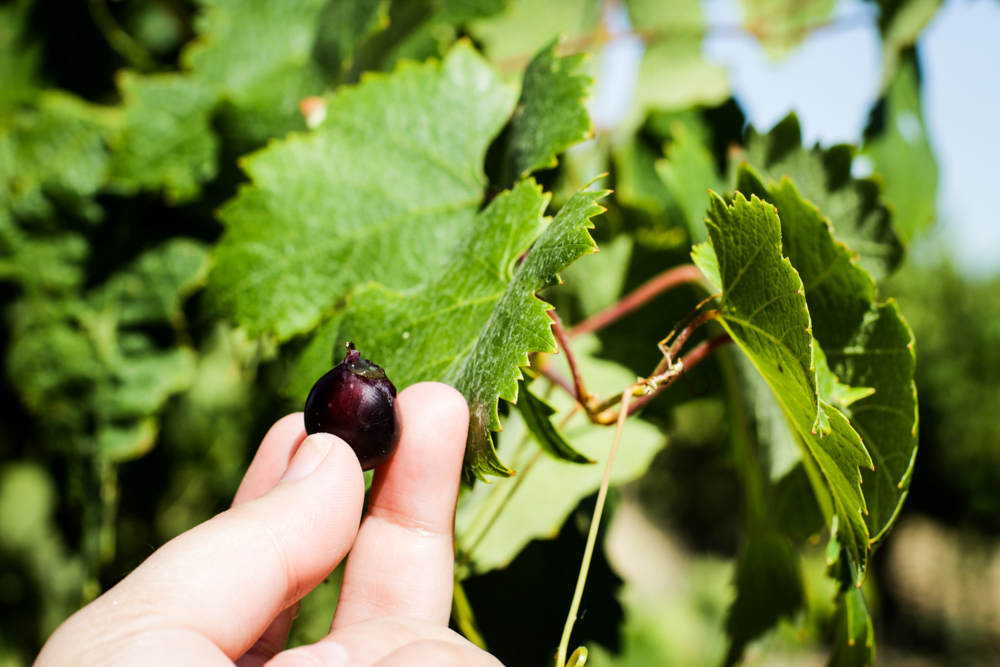
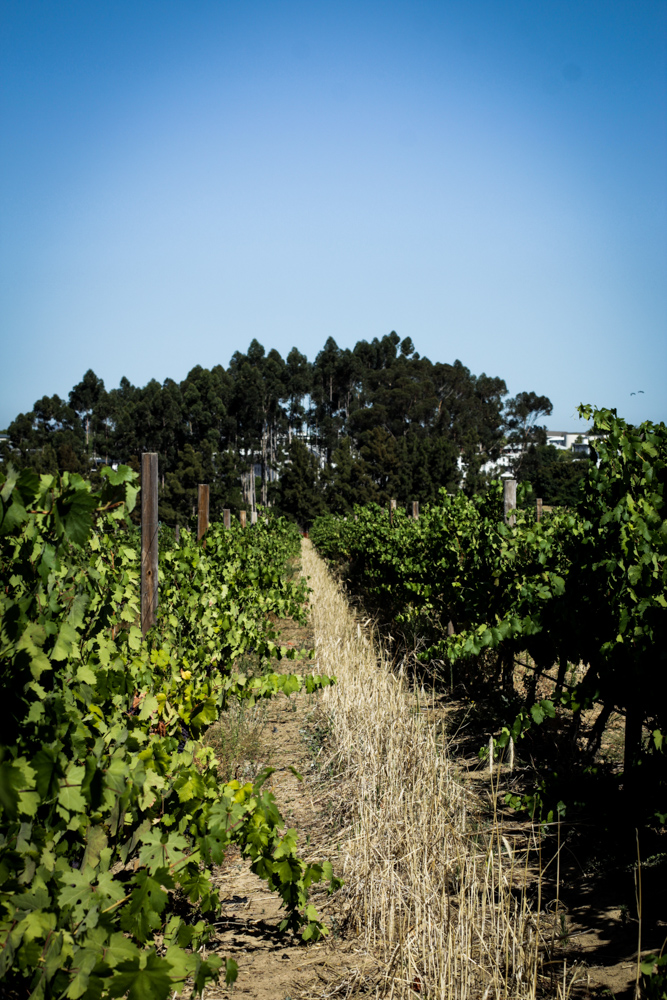
The indulgent evening ended with a good night’s rest in our luxe cottages on the beautiful farm. Our Saturday morning proved to be a busy one starting with a short walk to the magical glass cathedral in the already sweltering 30 degrees C Stellenbosch heat. To fuel our next adventure we had an MCC and Almond Biscotti pairing in the shade followed by my brave yet really long attempt at sabrage. We were met by Viticulturist Jaco van der Westhuizen who graciously fielded our novice wine questions and showed us through the lush vineyards ready to be harvested soon.
Enter a caption
YAY! I did it! 🙂 It only took over 2 minutes!
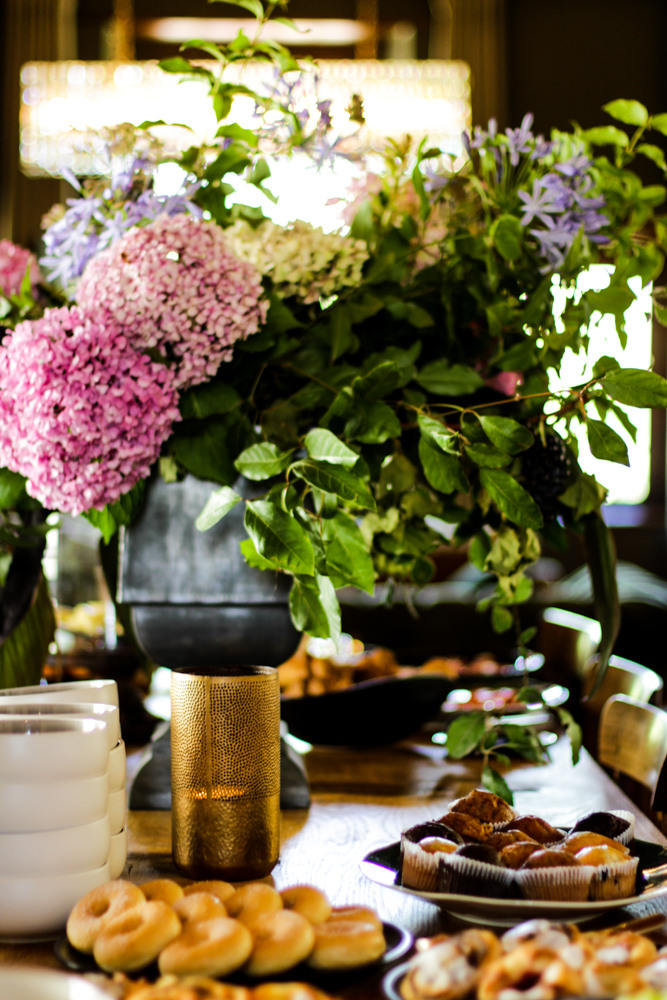
A scrumptious breakfast spread was set up in the beautiful manor house dining room.
Without reservation or bias, Blaauwklippen Wine Estate is a sensory experience to be taken in little by little, by staying over or visiting frequently. Family-friendly? Check! Wine enthusiast-friendly? Check! Craft gin enthusiasts? Check! Luxurious and comfortable accommodation? Check! Check! Delicious food on offer at resident restaurant Hamm & Uys? Check! Check! and check, please! I cannot wait to be back, whether it’s for the pizza evening’s or Sunday markets held every Sunday on the farm.
A massive thank you to the amazing team at Blaauwklippen for their warm hospitality.
OPENING HOURSSummer Times (1 October – 30 April) Mondays to Saturdays: 10h00 – 18h00 Sundays & Public Holidays: 10h00 – 17h00Winter Times (1 May – 30 September) Mondays till Saturdays: 10h00 – 17h00 Sundays & Public Holidays: 10h00 – 17h00
Information in this post about the winery is supplied by their website.
I recently entered the Veritas Young Wine Writers competition last year. Unfortunately, my entry was unsuccessful. However, I thought I’d share one of the two pieces I wrote for the competition with you. I have recently enrolled at UNISA to study a BA in Creative Writing to improve my craft as well as my chances of getting hired more frequently for freelance work in the industry. Please have a read, and let me know what you think in the comments.
Instagram is to Rosé what the Fairy Godmother was to Cinderella.
We live in a world of sensory overload. Everything is a meme, a moment, a tiktok, a story. But all it took was a simple hashtag and just one influencer to get something trending and relevant. That’s the story of how rosé magically transformed from ugly step-sister into rose gold queen.
Before 2017 rosé wine was a typically frowned-upon form of libation and seen as cheap and low quality. This all changed with millennials making the pink wine trend, specifically on social media.
Somehow pale pink rosé became an overnight sensation gaining traction as an ‘Instagrammable’ wine some may say a visually appealing prop for Instagram posts in the blazing summer heat.
Hashtags such as #rosé and #roseallday trended and suddenly became fashionable with many an establishment having to order their fair share of rosé far in advance for summer and in bulk to please many a millennial horde. It’s no surprise really that my fellow millennials took a serious liking to this now sophisticated pink wine with the generation making the hue culturally acceptable for all to wear and passively behold.
Annually, every second Saturday of June sees a full day dedicated to the celebration of rosé wine. The past five years we’ve seen a myriad social media posts using the blush pale pink wine to celebrate summer at their favourite wineries or quite simply at home with a homemaderefreshingly cool ‘frosé’. Rosé put simply signifies the advent of long, hot balmy days.
So here’s what we can expect to see in 2020 and beyond:
Yes way, rosé: As summer gets underway in the southern hemisphere, we start to see the apoplectic joy of hosting ‘Pinknics’. Where rosé simply calls for al fresco dining with your nearest and dearest in a divine setting.
Yes we ‘can’: at the end of 2019 wine in cans are already set to become the next big thing in the wine industry and amongst the younger crowd that look to convenience.
Yes to CBD: Like everything else, rosé will possibly get a modern cannabis-infused spin soon enough.
Yes to lower alcohol and fewer calories: We’re all a little more health-conscious these days, instead of cutting out alcohol completely, going for something lighter is a great option for most.
With just one day left to the end of the decade and the end of 2019, there’s plenty to celebrate and toast to with a glass of delicious bubbly. If you’re stuck for choice and want some suggestions, look no further than my top 5 favourite bubblies:
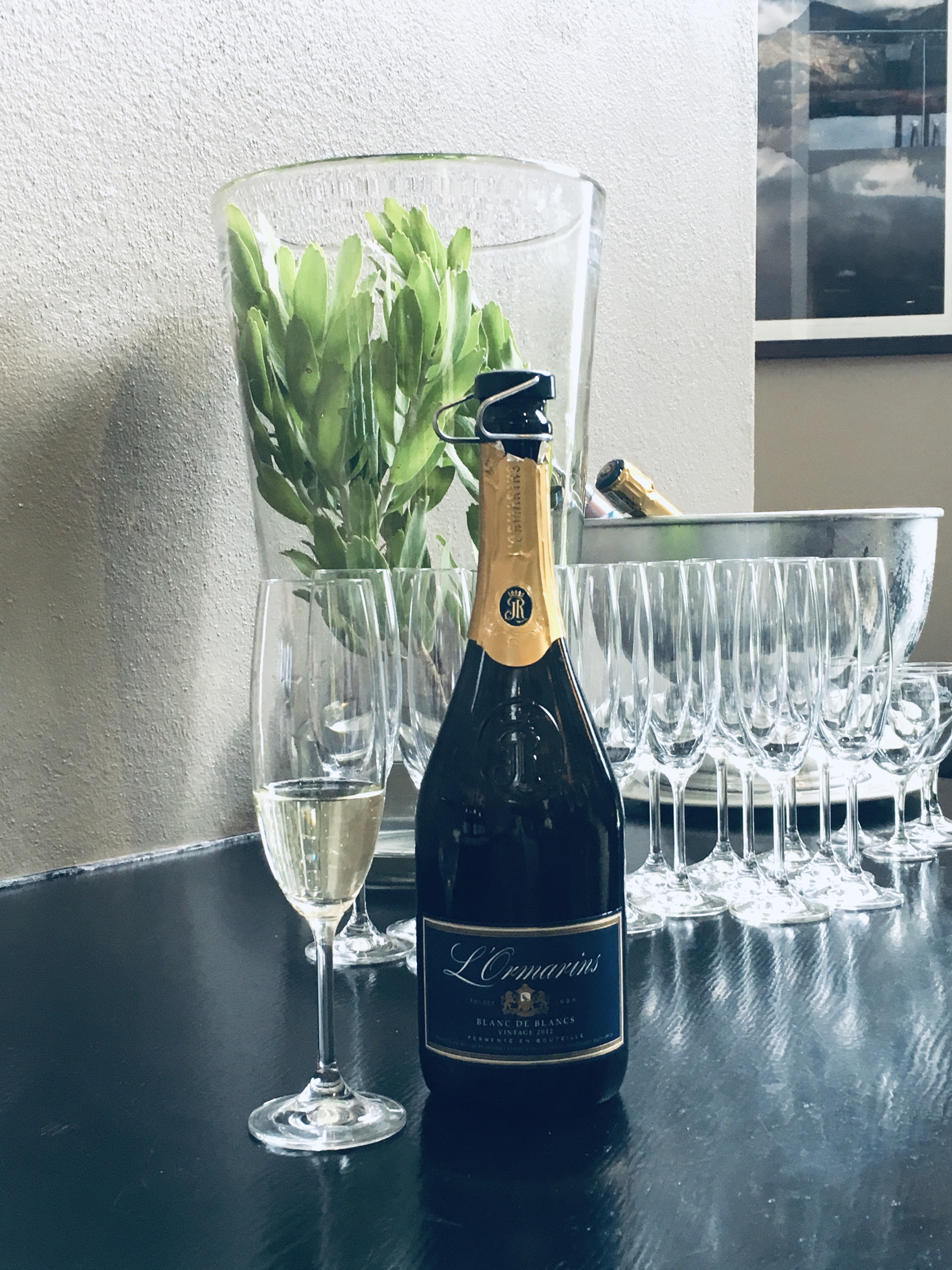
1. L’Ormarins Blanc de Blancs 2013 Vintage
Αn absolute favourite of mine! This L’Ormarins MCC is cultivated from 100% chardonnay grapes, is deliciously fresh with tangy lemon, ripe peach, grapefruit and crisp green apple on the palate with an intriguing flinty character on the nose, then broadens out on the mid-palate with a creamier, fuller-bodied richness taking over before it tightens once more with a defined, dry and crisp tail. Pairs well with seafood, sushi and grilled chicken.
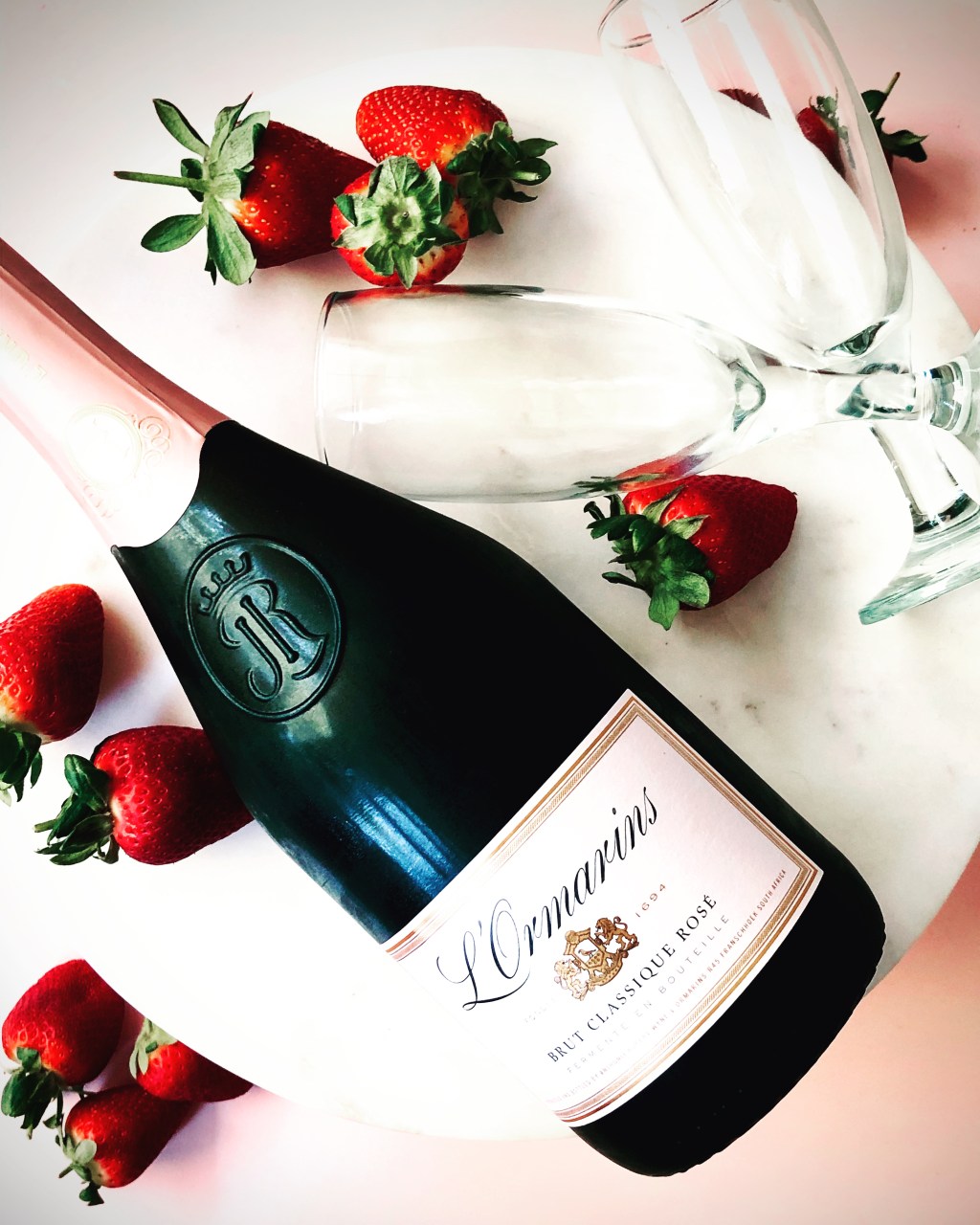
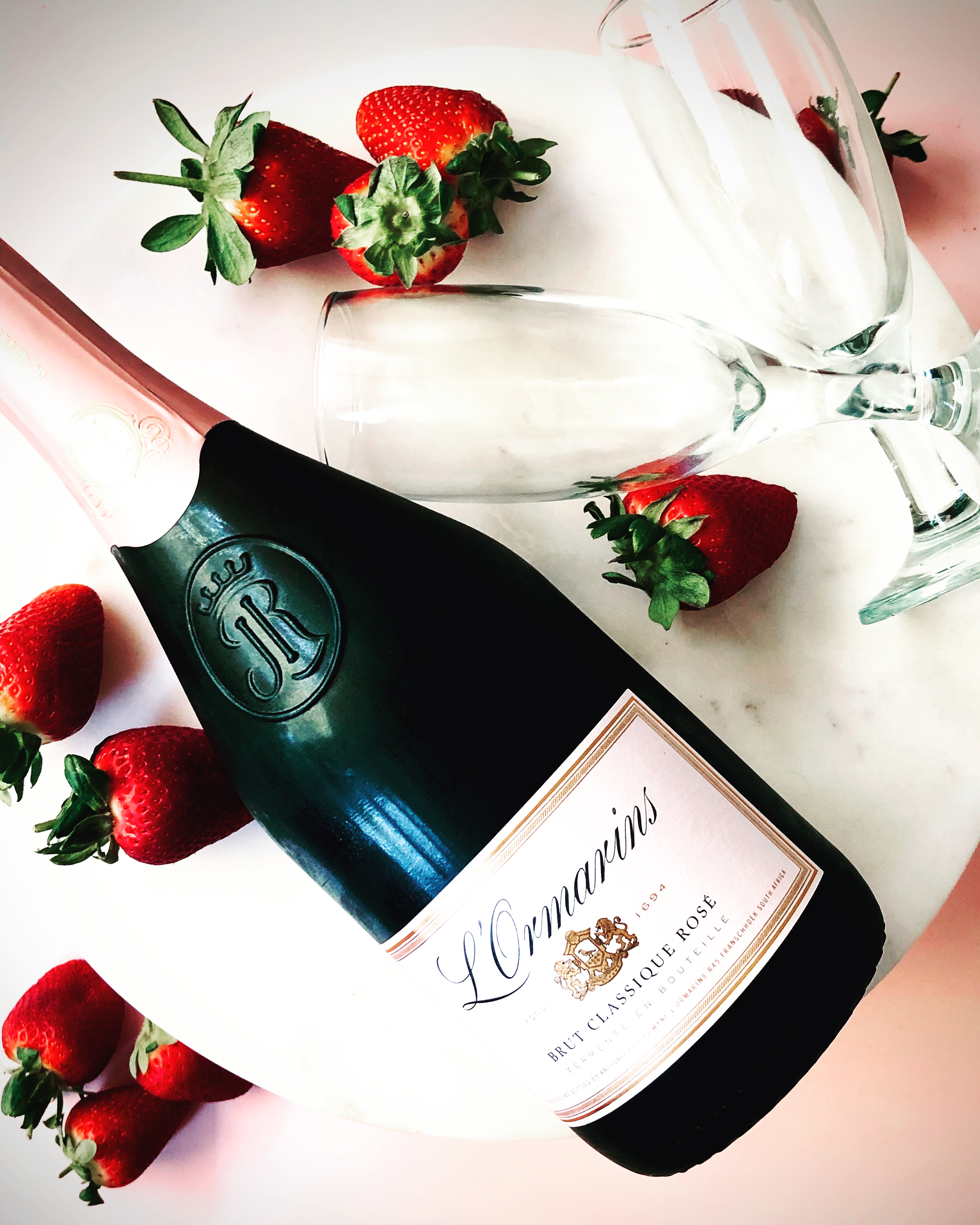
L’Ormarins Brut Rosé
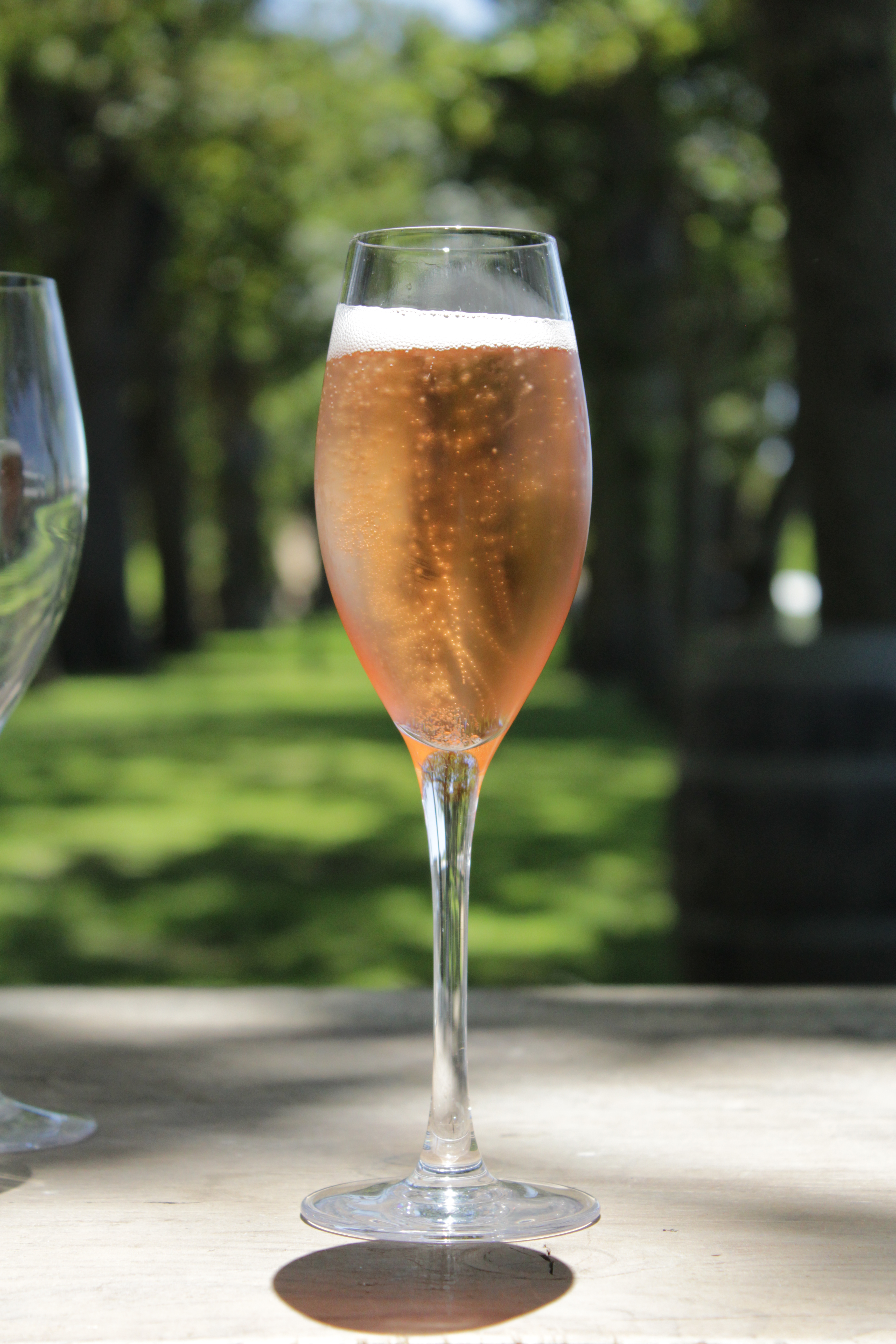
Cultivated from 60% Pinot Noir, 40% Chardonnay grapes, with grapes grown in Franschhoek, Overberg, Darling, and Robertson. I adore the sparkly salmon hue and summery notes of strawberry, raspberry and yeasty brioche on the palate and nose. Pairs well with dessert, soft cheese, seafood, and whitefish.
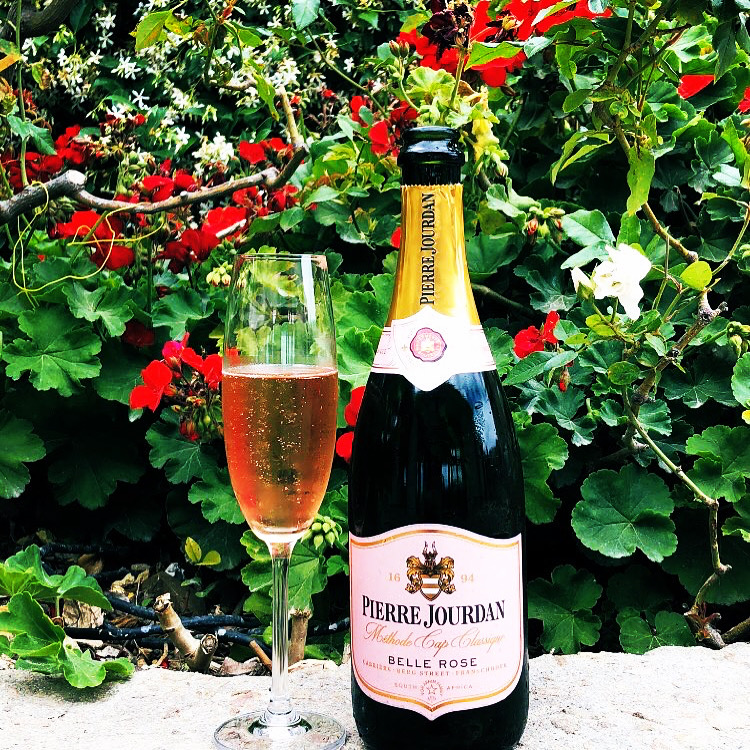
2. Haute Cabriere’s Pierre Jourdan Belle Rose
The Belle Rose is a fruity Méthode Cap Classique which owes its salmon pink colour to the Pinot Noir varietal. The palate reveals a lively presentation of rich strawberry and cherry flavours derived from Pinot Noir – with an elegant, long dry finish. Made from 100% Pinot Noir grapes. Pairs well with salmon, trout and a delicious summer cheeseboard.
3. Simonsig’s Kaapse Vonkel Brut Rosé
A celebration of refreshing flavours tantalises the palate with a sublime finish of quince notes. The subtle yet crisp acidity causes an array of lingering high notes. This vibrant Sparkling Rosé reflects elegance, style and finesse with notes of red berry and delicate hints of candyfloss. Pairs well with seafood, dessert and light summer snack platter of seasonal fruit and soft cheese.
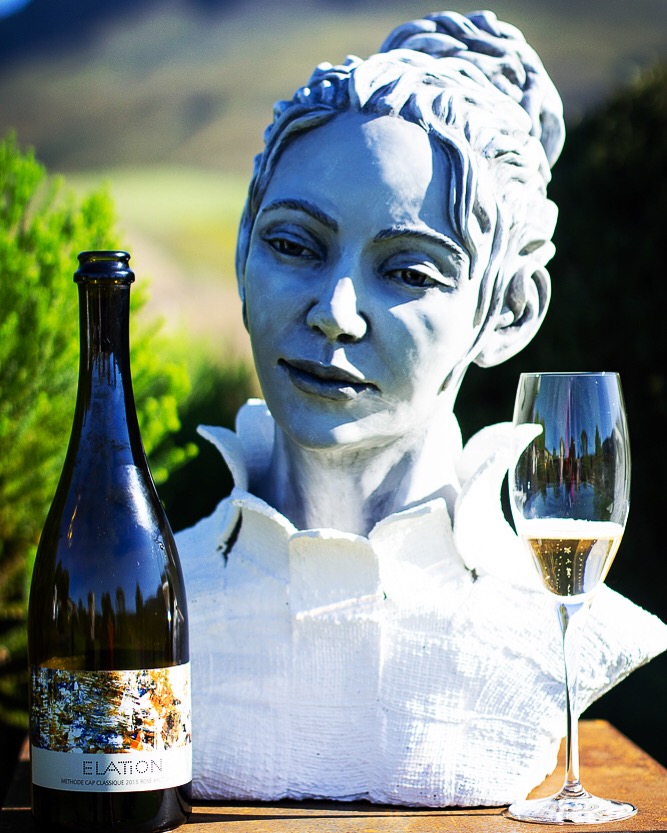
4. Creation’s Elation MCC
This Walker Bay local has the potential of an international superstar. Cultivated from 80% Chardonnay and 20% Pinot Noir Grapes. This beautiful MCC has aromas of lemon blossom and dried apple, followed by wild strawberry and hints of freshly baked brioche. On the palate, well-integrated flavours of grapefruit and dried apple are accompanied by fresh flinty character – elusively savoury like wet pebbles and shells on a beach.
5. Le Lude Brut
Last, but certainly not least, is the fantastic award-winning Franschhoek MCC. The Brut is a classic blend of 91% Chardonnay and 9% Pinot Noir.
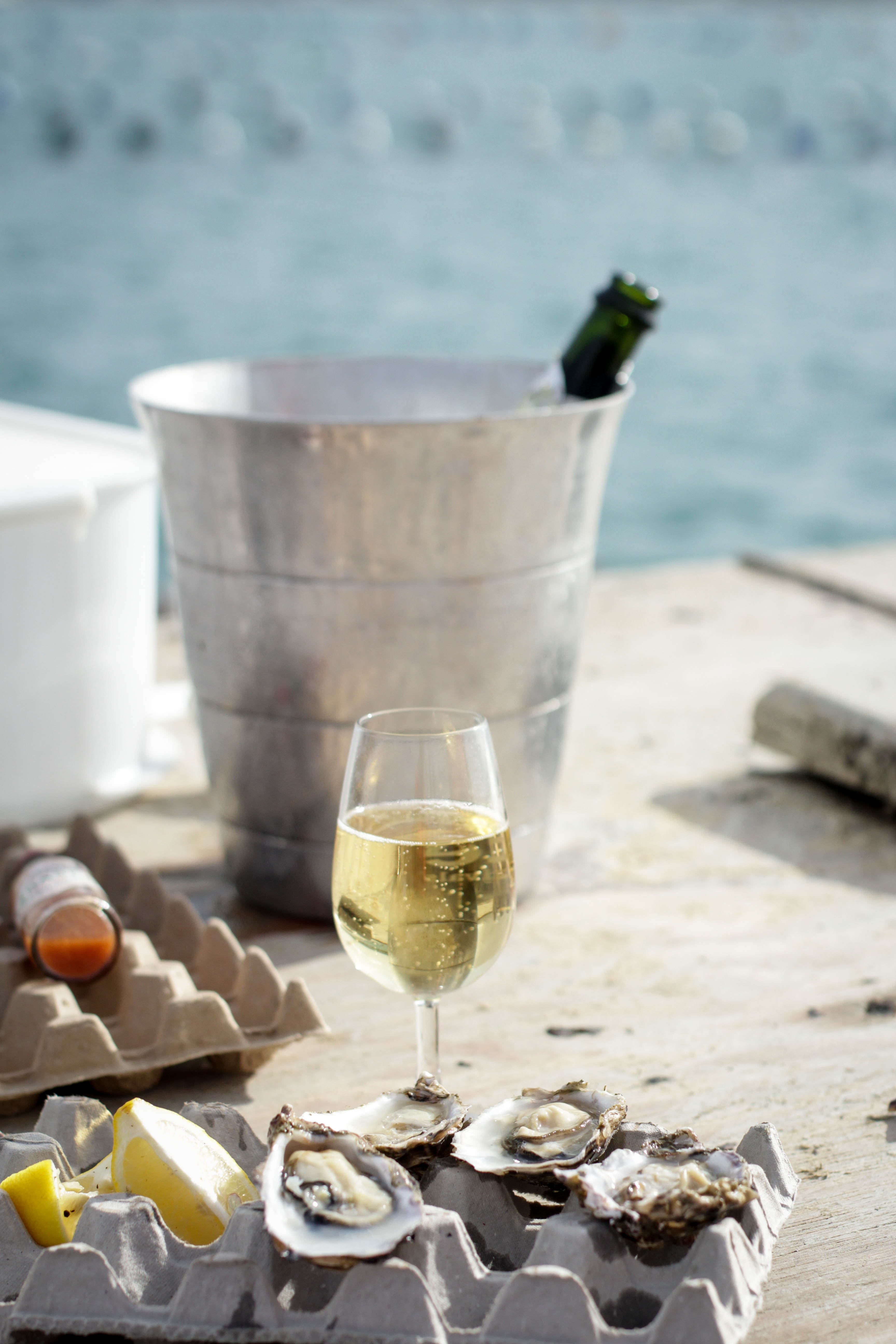
Elegant citrus blossoms with fresh lime aromas. Secondary aromas of nougat, roasted nuts and hints of proving dough.Bright, fresh and elegant palate entry. Aromas of grapefruit, ripe zesty lemon and pear form a structured mid-palate. The mousse shows effortless finesse and texture with a restrained presence. Elegant length develops delicately on the palate with fine tertiary aromas of caramelised honey, vanilla and dried fig. Pairs well with freshly shucked oysters, seafood and a complex flavoured cheese board. Drum roll, please… this is my top MCC pick for 2019!
Wishing you and yours a happy, healthy and prosperous 2020!
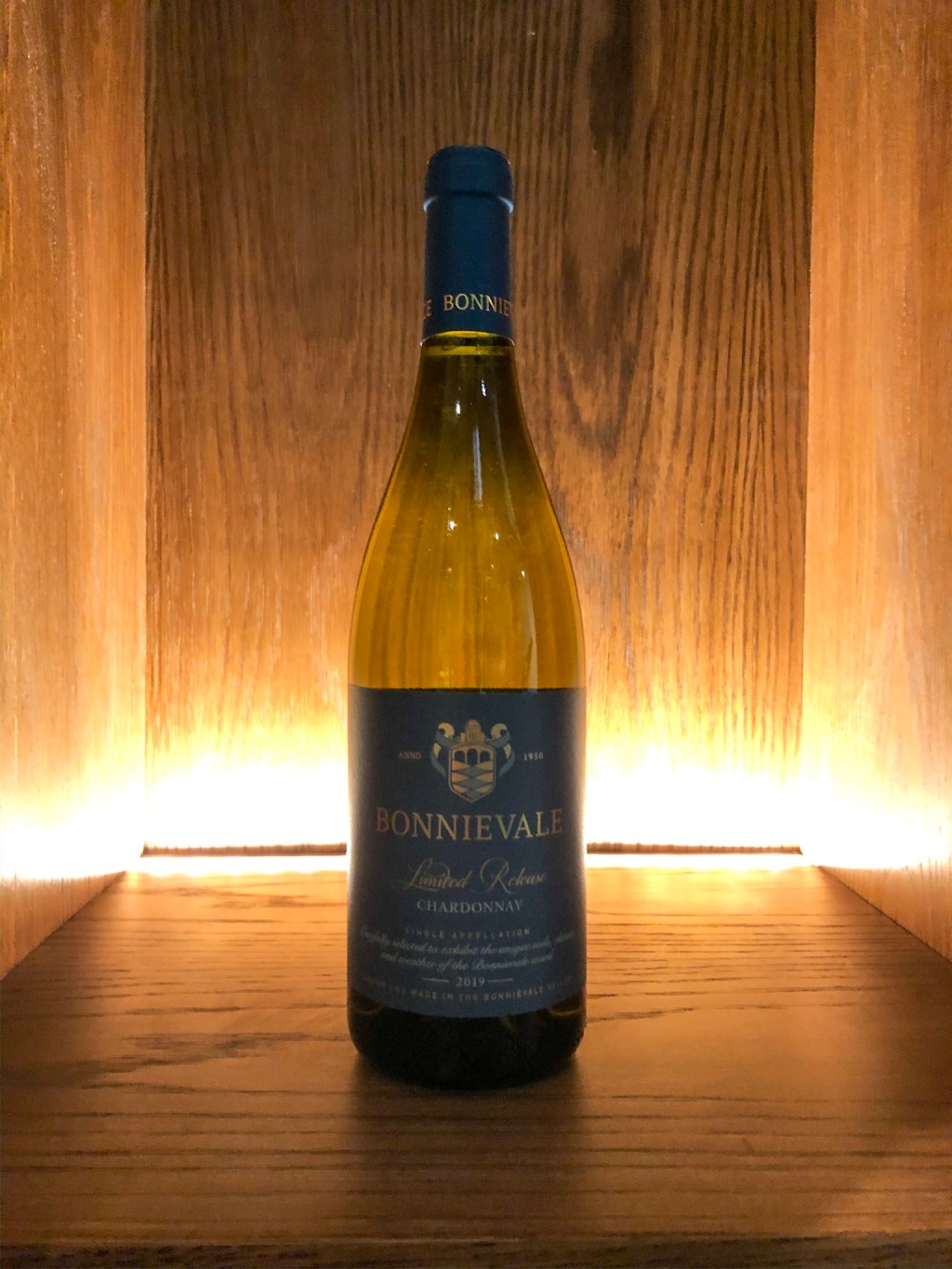
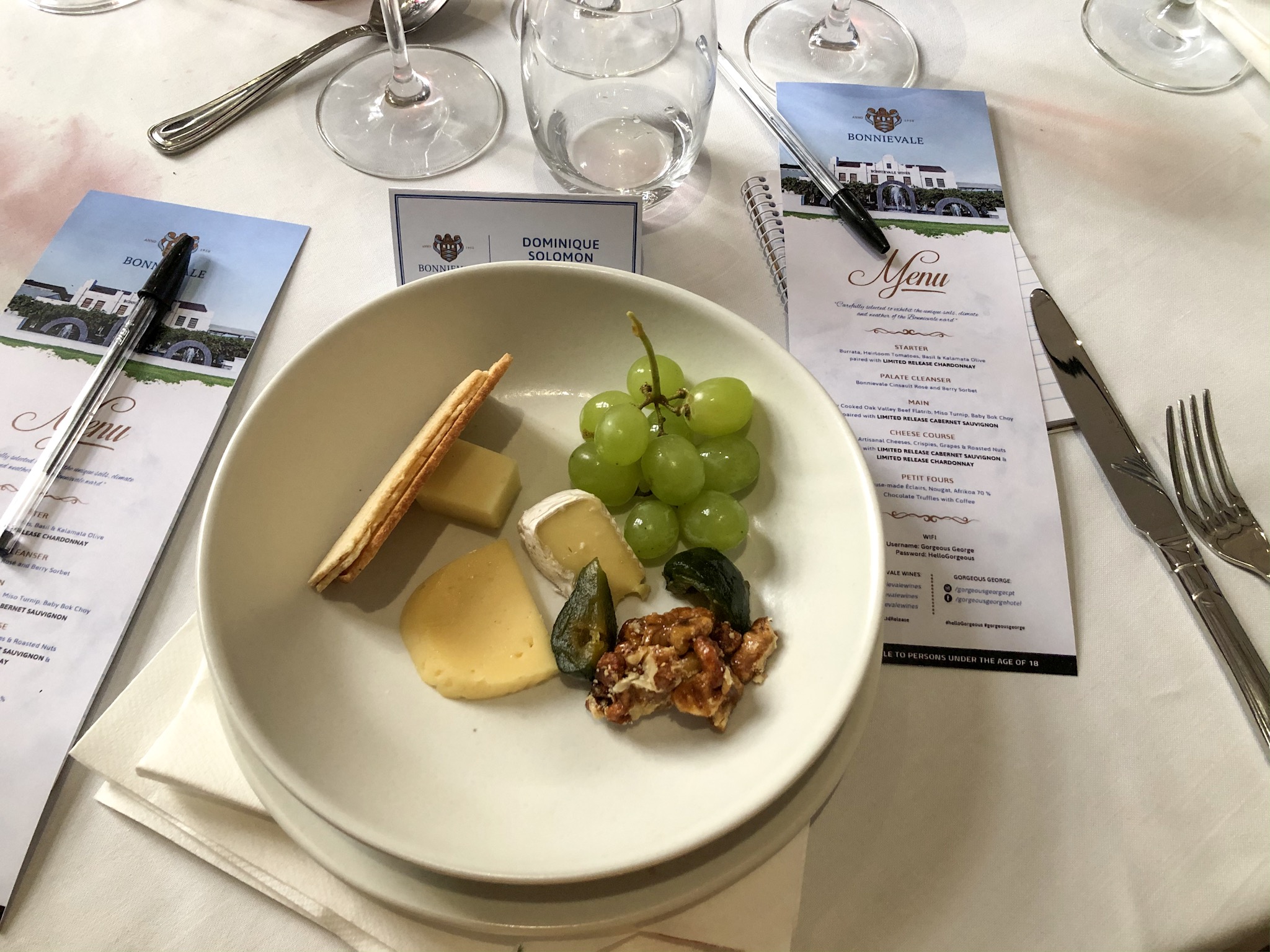
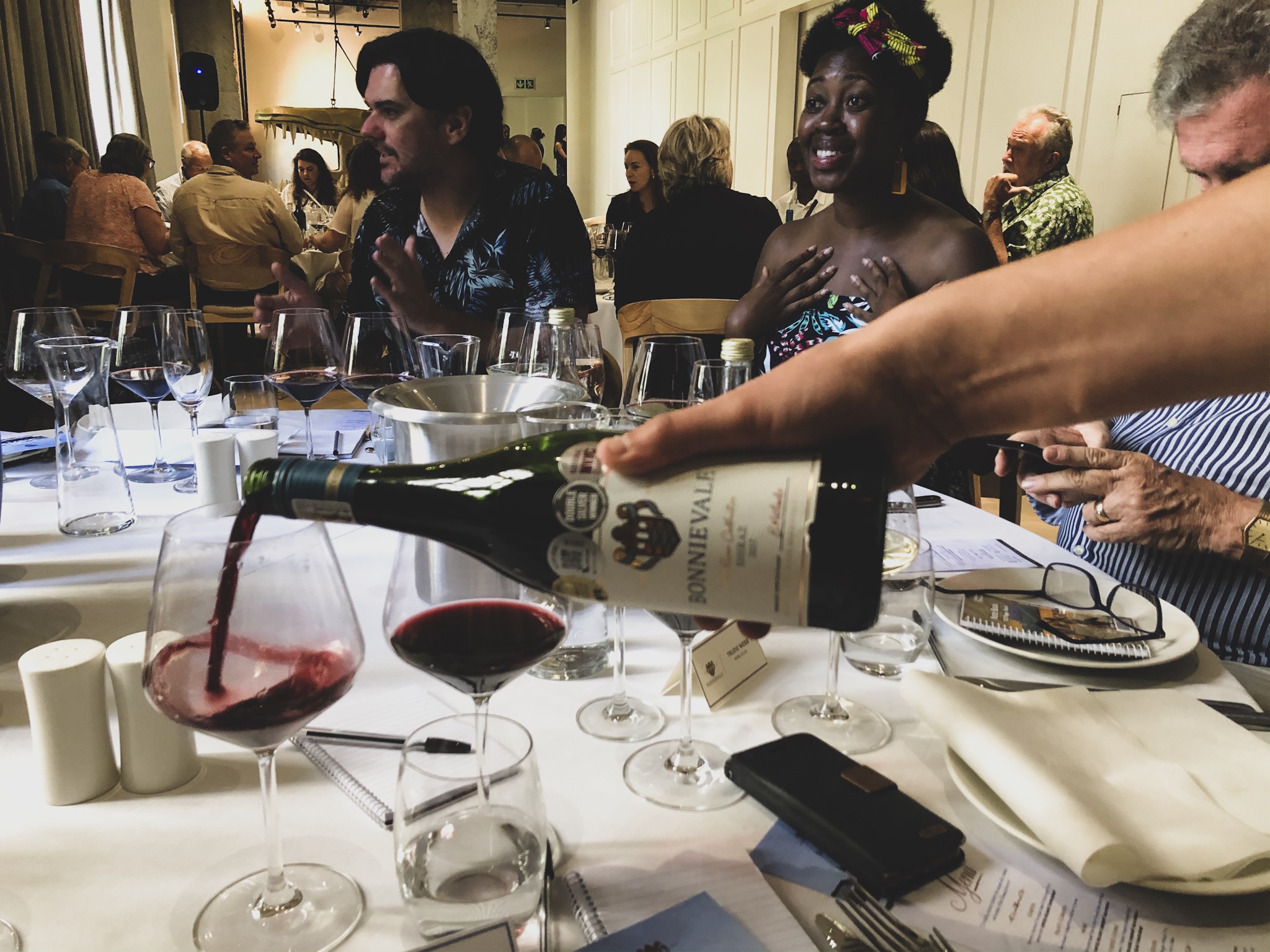
The launch for Bonnievale’s premium wine launch was hosted in the newly renovated ‘The White Room’ at the beautiful Gorgeous George Hotel in Cape Town last week. Bonnievale Wines launched two limited release, single-variety wines crafted from a selection of top vineyard sites that reflect the influence of the ancient soils, climate, and weather of the Bonnievale ward. The wines are a Cabernet Sauvignon from the 2017 vintage and a Chardonnay, from 2019 – both destined to be must-haves for the discerning wino. The new wines feature dedicated packaging and labels that reflect their premier status in the Bonnievale portfolio, as well as the quality of the contents.
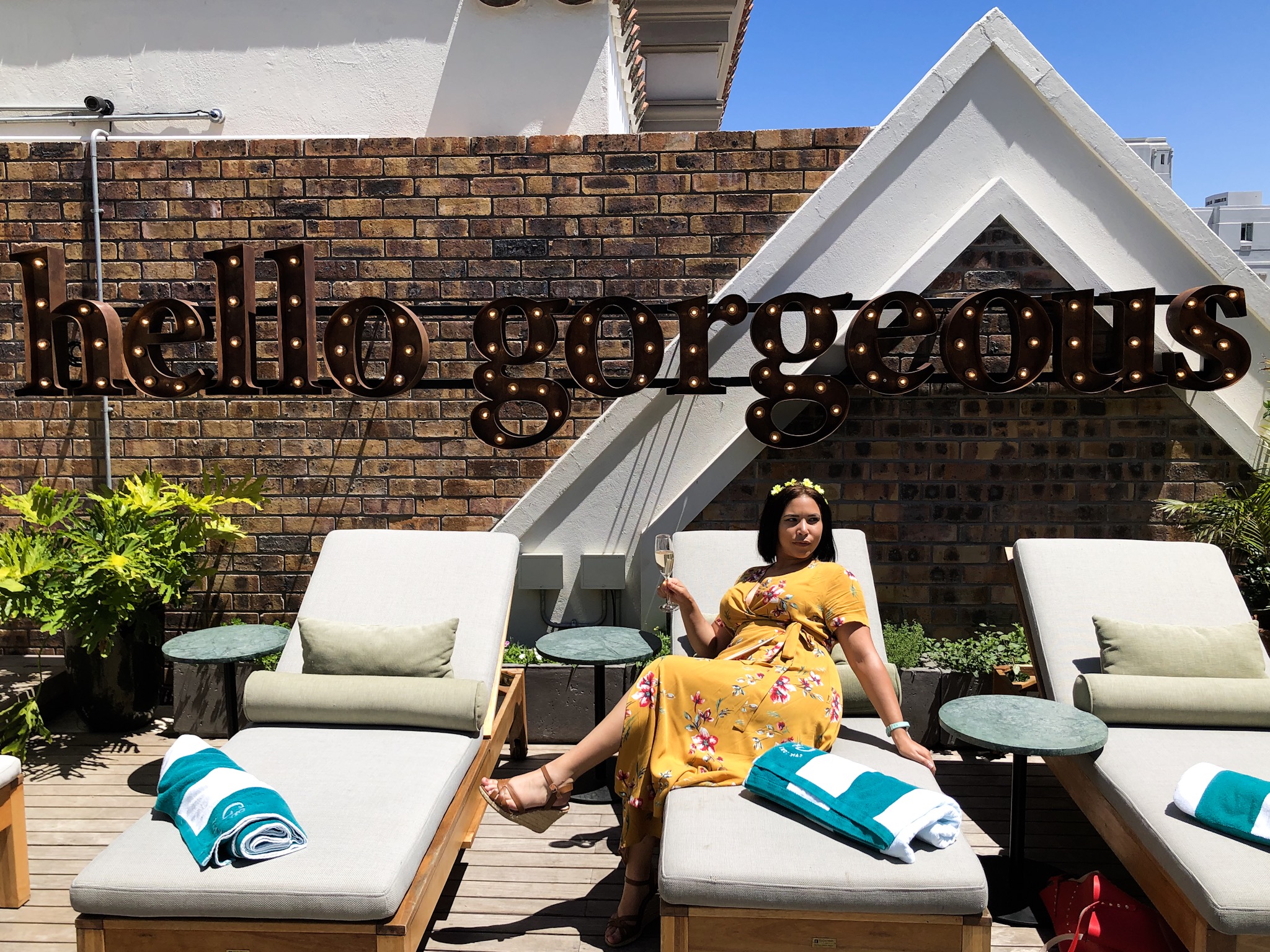
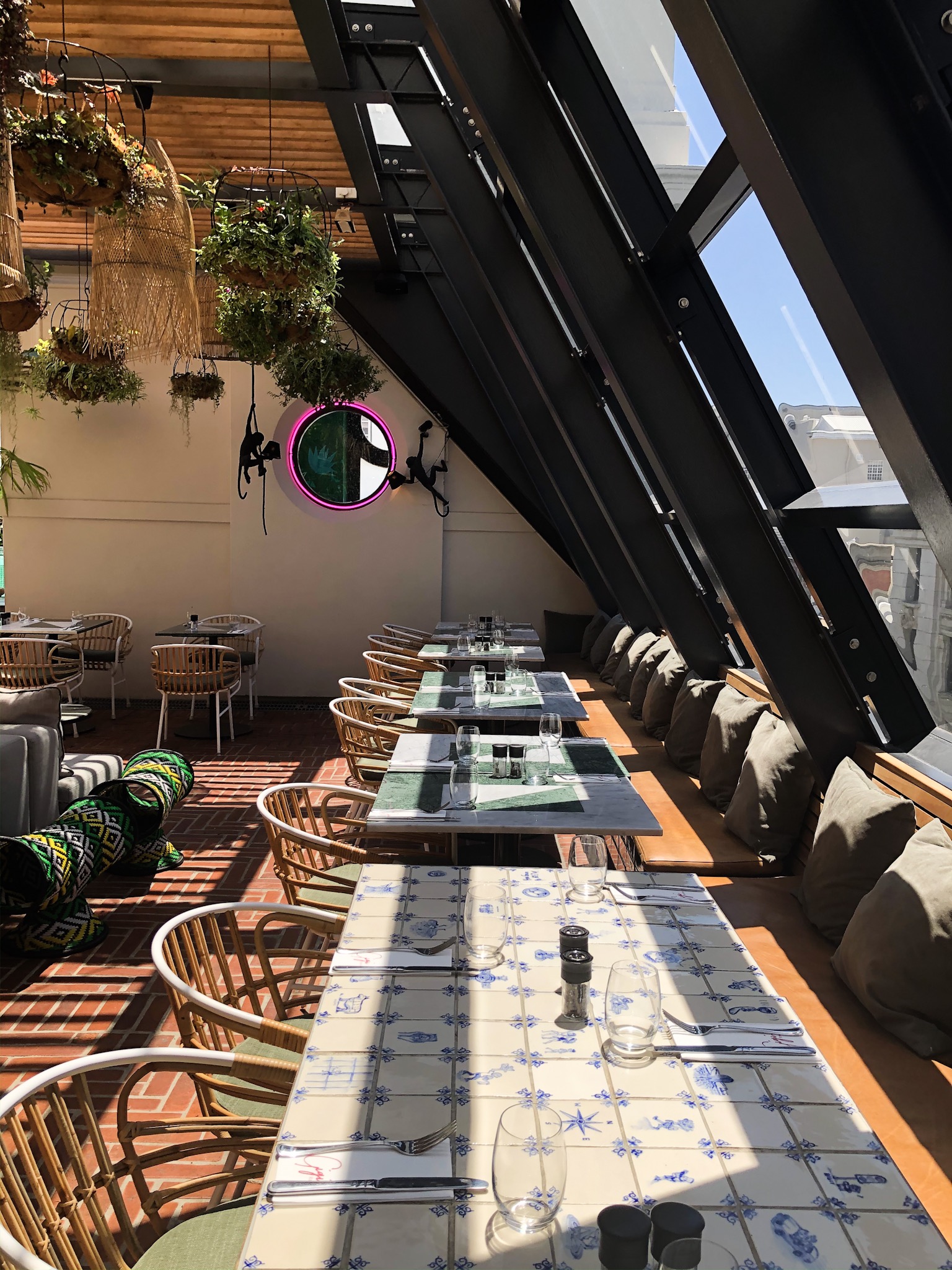
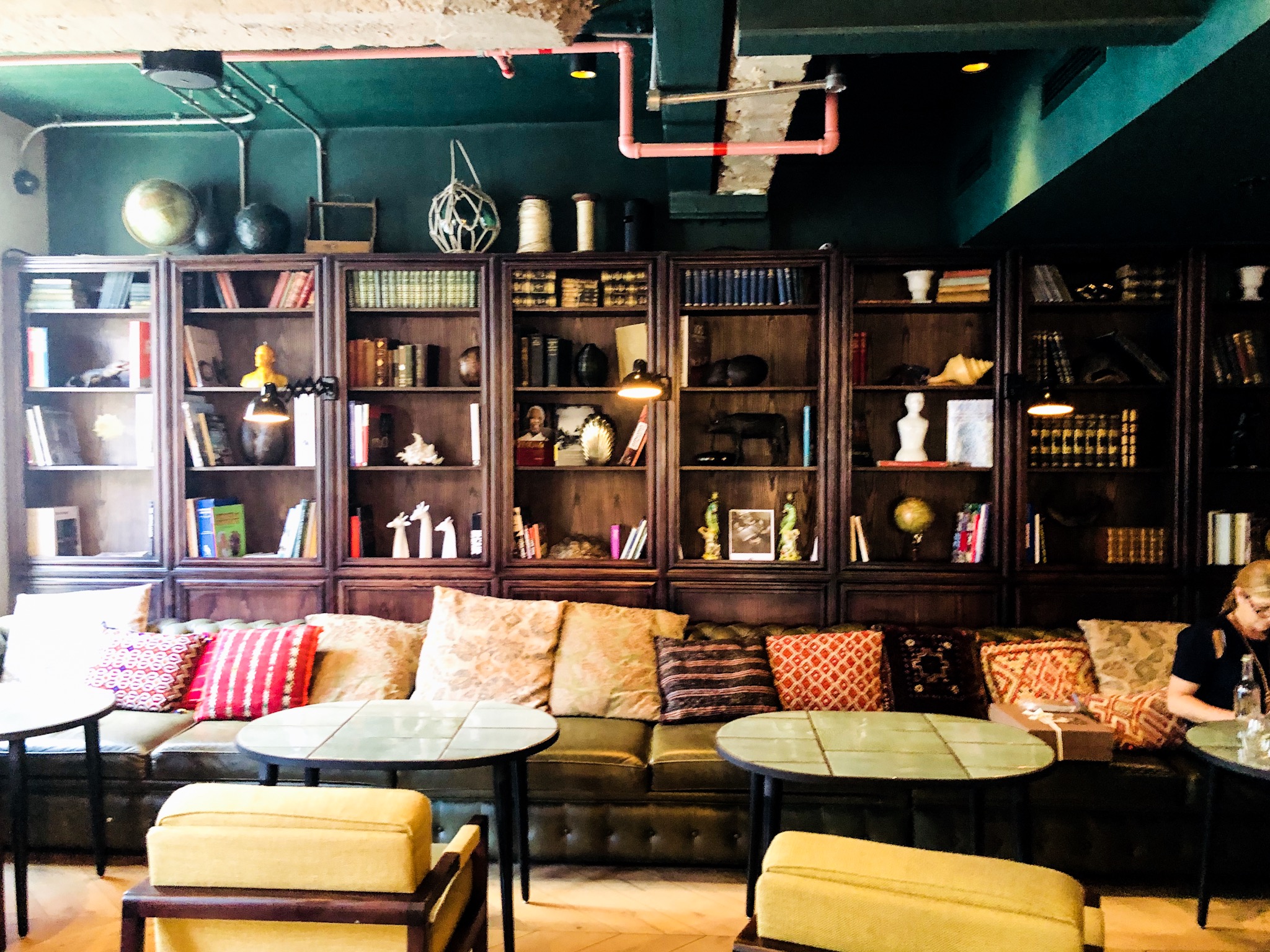
The Luncheon, consisted of a five-course menu, with all meals paired with Bonnievale wines. The hotel oozes opulence with chic touches of modernity. The roof-top bar is as ‘Instagrammable’ as is the Bonnievale Rosé served on the day.
Now on to the bit, you’ve been waiting for, the Bonnievale Limited Release Cabernet Sauvignon 2017 displays beautiful, clean red fruit, notably raspberry, supported by hints of liquorice and leather on the nose. The juicy red fruit carries through on the palate, supported by fine, ripe tannins that provide elegant structure and loads of depth to the wine. With 18 months maturing in mainly new French and American oak, the two types of oak deliver a balanced and well-integrated wine with a taste that lingers long after the last sip. The Limited Release Chardonnay 2019 has delectable citrus on the nose, especially of lime and grapefruit that extend to the palate. It is crisp and fresh with a distinct flinty finish. Here too, the French oak that was used to mature the wine for seven months is well integrated, supporting the fruit but also delivering a smooth, rounded mouthfeel.
Why these cultivars?
The Cabernet Sauvignon and Chardonnay have long been stars in the Bonnievale Wines portfolio. Both cultivars also remain highly regarded and sought after in international markets. The two cultivars are also keenly sourced by many of South Africa’s premier winemakers for use in their own blends and brands.
Bonnievale Wines
This coming-of-age for Bonnievale Wines has led to a renewed focus in recent years on high quality and high value. First came the revamp of its portfolio and then, the launch of the premium River Collection range, which has accumulated a string of local and international awards.
The home of Bonnievale Wines is the eponymous village, located some 200km east of Cape Town. A renowned winemaking region, Bonnievale’s vineyards are influenced by amongst others the presence of two major rivers – the Breede and Riviersonderend – and micro-climates created by extensive hills and soaring mountains.
Where to purchase and what’s the cost
The wines produced here are available countrywide and available for order from Bonnievale Wines’ online shop at http://www.bonnievalewines.co.za.
The Limited Release Cabernet Sauvignon 2017 sells from R140/bottle and the Limited Release Chardonnay 2019, from R95/bottle.
*Information supplied by Yolandi De Wet PR and Bonnievale Wines. *


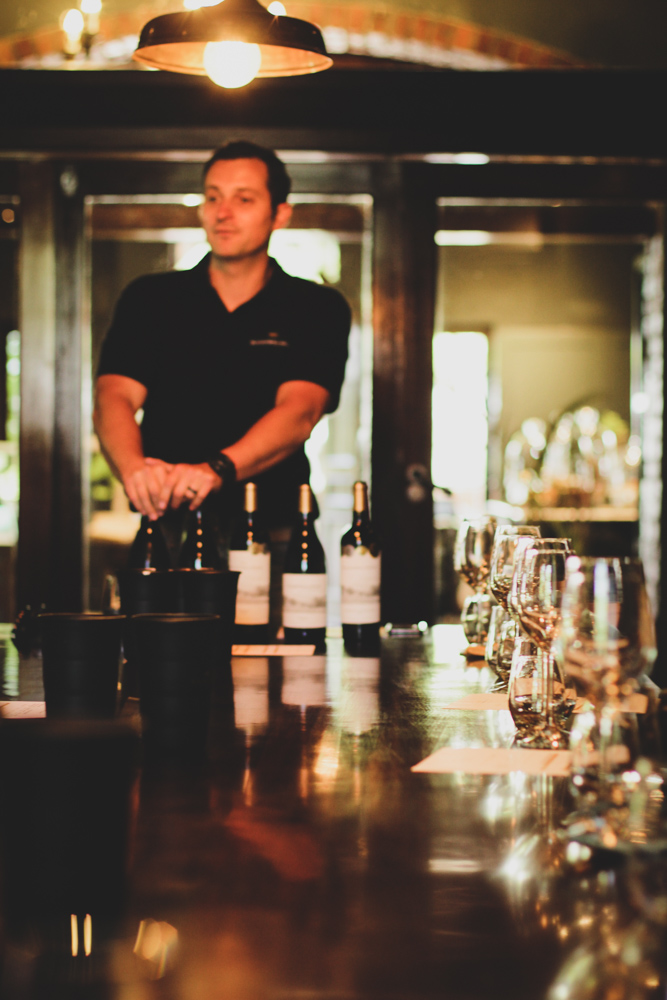
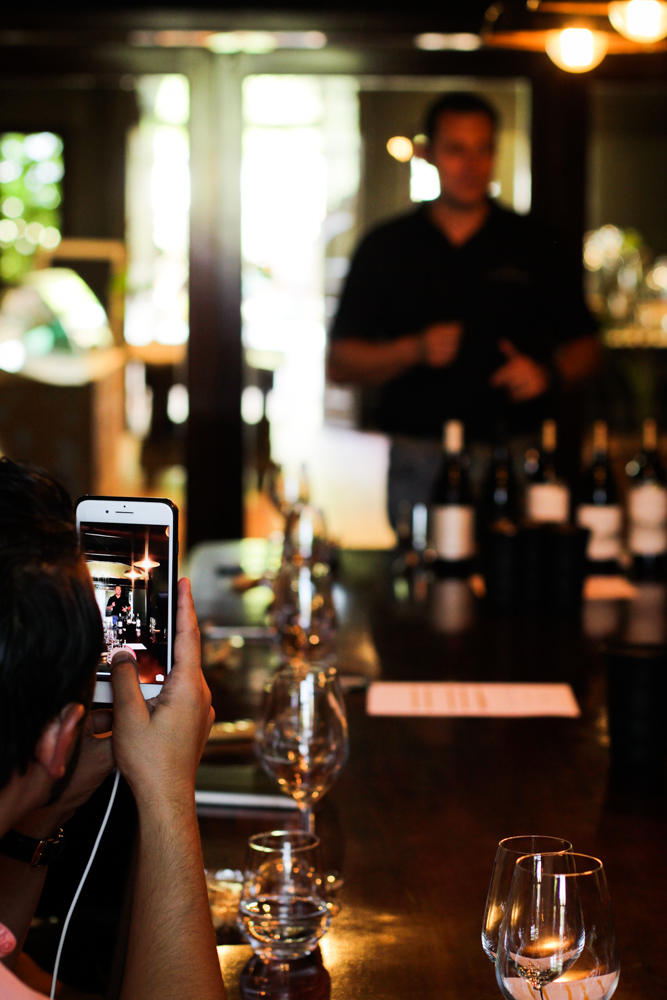
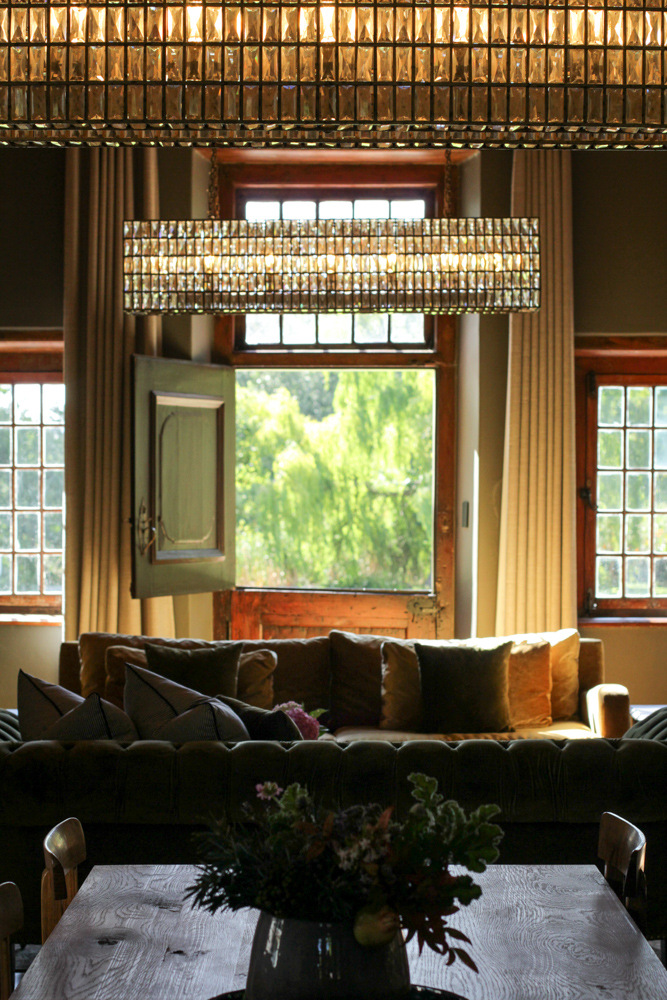
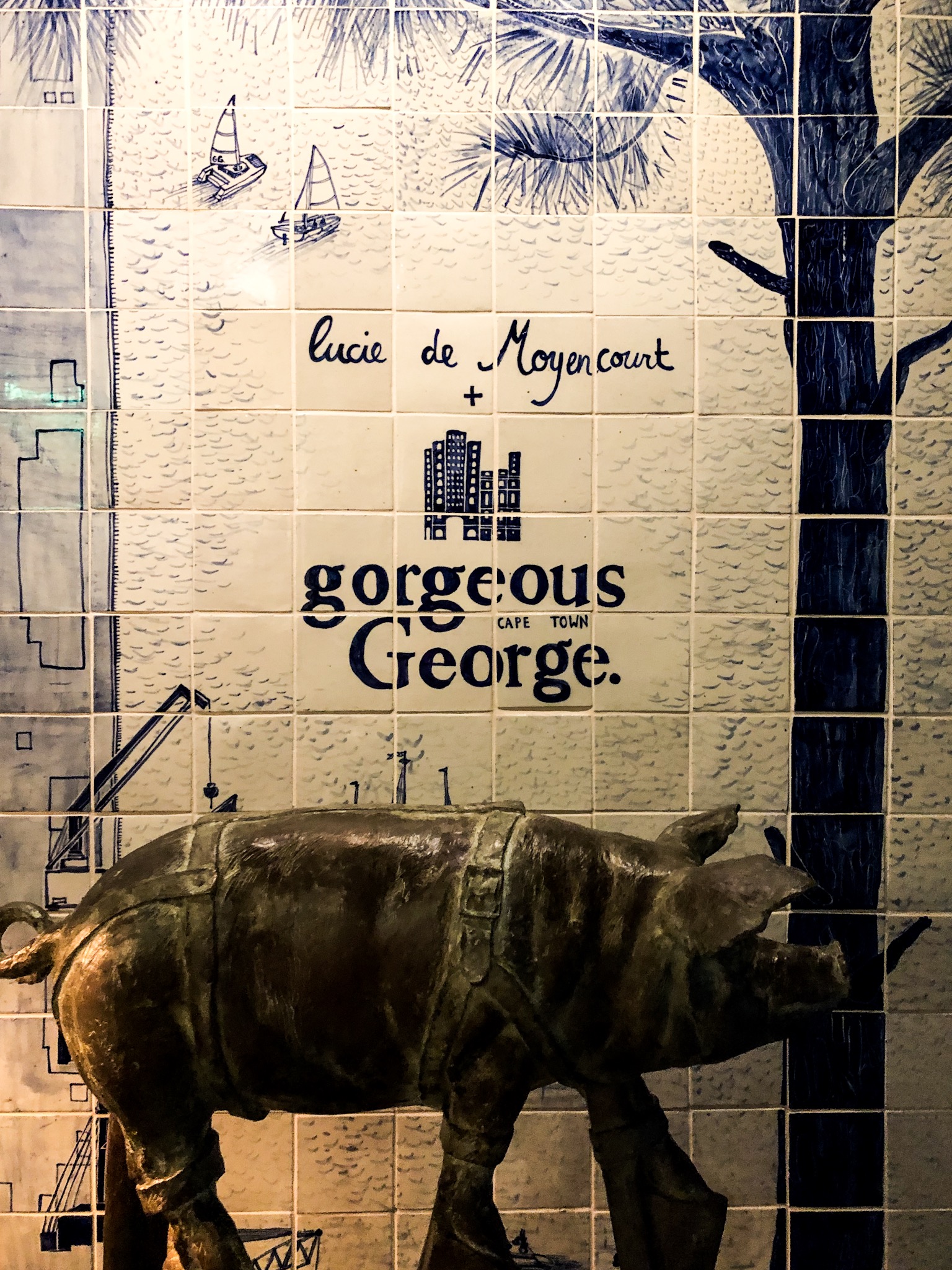
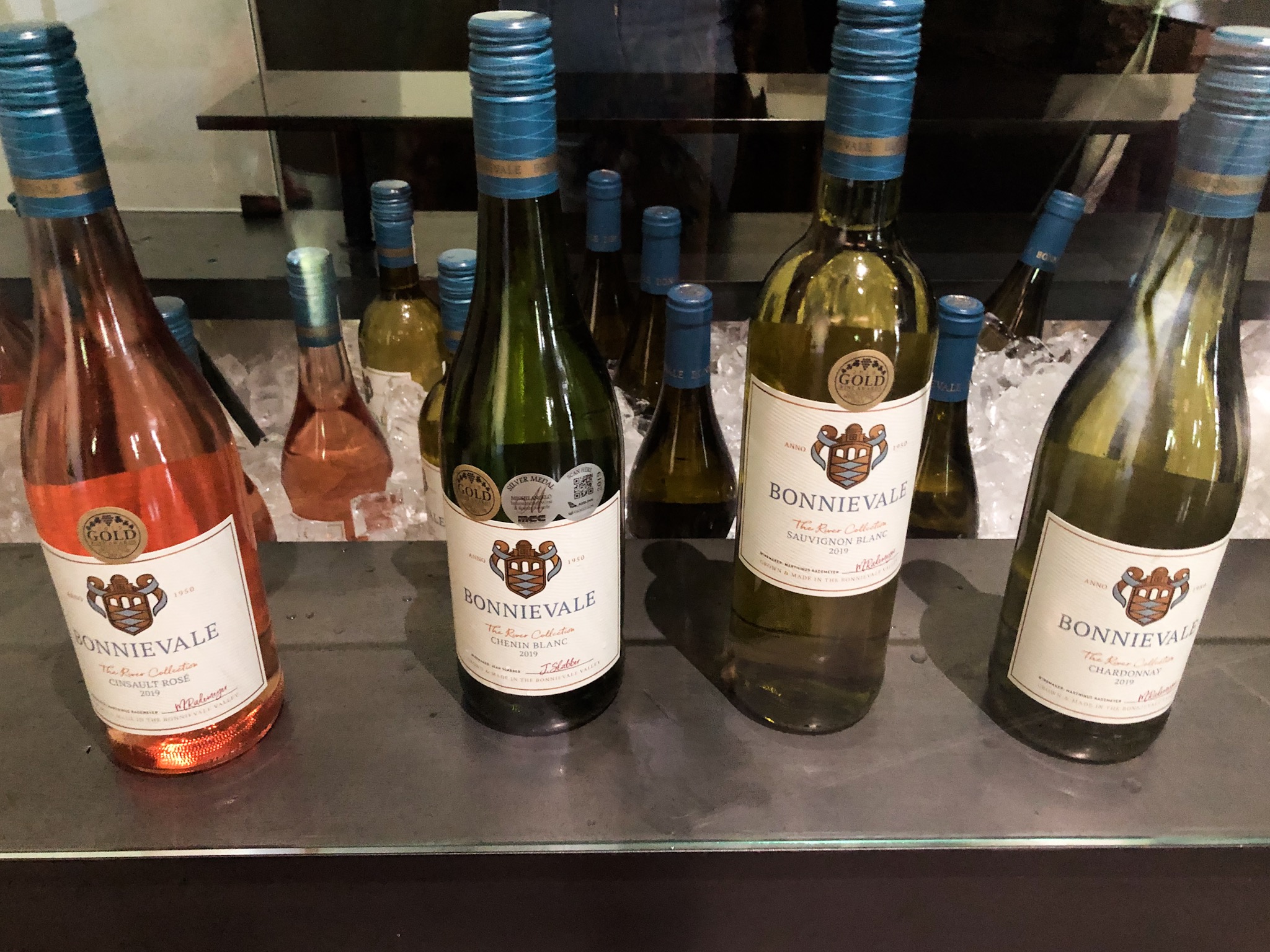 The launch for Bonnievale’s premium wine launch was hosted in the newly renovated ‘The White Room’ at the beautiful Gorgeous George Hotel in Cape Town last week.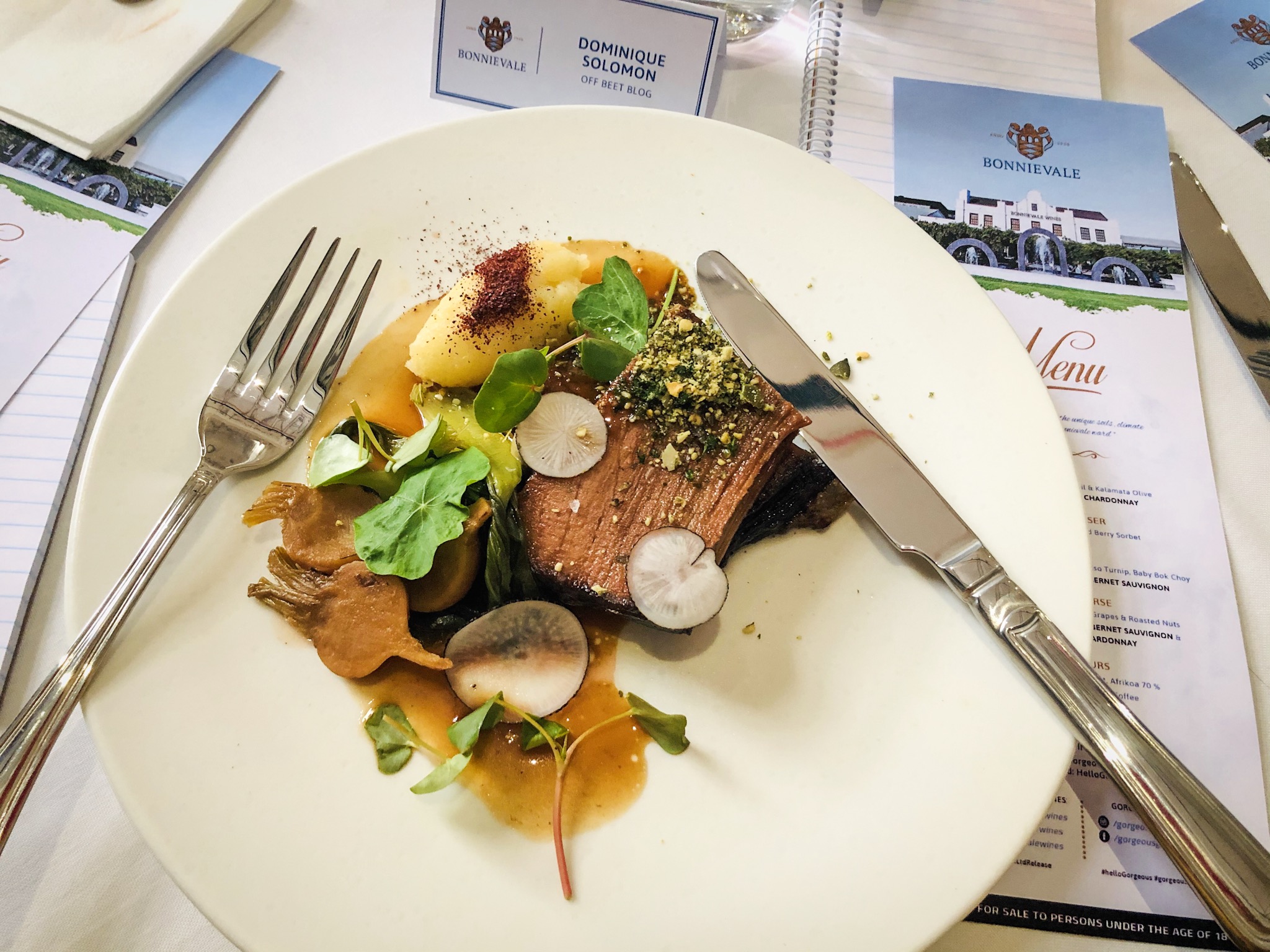
 The Corkless Mind